
Features / Technology

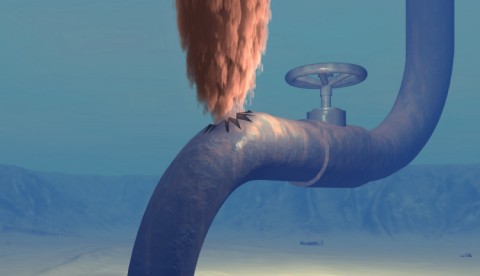
Pipe Leak Detection: At the Forefront of Asset Protection

Pipe leaks in oil and gas have been and remain to be one of the most formidable threats to not only businesses, communities, and the natural environment, but to the well-being of the sector itself. Asset protection has become an essential component for the natural gas industry’s economic health, as pipelines and equipment are at the mercy of the elements.


The Impact of Manufacturing Execution Systems (MES) in Oil & Gas Operations

Manufacturing Execution Systems (MES) incorporate manufacturing facilities, operational technologies such as supervisory control and data acquisition (SCADA), and computing systems. Engineers seek methods to monitor and regulate the ongoing operating processes in oil and gas equipment manufacture since the operations are complicated.

From Threat to Asset: Electrochemical Reduction of Carbon

Awareness of climate change and the need for global action is increasingly widespread across the world. Scientists estimate that to mitigate the impacts of the changing climate, humanity must stabilize the atmospheric concentration of carbon dioxide (CO2) at approximately 350 parts per million (PPM).

Hydraulic Jacks Enable Ras Badran Tank Farm

Using synchronized hydraulic jacks, Egypt's Petroleum Projects & Technical Consultations Company (Petrojet) was able to raise the largest floating roof tank, which was awarded the Guinness World Record, for its crude oil storage facility in Sinai. To lift heavy loads that are vital to any industry, operators study the best fitting lifting system in the market. Usually, hydraulic jacks are chosen over normal jacks, for their ability to lift heavier loads to a great height. Hydraulic lifting jacks do not use a huge amount of force, yet they achieve their targets. They have been used in several industries such as oil and gas, mining, construction, automotive manufacturing, and more.

Harnessing Metaverse Technology for QHSE Excellence

In a world where everything is moving closer and closer towards digitalization, the craze for “Metaverse” has taken over all conversations. This new wave of innovation has wet people’s appetite for the power of tools like digital twins, mixed reality, and autonomous systems. Moreover, modern manufacturer views Metaverse applications as the next step toward becoming a safer and productive organization.

Surfing The Waves of Global Climate Change: What ptX Can Actually Do

With skyrocketing global temperatures, increased natural disasters, and rising sea levels, never has humanity felt the wrath of today’s natural environment. Experts have pointed to global environmental and climate patterns that could spell an apocalyptic scenario if humanity seeks to continue living the way it is now. Despite the various opinions about climate change that exist within human societies, the global community is in unanimous consensus that there is a dire need for the people of the world to work together to reduce greenhouse gas emissions. As the world begins to adapt to this new reality, inventors have been hard at work trying to find new ways for human communities to live with the energy needs that they have, while leading a carbon-neutral lifestyle.

Intelligent Systems Push on Well Recovery Optimization

Digitalization and the use of advanced technology has become one of the important pillars of the oil and gas industry. It is a global trend among the petroleum operators to keep production sustainability in a safe and easy environment. Nowadays, advanced technology is a key factor in wells’ drilling, operation and production. Advanced technology has become necessary especially for optimizing production from deep-water, high-risk, complicated and uneconomical wells. In response to this, Smart wells have evolved.

Hydraulic Fracturing Uncertainty-Based Model Using Monte Carlo Technique

Looking at the nature of Egypt, the country has two thirds of its oil in brownfields. Therefore, using techniques like hydraulic fracturing and horizontal drilling is unavoidable. Hydro-fracturing is not only implemented to stimulate brownfields production, but it is also used when it comes to unconventional oil and gas exploration. However, there are several uncertainties when it comes to the process.

BIOCNG: The Locomotive of Future Natural Gas Vehicles

Great interest is headed towards maximizing the use of natural gas for fueling vehicles around the world. This is due to its clean properties as well as its ability to limit harmful emissions. Compressed natural gas (CNG) is the fuel dedicated for natural gas vehicles (NGVs) that is widely used in the world. By the end of 2021, it is expected for NGVs to reach 30 million worldwide, according to NGV Global. For this reason, new technologies are emerging to help accelerate this transition efficiently. BioCNG technology is a simple, effective and innovative way that was developed to produce CNG vehicle fuels.

CHP: From Waste to Power

The promise of tomorrow is reshaping a clean world with clean energy, at least that is the case for the oil and gas industry. With the climate crisis in focus, the oil and gas industry needs to step up its game to downsize its greenhouse gas (GHG) emissions. According to McKinsey, oil and gas operations account for 9% of all human-made GHG emissions in addition to producing fuels that contribute to another 33% of global emissions. One effective way the industry can reduce its GHG emissions is through utilizing Combined heat and power (CHP) technology.

Page 6 of 13

Login

Welcome! Login in to your account

Remember me Lost your password?

Lost Password