



Features / Technology

Smarter Energy Use: Efficiency to Ease Egypt’s Rising Power Demand

Dynamic growth in electricity demand continues to reshape the global energy system. According to the International Energy Agency's (IEA) World Energy Outlook 2025, electricity will play an increasingly important role in meeting future energy needs, driven by the rapid expansion of renewable energy. At the same time, artificial intelligence (AI), data centers, rising temperatures, and urbanization are accelerating electricity consumption, with cooling emerging as one of the fastest-growing sources of demand, particularly in emerging economies. The IEA projects global peak electricity demand could increase by around 40% by 2035, largely due to higher cooling requirements.

Corn Waste to Jet Fuel: From Fields to Flight

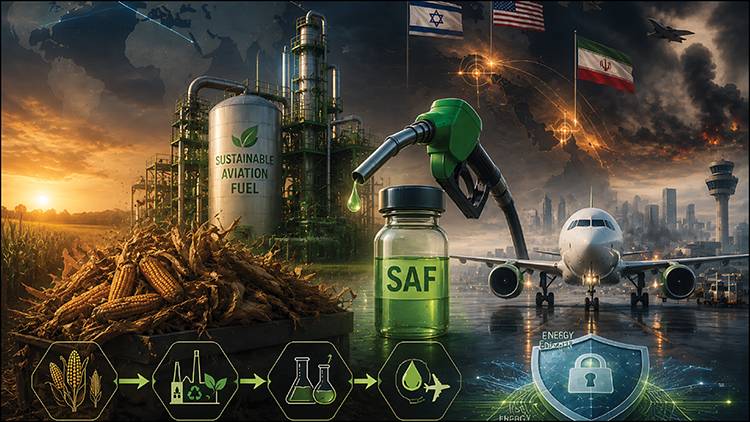
In times of geopolitical uncertainty, energy security suddenly becomes more than an economic concern, it becomes a strategic imperative. The recent US-Israeli war on Iran served as another reminder of just how vulnerable the aviation sector remains to disruptions in global energy markets.

Coastal Defense Meets Energy Transition: Seawalls as Power Generators

Energy systems worldwide are undergoing structural changes driven by decarbonization targets, environmental regulations, and growing pressure to improve climate resilience. This is prompting governments, industries, and infrastructure developers to reconsider how coastal protection systems should be designed in the future by the aid of the new innovative solutions.

From Bytes to Kilowatts: Data Centers and Ai Reshape Global Electricity Demand

Electricity demand is shifting in ways that are reshaping the global energy system. Traditional drivers like industry and households, data centers, artificial intelligence, cloud computing, and digital infrastructure are becoming major consumers of power. Every online search, stream, or AI response depends on vast server networks running continuously in the background.

Tracking Methane from Space: A New Era of Emissions Monitoring

Methane emissions have become a central focus of global environmental policy, particularly in the oil and gas sector. Methane is a highly potent greenhouse gas, with a warming effect far stronger than carbon dioxide over short timeframes. Scientists estimate that methane has contributed to nearly 30% of the global temperature rise since the Industrial Revolution, highlighting the urgent need for effective mitigation strategies. Beyond environmental concerns, unmitigated leaks also represent lost energy resources and reduced operational efficiency.

Driving The Future of Flight: Egypt’s Path to Electric Aviation

Electric aviation is emerging as one of the most promising pathways to reduce emissions, operating costs, and noise in air transport; particularly for short-haul and regional flights. While full commercial deployment remains in its early stages, research, regulatory frameworks, and pilot projects are accelerating globally.

Egypt’s Bess Revolution: Powering a Greener Future

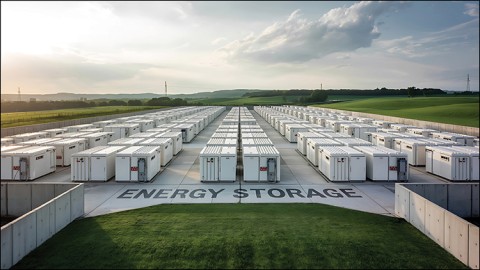
Egypt stands at the forefront of renewable energy expansion in the MENA region, with ambitious targets to increase the share of renewables in Egypt’s energy mix to 42% by 2030 and 60% by 2040. As the country accelerates the integration of renewable energy into its power mix, battery energy storage systems (BESS) emerge as a critical enabling technology. Once viewed as a supporting technology, battery storage is increasingly being treated as essential infrastructure—one that underpins grid stability, enables higher renewable penetration, and strengthens long-term energy security. BESS play a pivotal role in this transition, bridging the gap between intermittent solar and wind resources and the demands of a growing economy.

OBN Sparks Offshore Exploration Shift

As offshore hydrocarbon exploration moves into increasingly complex geological environments, traditional seismic technologies are struggling to deliver the clarity operators need to make confident investment decisions. In response, the global oil and gas industry is turning to more advanced solutions, among them Ocean Bottom Node (OBN) seismic technology, a method that is rapidly reshaping how subsurface data is acquired and interpreted.

Inside Egypt’s Energy Command Hub: MoPMR Builds Sector’s Nerve System

In today’s energy landscape, efficiency is powered by data as much as by fuel. Realizing this, Egypt’s Ministry of Petroleum and Mineral Resources (MoPMR) has taken a decisive step toward a better system with the launch of the Executive Command Center (ECC), a digital platform designed to optimize operations, streamline production, and enhance energy security across the nation’s entire oil and gas value chain.

Earth’s Infinite Heat: Geothermal Energy’s Path to Global Power

Geothermal energy, the heat stored beneath the Earth’s surface, has long been recognized as one of the most abundant clean energy resources. Unlike solar or wind, which depend on weather conditions, geothermal energy is available around the clock and can deliver stable, baseload electricity. It is considered renewable because the Earth continuously produces heat, primarily through natural radioactive decay deep underground.

Page 1 of 13

Login

Welcome! Login in to your account

Remember me Lost your password?

Lost Password