Energy systems worldwide are undergoing structural changes driven by decarbonization targets, environmental regulations, and growing pressure to improve climate resilience. This is prompting governments, industries, and infrastructure developers to reconsider how coastal protection systems should be designed in the future by the aid of the new innovative solutions.
Traditional seawalls and breakwaters were built primarily to defend coastlines from waves and erosion. Increasingly, however, experts are exploring how technology can transform these structures into multifunctional infrastructure systems capable of supporting renewable energy generation, environmental monitoring, desalination, and climate resilience.
Jagadish Vallarampara, Global Ocean, Carbon and Energy Technology Consultant at TERAOM, the UK-based marine environmental technology consultancy, noted that “traditional breakwaters and seawalls—designed purely for protection—are no longer enough.”
The discussion is gradually shifting toward technology-driven coastal infrastructure that integrates wave, tidal, wind, and solar energy systems alongside real-time ocean intelligence and environmental monitoring technologies. Under this approach, seawalls could evolve from passive barriers into connected infrastructure platforms that support both coastal protection and the broader energy transition.
The Growing Pressure on Coastal Infrastructure
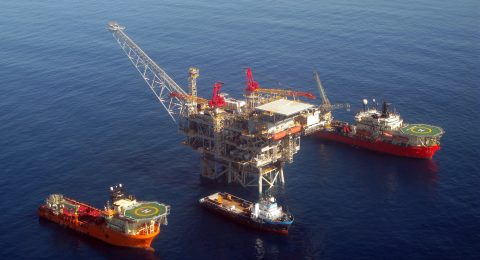
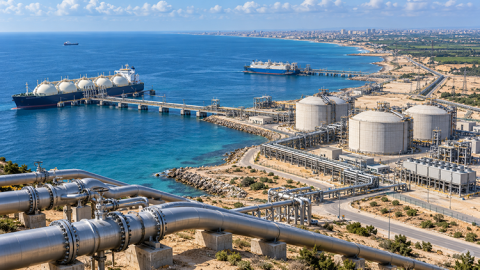
Coastal erosion is becoming an increasing threat to offshore and coastal energy infrastructure, particularly as climate change accelerates the rise of sea-levels and intensifies storms. Erosion can expose or weaken subsea pipelines near shore, damage export terminals and jetties, and increase flooding and foundation instability risks for coastal refineries and storage facilities. It also raises the likelihood of oil spills by compromising containment systems and disrupting access routes needed for maintenance and logistics.
These risks are becoming more visible in major energy-producing regions such as the Niger Delta in Nigeria, Ras Tanura in Saudi Arabia, and the US Gulf Coast, where offshore and coastal energy assets are increasingly exposed to erosion, storm surges, and extreme weather events. It is also becoming a major concern for countries with extensive coastlines and densely populated coastal regions. In Egypt’s case, the Nile Delta and Mediterranean coastline are particularly vulnerable. Rising sea levels and sediment loss accelerate erosion, while climate change magnifies storm intensity. For a country positioning itself as an East Mediterranean gas hub, these pressures make coastal defense and infrastructure resilience central to energy security planning.
TERAOM prepared a study exploring how traditional seawalls and coastal infrastructure could be redesigned to support renewable energy, environmental monitoring, desalination, and climate adaptation. According to climate assessments referenced in the study, parts of the Nile Delta face significant risks from future sea-level rise, while Alexandria is already experiencing increasing coastal erosion.
The wider Middle East and North Africa region is also warming faster than the global average, increasing pressure on infrastructure systems already facing environmental stress. These risks are especially important for the energy sector. Ports, offshore platforms, pipelines, logistics centers, and coastal industrial facilities all depend on stable marine infrastructure. Disruptions caused by flooding, erosion, or extreme weather events can directly affect supply chains, exports, and energy operations.
Historically, coastal defense systems were designed mainly to reduce physical damage from waves and storms. But as climate threats intensify, there is growing recognition that future infrastructure must do more than simply withstand environmental pressures. It must also contribute to sustainability and operational efficiency. As Vallarampara stated, “Coastal infrastructure must evolve from passive defense into active systems that contribute to both resilience and sustainability.”
From Passive Barriers to Multifunctional Systems
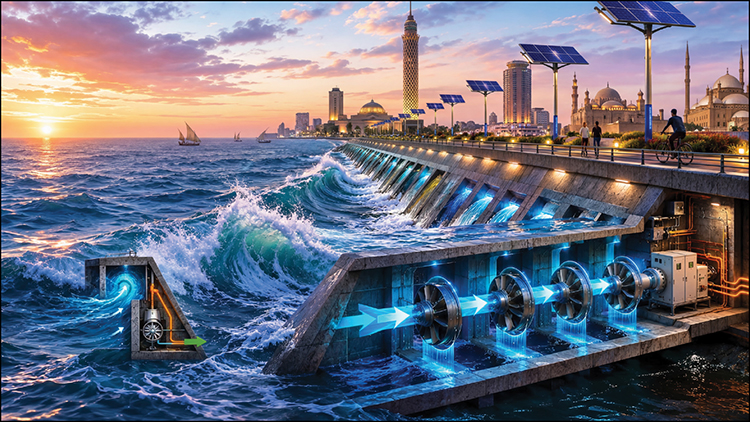
One of the emerging ideas in this area is the development of coastal systems that integrate renewable energy technologies directly into seawalls and marine infrastructure. Under this approach, seawalls could host wave, tidal, wind, and solar technologies capable of generating electricity along the shoreline. The energy produced could then be used locally to support industrial facilities, desalination plants, ports, or nearby offshore operations.
TERAOM has proposed ideas to redesignconventional seawalls into integrated coastal hubs that combine renewable energy systems, environmental monitoring, desalination technologies, and ecosystem restoration.
The framework also includes carbon management tools such as Direct Air Dust Capture (DADC) and ocean water column carbon monitoring. Together, these features would allow coastal infrastructure to play a role in emissions reduction while still serving its traditional protective function.
Although the framework remains conceptual rather than operational, it reflects the direction in which some infrastructure discussions are moving globally — particularly in regions where climate adaptation, coastal protection, and energy transition challenges increasingly overlap.
Smart Shores for a Changing Climate
For energy-producing countries like Egypt, the integrated system concept highlights how coastal infrastructure could evolve beyond traditional protection systems into integrated platforms that support emissions reduction, water security, environmental resilience, and operational efficiency. As many existing oil and gas facilities are expected to remain operational for years, integrating renewable energy into coastal and offshore infrastructure could offer “a practical pathway to reduce emissions from existing oil and gas operations,” according to Vallarampara. Some proposals linked to the concept also explore how renewable electricity generated through coastal systems could help electrify offshore operations and reduce reliance on diesel-powered equipment in marine environments.
The concept also reflects growing attention to water management and environmental restoration within future infrastructure planning. With Egypt facing increasing water pressures linked to population growth and climate change, some coastal infrastructure models include wave-powered desalination systems that use marine energy to help produce freshwater in coastal areas. At the same time, nature-based solutions such as mangroves, seagrass habitats, and artificial reefs are increasingly being considered alongside engineered infrastructure to reduce coastal erosion, improve biodiversity, and support blue carbon sequestration.
Another key element of this new framework is ocean intelligence and environmental monitoring. Advanced monitoring systems now allow operators to track waves, currents, sea temperatures, and other marine conditions in real time, helping improve operational safety and infrastructure resilience. The growing role of metocean intelligence — combining meteorological and oceanographic data — is becoming particularly important for offshore energy activities as climate risks intensify. As Vallarampara noted, “Real-time environmental intelligence is no longer optional, it is a frontline safeguard for coastal communities and critical infrastructure.”
Turning Coastlines into Assets
Egypt’s energy transition is evolving beyond the familiar metrics of capacity expansion and production growth. The new frontier lies in reimagining infrastructure itself—not simply as a defensive bulwark against rising seas, but as an active instrument of resilience, sustainability, and innovation. As climate pressures intensify along the Mediterranean coast, multifunctional systems that blend protection with energy generation, carbon management, and ecosystem restoration are emerging as strategic assets. They signal a shift from reactive adaptation to proactive transformation, where infrastructure becomes a platform for long term competitiveness and climate leadership. The coastline, once defined by its vulnerability, is now poised to become a driver of sustainable growth, a proving ground for integrated technologies, and a symbol of Egypt’s capacity to align environmental stewardship with energy resilience. In this vision, coastal infrastructure is no longer a line of defense—it is the foundation of a new model for national development and global climate leadership.