
Features / Industry Insights

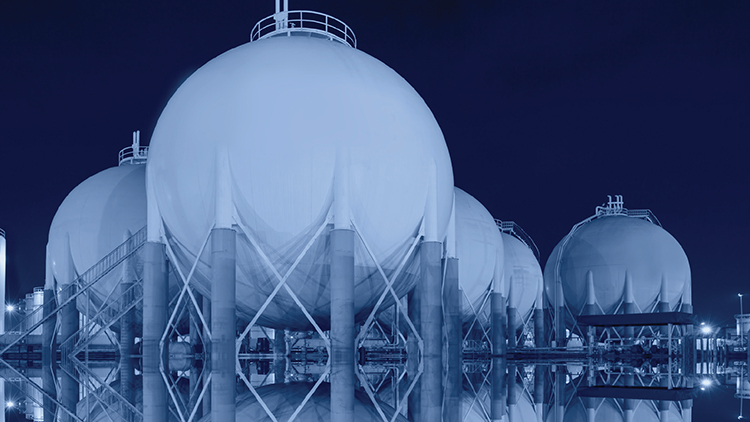
LNG Storage and Transportation: New Downstream Challenge and Opportunity

As the world cast around for clean and efficient alternative sources of energy to reduce greenhouse gas emissions and help combat global warming, the conversion to natural gas utilization has become a point of focus worldwide. It was no wonder to see the demand for natural gas increasing and so the demand for safe and cheap ways to transport and store.
Regeneration: Brownfields Live Another Day

To begin with, brownfield regeneration has been a very attractive topic in the oil and gas industry since the turn of the 21st century. With recent environmental regulations and frameworks pushing for land restoration and protection of contaminated sites, the oil and gas industry has faced tremendous pressure to comply with such requirements. However, before any brownfield site is redeveloped or regenerated for reuse, the brownfield must be effectively remediated from all potential hazards and toxins.

RTA: How to Make the Most Out of Your Data

As we embark on the threshold of digital transformation, we are simultaneously gaining access to data more than ever before. However, are we making the most out of it to particularly understand the fluid flow in a reservoir? Here is where Rate Transient Analysis (RTA) shapes our datausageto unlock wellbore flow performance.

Brownfields: Powering Through Prices Slump

As the year comes to an end, taking a look back to how it was for the oil and gas industry, 2020 certainly was anything but calm. The tumultuous fluctuation of the oil prices has rocked the industry quite a bit; from narrowing and sometimes halting production, to layoffs. Combined with an unforeseeable pandemic, it was the perfect storm that altered the balance of norms, but that does not mean that the oil and gas industry will not pull through. In fact, it has opened new doors for the industry to explore; whether in energy transition or taking advantage of brownfields.

Water Management Optimization: Breathing New Life into Brownfields

In the oil and gas industry, it is hard to produce barrels of oil without water as it exists in both onshore and offshore wells naturally. Due to this, sometimes oil companies have been referred to as water companies within the oil and gas sector. The ratio of produced water to oil varies from one well to another. CNBC reported, in 2017, that for each barrel of oil an average of three to five barrels of water is produced as well.

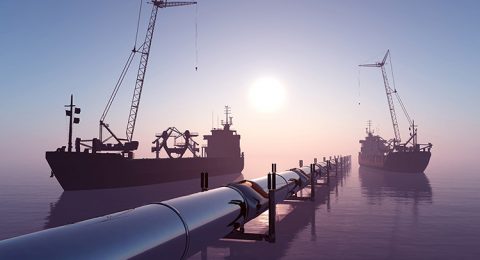
Enhancing Infrastructure for Deep Water Gas Pipelines

With natural gas becoming a topic of increasing interest, it is only expected that the infrastructure is revised and/or enhanced to further develop new projects. In fact, the Ministry of Petroleum and Mineral Resources (MoP) aims to expand the capacity of national gas grid over the coming years. Already, Egypt has successfully managed to increase the total grid length by 4,820 km over the course of 23 years. However, with Egypt striving further to be the region’s natural gas hub, it is important to ensure that the technical elements of pipelines – especially deep water pipelines – are at their prime capacities too.

The Making of A Multilateral Gas Hub

It is often said that multilateralism is key to advance regional as well as global energy goals. When the East Mediterranean gas saga began to unfold a decade ago, a regional accord had to be struck and multilateral agreements were necessary in order for a gas hub to be conceived. An increasing number of cooperation opportunities were put on the table; from pipelines to “pipedreams”.

Natural Gas: The Doorway to Green Energy

Recently, several oil companies have announced their plans to turn their oil business green in the upcoming years. The transition, for the oil and gas industry, from the currently normalized way of work to an environmentally friendly industry, is not easy, nor is it going to be smooth. However, going green should be on the horizon, especially after 175 countries, Egypt included, have signed the Paris Agreement Act. The Paris Agreement Act addresses climate change and deals with the problem of greenhouse gas (GHG) emissions. The oil and gas industry should align with the United Nations’ (UN) sustainable plan; which poses the question: could natural gas be the stepping-stone of a better green future?

Smart Pipelines Pigging: A Step-In Towards Integrated Safety

Pipelines are considered the best way to transport large amounts of oil and natural gas across various distances. Also, pipelines are the safest mean in terms of its impact on the environment and human health. This fact should be taken into consideration when it comes to petroleum sector.

Business-As-Usual: The Post-Coronavirus Definition

As employees worldwide begin to slowly transition into ‘business-as-usual’ operations, certain Health, Safety and Environmental (HSE) measures must be applied to prevent the fear of a potential second wave of the COVID-19 pandemic. In addition to adequate measures, employees must be aware and educated on the basic principles of proper use of Personal Protection Equipment (PPE), both inside and outside the work area.

Page 8 of 17

Login

Welcome! Login in to your account

Remember me Lost your password?

Lost Password