


Features / Industry Insights

The BullWhip Effect in the Oil and Gas Industry

Between the 1940’s and the 1970’s, the average annual price of oil fluctuated within a 6.5% band, but from the 1980’s until the last few years, the variation leapt to almost 11 times that amount. A range of factors have contributed to the most recent volatility, including political crises, financial speculation, and a sharp increase/decrease in demand.

Sanctioning Iran: The Coming Oil Embargo & Its Effect on the Oil Market

When, in July 2017, Total purchased a controlling stake in phase 11 of Iran’s South Pars natural gas field - projected to produce around 2 billion cubic feet per day (cf/d) - it seemed almost inconceivable that the French oil giant could pull out of the agreement just a year later. Following the conclusion of negotiations, Total’s chief executive, Patrick Pouyanne, lauded the deal as representing a “new page in the history of our partnership with [Iran]”. Fast-forward to July 2018 and it seems that this deal has already been placed in the shredder.

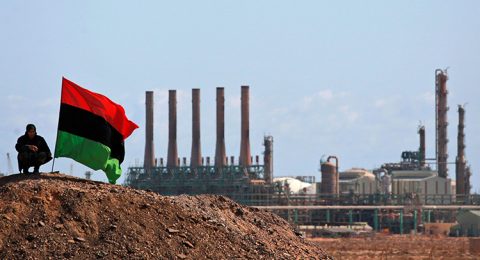
Seven Years After Gaddafi: Where Does the Libyan Oil Market Stand?

Libya possesses the largest proven oil reserves in Africa and the ninth biggest reserves worldwide with an estimate reserves of 47.1 billion barrels. The country used to be a main oil exporter to Europe for decades as its production reached a peak of 3 million barrels of oil per day (b/d) in the 1970s. Only seven years ago, before the uprising that ended the 42-year rule of Muammar Gaddafi, the north African country was pumping more than 1.6 million b/d. As the country is currently torn between rival governments and tens of militias, it is struggling to maintain a production level of 1 million b/d.

The Collapse of the Venezuelan Oil Industry

In 2001, Venezuela was the richest country in South America, as stated by the World Economic Forum. The country’s economic position in the region was closely tied to its oil reserves, which - to this day - are the largest known reserves in the world. Under the reign of former President Hugo Chavez, the Venezuelan oil industry provided the capital to fuel large-scale socialist reforms. Now, five years after Chavez’s death, the economy and energy sector have collapsed, and the country is in a state of penury.

New Oil Discoveries: Boost Western Desert Prospects

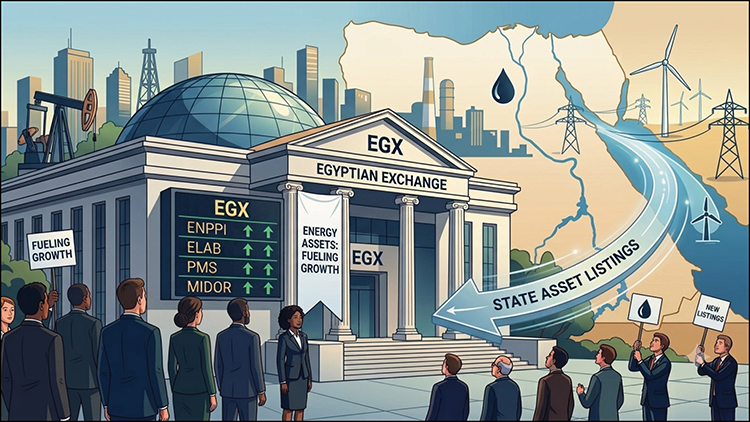
Egypt is both one of the major oil-producing non-OPEC countries and one of the oldest energy producers in the Middle East. According to Oxford Business Group, the country benefits from low production costs, and a relatively large volume of both onshore and offshore oil and gas fields.

Oil Price Fluctuations: Can Egypt’s Economy Stand the Strain?

Crude oil prices have reached high levels as global oil inventories have generally declined from January 2017 through April 2018. The fluctuating prices are affecting both importing and exporting countries. Exporting countries, especially the members of the Organization of the Petroleum Exporting Countries (OPEC), are facing production swings after signing the oil production cut deal and its extensions. The latest amendment on the deal was approved after OPEC’s meeting on June 22.

Quantum Computing, Technology of the Future

Quantum computing, an emerging technology, has the potential to bring massive changes to many industries, including the oil and gas sector, in the near future, as researchers expect.

Big Data Analysis for Oil & Gas Operational Gains

In 2006, Clive Humby, then the architect of a supermarket loyalty scheme, expressed the now-popular belief that “data is the new oil”. He was talking about the potential value in using the massive amounts of customer data generated by the Tesco Clubcard system, but the axiom rings just as true for the oil and gas industry.

Cybersecurity in the Oil and Gas Sector: Problems and Solutions

The recent technological boom in wireless communications, sensor applications and automated machinery is bringing untold benefits to the oil and gas industry; from enhancing remote monitoring capabilities and providing detailed analytics, to revolutionizing data storage and reducing operational costs. However, the connection of industrial control systems (ICS) and supervisory control and data acquisition (SCADA) systems to the wider digital network has exposed critical pieces of infrastructure to cyber threats.

Energy Subsidy Cuts: The Hardest Part of Egypt’s Economic Reform

Egypt’s government has committed to periodically increasing the pre-tax cost-recovery ratio on most fuel products in order to achieve 100% in fiscal year (FY) 2018/2019 and to eliminate electricity subsidies by FY 2020/2021, according to the International Monetary Fund (IMF).

Page 17 of 18

Login

Welcome! Login in to your account

Remember me Lost your password?

Lost Password