Features / Research & Analysis

Natural Gas Exporting Vs. Re-exporting: Maximizing Egypt’s Regional Competitive Advantage

With bright prospects in natural gas production, Egypt is willing to regain its position as a natural gas exporter. In order to reach this target and successfully reduce the gap between supply and demand, the country is taking serious steps towards increasing exploration and production (E&P) activities, in addition to diversifying energy mix.
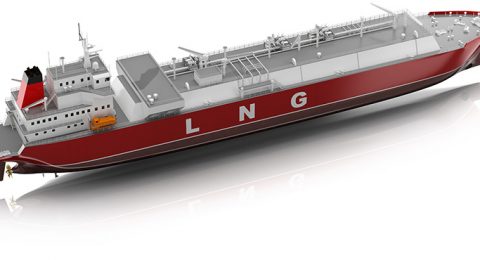

The Impact of LNG Imports Reduction on Egypt’s BOP

Egypt is aiming to become a regional energy hub following the recent discoveries of large offshore gas reserves in the Eastern Mediterranean and the Nile Delta. The country’s goal is essential during the current transitional period as the energy sector, especially the oil and gas industry, remain the major driver of Egypt’s Balance of Payments (BOP).

IOCs and Investment An Examination of the Lure of Egypt’s Investment Climate

Egypt’s exploration and production (E&P) activities are by far one of the most significant sectors activities attracting investments into the country, representing approximately 16% of the country’s Gross Domestic Product (GDP), according to the Ministry of Petroleum and Mineral Resources.

The Market Dynamics of Egypt’s Petrochemical Industry in the Era of Subsidy Elimination

Egypt’s petroleum sector is starting a new era of energy self-sufficiency. The Ministry of Petroleum and Mineral Resources has already announced the first milestone in its ambitious plan by declaring that Egypt will achieve self-sufficiency of natural gas before the end of 2018.

Understanding the Impact of Egypt’s Economic Reform on Petroleum Investment

Egypt’s oil and gas industry has always been one of the core indicators of the health of the country’s economic environment. To note, in response to the fluctuations resulting during the early phases post 2011, Foreign Direct Investment (FDI) influx into the industry saw a decline, decreasing from EGP 54.3 billion in the Fiscal Year (FY) 2011/2012 to around EGP 25.5 billion in FY 2013/2014, according to Egypt’s Ministry of Planning.

E&P Risk Analysis: Expecting the Unexpected

Exploration and production (E&P) of hydrocarbons is a high-risk venture. Geological processes are dynamic and uncertain with respect to structure, reservoir seal, and hydrocarbon charge. Economic evaluations of E&P activities contain uncertainties related to costs, probability of finding and producing economically viable reservoirs, global oil prices, and supply and demand dynamics.

High Drilling Cost: Efficiency’s Main Challenge

The fall of international oil prices has forced industry players to consider controlling, optimizing, or cutting drilling cost to increase efficiency and maintain positive profitability ratios. Drilling a well is a costly process with a high element of risk that requires strict monitoring. Exploration and production (E&P) companies may spend 50% or more of their capital budgets on drilling and completion costs.

A Deeper Look into the Prospects of Hydrocarbon Recovery Factors

Hydrocarbons will likely remain the major component of the global energy mix, especially as energy demand is expected to increase by 50%, according to a paper published in the Journal of Applied Polymer Science by Miller et al. The contribution of renewable energy sources could prove insignificant in the face of growing demand.

TAHRIR Petrochemicals Complex

The current administration aspires to make the Suez Canal and the area surrounding it the spearhead of Egypt’s economic revival and its investment hub. The region has mega projects that depend on the Suez Canal for their economic feasibility, such as the Suez Canal Economic Zone (SCZone). and the New Administrative Capital, which part of its economic lure is its connection both to the SCZone and the seaports at the southern tip of the Suez Canal.

An Examination of Egypt’s Zero-Mazut Plan

To reach and maintain prosperity, countries must continually seek new development. Like others, Egypt is on a continuous journey toward the development of its different sectors, especially the downstream oil and gas sector. The government is adopting different methods and plans to strengthen its downstream capability and, eventually, to boost its economy.

Page 2 of 12

Login

Welcome! Login in to your account

Remember me Lost your password?

Lost Password