

Features / Overview

The Ministry’s Roadmap to Generate Future Leaders

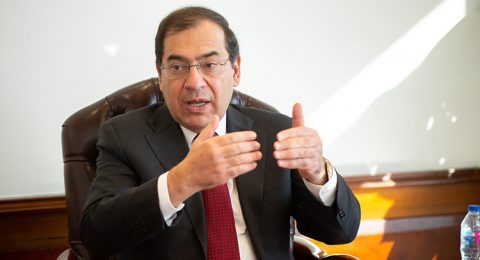
Thanks to the vision of the Minister of Petroleum and Mineral Resources, Eng. Tarek El Molla, the Egyptian oil and gas sector has begun its journey towards developing the sector for a brighter future. This was achievable through the Modernization Project, which stemmed from the ministry’s belief in creating motivated, talented, and well-developed young professionals to succeed in this journey and accomplish its future ambitions. The Modernization Project specified a whole pillar, the Human Resources (HR) Management, for this aim.
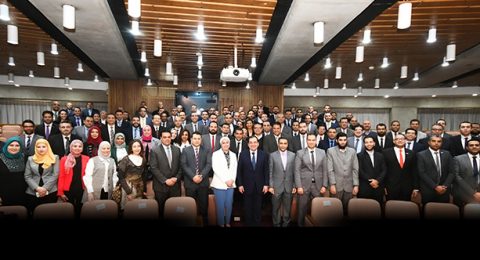

The Middle Management Program: Rebuilding Egypt’s Human Calibers

In accord with Egypt Vision 2030; the Ministry of Petroleum and Mineral Resources under the patronage of Minister Eng. Tarek El Molla, has been revamping the oil and gas sector by an efficient, sustainable and modern strategy; also known as the Modernization Project.

Modernizing Human Resources: A Propelling Potential

The Ministry of Petroleum and Mineral Resources (MoP) has succeeded in achieving a chain of unprecedented milestones through the Modernization Project. The project was launched at the end of 2016, aiming at modernizing the Egyptian oil and gas sector. The implementation of such an inclusive strategy plays a vital role in boosting the country’s economic growth, in addition to transforming Egypt into a regional energy hub.

Development Programs: An Efficient Future for Human Resources

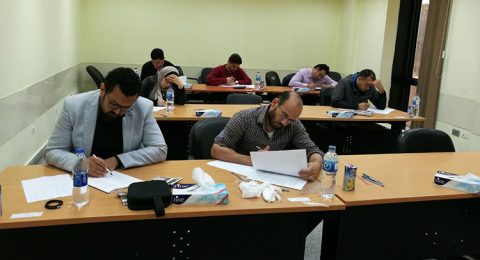
Egypt has embarked on a development plan in collaboration with international oil companies (IOCs), as human resources (HR) training programs play a key role in Egyptian oil and gas companies. These trainings are a catalyst to attracting valuable talents, developing their technical know-how, and qualifying them to take on leadership positions in the future.

HSE Completes the Modernization Project’s Picture

Under the umbrella of the Modernization Project, health, safety and environment (HSE) comes as a top priority to secure the industry’s work environment. This stems from the belief that the oil and gas industry’s success is based on lowering its risks. Thus, the Ministry of Petroleum and Mineral Resources (MoP) has endeavored to ensure safety on both levels; the employees’ safety and the occupational safety.

A Deeper Look into Egypt’s Production Rates of Oil and Gas In 2019

An increase in production rates comes as a sign of success for the oil and gas sector in Egypt. The total production of crude oil and natural gas recorded around 6.8 million tons in June 2019, up from 6.1 million tons in June 2018. In July 2019, crude oil production reached around 675,000 barrels per day (b/d). It is also worth keeping in mind that the Ministry of Petroleum and Mineral Resources spares no effort in maintaining a minimum crude oil production rate of around 670,000 b/d; it also targets raising the daily production of crude oil to 720,000 b/d by the end of fiscal year (FY) 2019/20.

OSHA: Putting Process Safety Management into Motion

For many decades, the oil and gas sector has witnessed the occurrence of many accidents. The mounting number of these incidents rang the alarm bells for the sector’s experts to work on ameliorating the standards of Health, Safety, and Environment (HSE) in order to eliminate these catastrophes.

Egypt’s Oil and Gas Mergers and Acquisitions: A Propelling Potential

Thanks to the prosperous state in the Egyptian oil and gas industry, the investment climate has altered accordingly. In fact, the current state has attracted many International Oil Companies (IOCs) to implement new projects or even expand their current investments. As a result, the Mergers and Acquisitions’ (M&As) transactions in Egypt have witnessed a boom recently.

Gas Regulation in the EMGF Countries

Recent decades have seen a marked boom in the development of offshore oil and gas activities. Due to the increasing energy demand and new technological innovations, offshore drilling extended their activities in the deep water areas. As of today, almost a third of the oil and a quarter of the natural gas consumed in the world comes from the underwater. This rush to offshore oil and gas exploration and production is not about to end as forecasts show a continuing growth of production in traditional offshore regions and significant development in new areas, particularly the Eastern Mediterranean region.

Energy Subsidy Reform Program: The Full Picture

Energy subsidy reform is a main pillar of Egypt’s economic reform program. The government has implemented the last round of subsidy cuts in June 2019 and the subsidy's system reform is supposed to be ongoing until 2020. It is worth noting that according to the Middle East and North Africa (IFPRI) paper, titled “Phasing Out Energy Subsidies as Part of Egypt’s Economic Reform Program: Impacts and Policy Implications,” the first wave of the fuel subsidy cuts began in 2014 by increasing diesel prices by 64%, 80-octane gasoline by 80%, and 92-octane gasoline by 40%. Overall prices averaged at a 50% increase; however, despite the increase, fuel products remained heavily subsidized; hence, the government continued its fiscal reform by implementing further cuts.

Page 9 of 15

Login

Welcome! Login in to your account

Remember me Lost your password?

Lost Password