In an age of rising global uncertainties, energy security has become a critical challenge for governments and economies alike. As one of the largest energy importers in the Middle East, Egypt is also an emerging hub for regional gas exports. Recent shocks, from the COVID‑19 pandemic and Russia’s invasion of Ukraine to the ongoing US-Iran war and the closure of the Strait of Hormuz, have underscored the fragility of global supply chains. Against this backdrop, Egypt has adopted a layered strategy: contingency planning and petroleum stockpiling to hedge against crises. This pragmatic balancing act positions Egypt to weather immediate disruptions while laying the foundation for a resilient energy future.
Strategic Hedging Against Crisis
Over the past few years, the global energy scene has been going through one hurdle after another. Starting with the COVID-19 lockdown, through the Russian invasion of Ukraine, and recently facing the complexities of regional instability caused by the US-Iran war, and the closure of the Strait of Hormuz.
This comes amid global uncertainties as global energy markets have experienced sharp volatility since early March, following Iran’s threats to target vessels transiting the Strait of Hormuz in retaliation for US and Israeli strikes. Meanwhile, Iranian strikes in March have disabled roughly 17% of Qatar’s liquefied natural gas (LNG) export capacity, disrupting flows from the Ras Laffan hub and intensifying global supply concerns.
Accordingly, Egypt’s government is actively hedging against energy crises by strengthening contingency planning and securing petroleum reserves. To ensure energy security remains a cornerstone of national stability, Egypt has launched a proactive suite of measures aimed at safeguarding domestic supplies of natural gas and petroleum. This initiative was drawn ahead of the US-Iran war, and it has enabled Egypt to safely navigate through the latest global energy crisis.
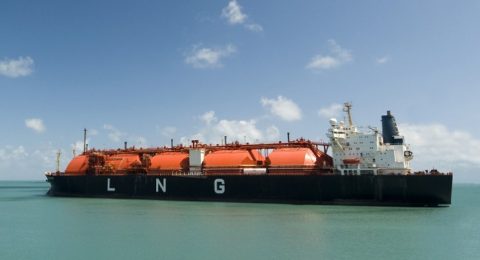
In 2025, the Ministry of Petroleum and Mineral Resources (MoPMR) pursued a proactive strategy to secure sustainable LNG supplies for electricity, industry, and households. This included diversifying sources through spot shipments and long-term contracts with international partners, supported by new infrastructure such as Floating Storage and Regasification Units (FSRUs), now central to energy security. Coordinated efforts with the Ministry of Electricity and Renewable Energy ensure operational flexibility and guarantee the electricity sector receives the natural gas volumes needed to maintain grid stability.
The Synergy of Renewables and Hydrocarbons
Egypt’s energy mix relies heavily on natural gas (58%) and oil (34%), making petroleum reserves vital for stability, according to the International Monetary Fund’s (IMF) July 2025 report. The government aims to raise clean energy’s share to 45% by 2028, as stated by Minister Mahmoud Esmat in May. This shift represents strategic diversification rather than a simple replacement. Helal Konsoua, Egypt Country Manager at Mediterra Energy Corporation, a Canadian based international upstream Oil and Gas Company focused on exploration and development opportunities in Africa and the Middle East, emphasizes that green hydrogen and solar energy can play a strategic role in strengthening Egypt’s long-term energy resilience by reducing dependence on imported fuels and diversifying the country’s energy mix.
Konsoua adds that “the development of green hydrogen and large-scale solar projects can also help reduce the significant US dollar outflow currently associated with Egypt’s energy deficit and imported energy requirements. In addition, lower and more stable energy costs would support industrial growth and broader economic expansion, which in turn would strengthen the country’s ability to maintain steady and regular payments to the oil and gas industry.”
“However, in the near and medium term, Egypt’s oil and gas sector will continue to remain critical for economic stability, industrial growth, and foreign currency generation. Therefore, the optimal strategy is to develop renewables in parallel with responsible hydrocarbon development rather than viewing them as competing priorities,” according to Konsoua.
Restoring Investor Confidence and Financial Credibility
Complementing this diversification, a critical component of this energy security puzzle is the relationship between the state and International Oil Companies (IOCs). The MoPMR announced its plans to settle all arrears to IOCs by June 2026. “The government’s commitment to address and clear IOC arrears sends a very positive signal to international investors and operators, especially considering the geopolitical conflicts surrounding the region. Payment certainty is one of the most important factors influencing capital allocation decisions in the upstream oil and gas industry,” Konsoua points out. By actively addressing the arrears situation despite a challenging regional environment, the Egyptian government is reinforcing the long-term potential of the sector.
This financial credibility is essential for maintaining the momentum of ongoing projects. For instance, Mediterra Energy Corporation has continued to invest heavily over the last several years, operating 4–5 drilling rigs continuously despite global market volatility, according to Konsoua. The steady progress in clearing arrears has reinforced investor confidence, encouraging continued capital inflows into Egypt’s energy sector and the introduction of advanced technologies to unlock the country’s substantial hydrocarbon reserves. With extensive geological potential, well‑established oil and gas infrastructure, and a highly skilled workforce shaped by decades of industry expertise, Egypt is well‑positioned to sustain growth. Preserving financial credibility and operational stability will remain essential to attracting the long‑term investment and technical know‑how required to keep the sector dynamic and globally competitive.
Pushing Output, Preserving Reserves
In parallel, accelerating production is a key priority for the Ministry of Petroleum and Mineral Resources, aimed at boosting domestic output and easing the impact of rising global energy prices, though this effort must be viewed within the wider context of global industry trends. The International Energy Agency (IEA), in a September 2025 report, warned that average decline rates in oil and gas production have accelerated sharply, particularly as deepwater and shale resources are increasingly tapped. As IEA Executive Director Fatih Birol emphasized, declining rates are often overlooked in investment discussions, but the pace of decline has been rising in recent years.
This reality underscores the need for balance. While production acceleration is a priority, it must be carefully managed through strong reservoir practices. “However, in the oil and gas industry, the more we drill and operate, the more we learn about the reservoirs. This knowledge often generates incremental production opportunities, which in turn help finance the application of new technologies and improved recovery methods,” Konsoua explains.
He added that In mature oil fields, in particular, enhanced recovery techniques combined with innovative drilling and reservoir management approaches can unlock significant additional reserves and materially increase ultimate recovery.
In this regard, He highlights that modern technologies such as horizontal drilling, improved water management, advanced reservoir surveillance, and optimized production practices can significantly improve both recovery efficiency and field life. There is a common misconception that accelerated drilling would lead to steeper depletion, but can sometimes be misleading and may create a false sense of depletion, leaving substantial valuable reserves undeveloped underground.
Ultimately, the key lies in striking a balance: maximizing ultimate recovery rather than chasing short-term production gains. Short-term optimization generates revenue that can be reinvested into exploration, ensuring long-term sustainability and energy security. “By harmonizing technical mastery with financial reliability, Egypt is positioning itself not only to weather the current global energy storm but also to build a resilient, multi-faceted energy future,” according to Konsoua.
Egypt’s energy policy balances short-term crisis management with long-term sustainability. The government has reinforced contingency planning, diversified LNG supplies, and expanded domestic production to cushion against global volatility. At the same time, ambitious targets in solar, wind, and green hydrogen mark a deliberate shift toward resilience and diversification. Overall, Egypt’s strategy, combining stability; innovation; and diversification, offers a model for managing global energy turbulence, safeguarding national security, and strengthening its role as a regional hub.