Baker Hughes reported revenue of $6.74 billion for the second quarter (Q2) of 2026, down 2% year-on-year (YoY) from $6.91 billion despite a 2% sequential increase. The energy technology company also posted net income of $681 million, down 3% compared to the same period last year and 27% lower than the previous quarter.
The decline was mainly due to the sale of its Precision Sensors & Instrumentation (PSI) and Surface Pressure Control (SPC) businesses, which no longer contribute to the company’s revenue.
Meanwhile, adjusted net income rose 3% YoY to $640 million, while adjusted EBITDA increased 2% to $1.23 billion. Baker Hughes said that the YoY increase was primarily driven by productivity, price, cost-out initiatives, and FX, partially offset by inflation, lower volume, change in business mix, and the PSI and SPC dispositions.
Chairman and CEO Lorenzo Simonelli said, “Baker Hughes delivered another strong quarter, reflecting the breadth of our portfolio and continued momentum across data center, gas infrastructure, and upstream markets. Disciplined execution and our ability to effectively navigate ongoing Middle East challenges contributed to Adjusted EBITDA exceeding the high end of our guidance range.”
Simonelli also expressed confidence in achieving the midpoint of the company’s full-year guidance, supported by favorable market fundamentals despite ongoing geopolitical uncertainty in the Middle East.
The company’s Industrial & Energy Technology (IET) business secured a record $7.1 billion in orders, more than double the level recorded a year earlier, while backlog increased 19% to an all-time high.
During the quarter, Baker Hughes received major contracts across the liquefied natural gas (LNG), power generation, gas infrastructure, and digital technology markets. The company was awarded contracts by US Venture Global to supply liquefaction equipment for LNG projects in Louisiana and secured additional LNG-related awards from US Cheniere and US Bechtel supporting Sabine Pass Train 7.
The company also strengthened its position in floating LNG after winning an order from Golar to supply gas turbine-driven refrigerant compressor trains for a 3.5-million-ton-per-year (mt/y) floating LNG facility, while extending a multi-year services agreement with Nigeria LNG for Train 7 turbomachinery.
Growing electricity demand from data centers also continued to drive orders. Baker Hughes secured a major contract from US Dynamis Power Solutions to supply 76 NovaLT™16 gas turbines with approximately 1.3 gigawatts (GW) of generation capacity. It also signed an agreement with US Kodiak Gas Services, including an initial order supporting 1 GW of power generation capacity and a framework that could expand to 1.8 GW.
In the Middle East, the company received significant compression equipment awards for offshore gas recovery projects and Saudi Aramco’s Uthmaniyah gas field development, while continuing to expand its digital solutions portfolio through agreements with China’s SINOPEC, Brazil’s Petrobras, and Kuwait National Petroleum Company (KNPC).
Simonelli said broadening customer demand and an expanding pipeline across industrial and energy infrastructure markets prompted Baker Hughes to raise its full-year IET order guidance and increase its outlook to more than $45 billion.
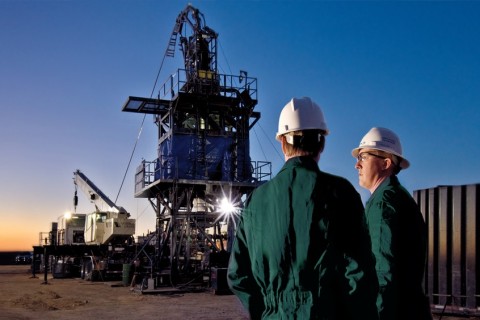
Baker Hughes provides solutions to energy and industrial customers worldwide in over 120 countries to take energy forward, making it safer, cleaner and more efficient for people and the planet.