The global energy landscape is changing because of electrification, industrial growth, and the urgent need to deal with climate change. But this change isn’t happening in the same way everywhere. While demand for all types of fuels is still rising in emerging markets, it is contracting in advanced economies. Mature economies have shifted from heavy industry to services, which consume far less energy, while efficiency gains in buildings, transport, and manufacturing have steadily reduced consumption intensity. Slower population growth and aging demographics limit household demand, and strong commitments to decarbonization have accelerated the move away from fossil fuels.
This difference underscores a gap between policy goals and operational reality, where hydrocarbons remain essential for heavy industries, long haul transport, and grid stability. Despite the rapid scaling of solar and wind, structural barriers—including intermittency, infrastructure deficits, and high financing costs—persist. Combined with the surge in AI driven power demand, the global system is shifting toward a model of “Energy Addition” rather than the outright substitution of traditional fuels.
Global Energy Demand Dynamics
Global energy demand continues to rise steadily, propelled by economic expansion, widespread electrification, and climate related pressures. The International Energy Agency (IEA) reported that global electricity demand grew by 2.2% in 2024, a significant acceleration that surpassed the previous decade’s average growth rate. Within specific sectors, electricity demand surged by over 3%, driven primarily by data centers, rapid electric vehicle (EV) adoption, and escalating cooling needs in hotter regions. Yet this global picture conceals stark contrasts between the Organization for Economic Co operation and Development (OECD) and non OECD realities.
Energy analyst Barış Sanlı emphasizes that OECD nations are the only group experiencing a contraction in demand, while energy demand for the rest of the world continues to expand across all major fuels. He explains, “It is only OECD countries, perhaps excluding the US and Canada, that are seeing a demand contraction. Therefore, these institutions are reflecting this as a global reality; however, for the rest of the world, demand for all energy resources remains quite strong.”
Shrinking demand in OECD countries stems from improved efficiency, structural economic shifts from manufacturing to services, and saturation of electricity demand.
In contrast, most of the world faces demand growth too rapid for any single energy source to meet in isolation. Sanlı argues that global conversations framed by OECD institutions often misrepresent the needs of emerging economies. He notes, “If your demand is shrinking, it is a transition. If your demand is growing, you need all resources. If your demand is shrinking and you have a disproportionate influence in world energy policy discussions, you try to reflect this and force others to align with your reality.”
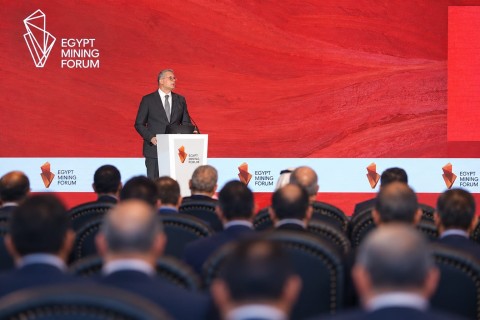
Emerging economies often revert to energy addition, using many sources of energy, rather than substitution once demand accelerates. Olivier Le Peuch, CEO of SLB, noted at the Egypt Energy Show (EGYPES 2026) that “every country has its own resources, infrastructure, and policies shaping distinct energy systems. This diversity drives ‘energy addition’ everywhere, with each nation choosing its own path—local by design, global by capability.”
Mohamed Refaat Habieb, Energy Efficiency and Renewable Energy General Manager at the General Petroleum Company, underscores that “it is more realistic to think of renewable energy as an addition to our current system, rather than a replacement for oil.”
Hydrocarbons Remain Core
Despite rapid growth in renewables, hydrocarbons continue to supply the majority of global primary energy. Oil, natural gas, and coal consumption each reached record highs in 2025, rising by 0.7%, 1.5%, and 0.4% respectively, reflecting their indispensable role in power generation, petrochemicals, and industrial heat, according to the IEA’s 2025 Statistical Review. These figures underscore the continued reliance on traditional fuels in sectors where low carbon alternatives remain limited or economically expensive.
This aligns with Habieb’s assessment: “While solar and wind are expanding, hydrocarbons remain essential for providing reliable, base-load power 24/7. In energy-intensive sectors like heavy industry and long-haul transport, hydrocarbons maintain a decisive cost advantage over green alternatives, which currently remain economically prohibitive for these specific applications.”
Renewables as Additions, Not Replacements
Solar and wind are expanding rapidly, with solar photovoltaic (PV) capacity growing by more than 30% worldwide throughout 2023–2024. Yet intermittency, storage, and grid integration challenges prevent these sources from fully displacing hydrocarbons. Sanlı notes, “Renewables may not suffer from significant supply chain problems. Clean energy technologies are modular; I see solar as an installation economy and batteries as a container economy.”
While China’s dominance in clean tech adds complexity—securing market control by undercutting prices—low cost Chinese technology simultaneously enables developing nations to expand energy access affordably. However, this expansion is being outpaced by a new industrial catalyst: Artificial Intelligence.
The rapid ascent of AI is driving unprecedented electricity demand that is straining global grid capacities. This creates a functional paradox where the digital tools designed to optimize the energy transition are intensifying the physical pressure on power systems. IEA data underscores this shift, reporting that global data center consumption rose 17% in 2025, with AI focused facilities surging by 50%.
Sanlı observes that while AI can help ease mineral bottlenecks, the clean energy economy remains tethered to “hard assets”—turbines, copper wiring, grids, and industrial scale batteries. Building these physical components requires long lead times for mines and processing plants, ensuring the transition remains a physical challenge that software cannot bypass. Consequently, the global market is moving toward “Energy Addition” rather than “Substitution.” Renewables are expanding to meet this surging digital demand, but they are doing so alongside traditional fuels. Within this mix, natural gas remains vital as a flexible peaker source, providing the high density, reliable power required to stabilize AI driven data centers when renewable supply falters.
The Continued Necessity of Hydrocarbons
Energy realism acknowledges hydrocarbons’ critical role in market stability and industrial supply. Habieb stresses that “the challenge isn’t just the price of energy; it is the infrastructure. To switch completely, we need to rebuild our power grids and have massive battery storage, which costs trillions of dollars. Also, making enough batteries requires huge amounts of minerals like lithium.”
Decisions by OPEC+ remain vital, as price stability encourages companies to invest billions in long term projects, preventing future shortages. Habieb points out, “OPEC+ helps keep oil prices stable. When prices are stable, oil companies feel safe to invest billions of dollars in new, long term projects. Without this stability, companies become afraid to spend money, which could lead to energy shortages in the future.”
Sanlı adds that leaders must prioritize execution over political slogans. “In these times, I think leaders must focus, prioritize, and execute. Everyone is impacted by energy and energy prices. But you have to focus on the most important part of the problem. Solar may create imbalances, but it is a very cost effective solution to energy supply. Engineers may resist, but politicians must force.”
The way global energy demand is going, it looks like the world is not going to make a clean break from hydrocarbons. Instead, it looks like having a layered system where renewables grow along with oil, gas, and coal is more likely. Emerging economies that are growing quickly cannot rely on just one source, and the fact that advanced economies’ demand is declining shouldn’t change the global story. The problems with infrastructure, financing, and mineral supply chains show that transition isn’t just about slogans; it’s about getting things done—building grids, securing resources, and making sure investors trust organizations.