

Features / Industry Insights

The Pinnacle of The Pandemic: Investing in Natural Gas

To begin with, the natural gas investment climate as of Q1 2021 has proved to be a financial opportunity that cannot be ignored for both the upstream and downstream sectors. The trend in natural gas popularity has changed dramatically between 2019 and 2021; starting with a low-sloped rise, continuing with a plateau and eventually exponentially increasing at present. However, before further analyzing the current state of the financial market, it is important to understand the journey that led to the present day interest in natural gas.

Pulling the Threads of Private Investments

For years, the privatization program has been oscillating back and forth with promises that fail to see the light of day. However, the government has been pushing forward with the program’s comeback in an attempt to flourish the investment climate and pump more foreign direct investments (FDIs) amid the coronavirus pandemic. One of the companies that has kickstarted the program and is currently being offered to the private sector is the state-owned oil distribution company, Wataniya Petroleum. Will this perhaps be the first of many national oil companies (NOCs) to be up for grabs by private sector investors?

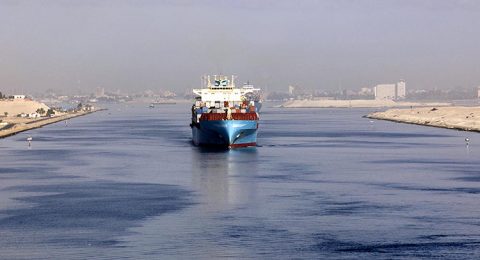
The Suez Canal: Weathering Global Trade Storm

International organizations have declared 2020 as one of the worst years for the world economy. The COVID-19 consequences were to blame for the economic damage that left only a handful of countries to come on top with little economic damage by the end of the year. Trade, being one of the main driving forces of the economy, was not able to escape a hit over the past year too. As some parts of the world begin their way to recover, health-wise and consequently, economic-wise, Egypt Oil and Gas (EOG) takes a look back on what 2020 has brought on the global and national trade through the lens of the Suez Canal; one of the most vital links connecting the world economy.

Operational Excellence Builds Refineries’ Profit Margin

The refinery industry is one of the essential pillars of the petroleum sector. The Egyptian government has given great attention to this important industry, where Egypt is ranked as the second-highest oil refining country in Africa by refining about 23% of the total domestic refined oil in the continent.

2020: The Odyssey of Crude Oil Prices and Production

To begin with, the coronavirus has affected the global energy markets as well as the primary energy consumption in multiple ways. While this global pandemic was only seen as a minor threat to the city of Wuhan in China, its turbulent and intense effect on the energy market hasn’t been seen since the Swine Flu that spread between 2009 and 2010, with a similar global impact. The unpredictability of the coronavirus’s spread has caused a major fluctuation in the oil and gas industry, especially when concerned with supply and demand.

The Golden Year of Egypt’s Mining Sector

One year ago, the mining sector vouched for a fundamental change from within its core practices. That change came in the form of new legislative reforms and new opportunities that were sound enough to power through a pandemic. Throughout 2020, the sector retained its bold moves only to prove that Egypt’s mining potential is above any crisis. This one-year journey was full of exciting news that spearheaded the development of the sector.

Egypt’s Refining Sector Makes A Comeback in 2020

What a year it has been for the global oil and gas industry and all its divisions! Unexpected as it was, it was not all downs, at least for Egypt. Despite the shock of the COVID-19 pandemic, Egypt’s petroleum sector has had a strong year on so many levels and its refining division is no exception.

Navigating The Pandemic’s Next Wave

To begin with, the year had started with, what seemed like a temporary change in plans, as a result of the Coronavirus (COVID-19) pandemic. In fact, experts had thought that the declining oil prices and excessive storage of oil and gas products were an unpredictable phenomenon. However, it took nearly 6 months after the impact of the global pandemic (Q3 2020) for experts to hypothesize that COVID-19 is here to stay for another couple of years. Not only that, but there is an expected 2nd wave of the COVID-19 pandemic that is expected to hit between Q4 2020 and Q1 2021. The difference between the 2nd wave and the 1st wave of the pandemic is that this time, industry experts are ready for whatever comes their way.

CNG: Driving on The Route to Success

President Abdel Fattah El-Sisi announced last July that all cars in Egypt will have to run on compressed natural gas (CNG), saying that new cars will not be licensed until they are converted. The president’s remarks were then followed by an array of amplifications to the government’s directives; all of which guarantee that CNG is optimum for all vehicles.

Delving into The Petroleum Trade Agenda

Crude and economy walk hand in hand and the 2020 economic turmoil is a proof of that. Despite the declared intention of energy transition and the pandemic-induced prices, it seems that the world will keep relying on crude for power for the near future. This may not be only good news for upstream oil companies but also for the petroleum trade sector, which may have another story to tell about the COVID-19 crisis.

Page 7 of 17

Login

Welcome! Login in to your account

Remember me Lost your password?

Lost Password