

Features / Industry Insights

Employing More Women: The Remedy to Brain Drain in The Energy Sector

To begin with, some of highly trained and educated people prefer to migrate from developing and less industrialized nations to wealthy, more developed countries. This phenomenon otherwise known as the ‘brain drain’ suggests that individuals leave their countries for better opportunities elsewhere as there are few opportunities to use their talents or skills locally.


Transitioning The Oil and Gas Industry to Low-Carbon

To begin with, although a rising number of oil and gas businesses are committing to net-zero targets, not all are sure how to get there. With that, energy transition is viewed by oil and gas companies as a mixed bag of possibilities, hazards, and a complicated phenomenon. The current crisis has demonstrated how sensitive the global economy is to underlying threats, one of which is climate change. Even before COVID-19, there was growing demand to transform the energy system away from one dominated by hydrocarbons further towards one driven by low-carbon sources.

The Uphill Quest for Natural Gas

Although the hydrogen sector is generating a lot of hype and millions of dollars, not even all hydrogen is made equal. Although hydrogen is by far the most plentiful resource in the world, it must be separated from its source, which requires energy. At the present, it's largely made from grey hydrogen, which comes from fossil resources like natural gas as well as oil.

Promoting Net-Zero Carbon in the Oil & Gas Industry

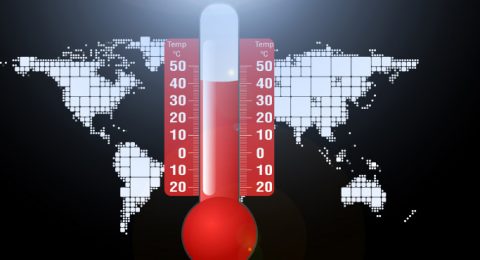
According to climate researchers, net CO2 emissions must be zero in order to maintain global average temperature stability. To meet the Paris climate targets, net CO2 emissions must reach zero far before temperatures increase by over 2°C. Afterward, no more CO2 may be discharged into the air until it is compensated by CO2 removal.

Carbon Capture Potential in Egypt

To begin with, it can be noticed with the increasing oil and gas activities, that there has been an exponentially large amount of greenhouse gases (GHGs) that have been emitted into the atmosphere. This particular phenomenon adheres mostly to Carbon Dioxide (CO2) emissions. With that, the technique of trapping CO2 produced during power production and industrial operations and preserving it so that it is not released into the environment is known as carbon capture and sequestration/storage (CCS). CCS technologies offer a lot of promise for lowering CO2 emissions in energy systems. CCS-equipped plants can collect nearly all of the CO2 that is emitted.

Enhancing Upstream Activities Through Sustainable Practices

To begin with, the upstream sector in the oil and gas industry is presently confronted with some of the most serious environmental, health, and safety issues it has ever faced. The oil and gas sectors continue to be a major source of revenue for the global economy. On the one hand, worldwide demand for fossil fuels continues to rise. At the same time, firms encounter difficult investment hurdles due to the tough operating environment of exploration and production operations.

Potential of Petroleum in Unexplored Geological Sites

To begin with, the oil and gas industry has uncovered about 15.5 billion barrels of oil equivalent (bboe) of reserves since the first discovery of oil in the Eastern Desert during the late 19th century. Therefore, it is crucial to understand the future potential for multiplying Egypt's oil reserves by looking at the tectono-stratigraphic past of each significant basin, as well as drilling record and field size allocations. Additionally, the Egyptian government has continued to promote international oil firms to invest in Egypt since 1970, resulting in the ongoing and intense exploration in Egypt’s untapped unique geological makeup.

Hybrid Transportation Potential: CNG & Renewables

Natural gas and renewable energy are important components of a strong national energy market in order of energy security. Nevertheless, there are significant, although not overwhelming, obstacles to using natural gas and renewable energy to lessen our country's dependency on imported oil for transportation applications.

Energy Transition for Oil Players: A Challenge to Survive or A Chance to Revive?

Since Paris Agreement invited the world countries to formulate a long-term low greenhouse gas emission strategies to limit global warming to 1.5 to 2.0 degrees Celsius above pre-industrial levels, more countries and businesses began to formulate their carbon neutrality plans. This made zero-carbon solutions competitive across economic sectors that produce nearly 25% of emissions, while the United Nations Framework Convention on Climate Change (UNFCCC) expects such zero-carbon solutions to be more competitive in sectors representing over 70% of global emissions by 2030.

Upstream Remediation: Striking Green in Brownfields

Upstream activities have a huge role to play in environmental impacts and could result in high carbon dioxide emissions, increased energy consumption, air pollution, water pollution, soil pollution, deforestation, flooding, and even endangered biodiversity. Land clearing, hydrocarbon extraction from inside the soil, feasibility testing, construction and processing, transportation, storage, and distribution to the first customer are all part of the upstream phase in the oil and gas sector; all of which require technological remediation procedures to ensure land preservation and environmental conservation.

Page 6 of 18

Login

Welcome! Login in to your account

Remember me Lost your password?

Lost Password