

Features / Industry Insights

The Road to Energy Security

To begin with, the market of natural gas is currently undergoing significant change, shifting from regional cooperation to an increasingly international and interconnected economy. Given the ongoing condition of surplus in the gas market, this change is causing new security-related worries, which are still present. Natural gas plays a significant role in the transition to cleaner energy because of the amalgamation of two main factors—a decrease in greenhouse gas (GHG) pollution and increased energy security.
Zero-Carbon: An Intro to Developing Human Cadres to Achieve Sustainability Goals

It is a truth universally acknowledged that we are currently living in an era wherein vying for achieving the net zero is the status quo; this is a clear indication of environmental requirements from administrations, the public, and buyers. Companies are taking notice and attempting to implement their environmental obligations. However, greater climate information and the ability to use it will be needed at every level of management in order to integrate climate change awareness and decarbonization initiatives into the company strategy. Capacity development is a crucial component of the overall transition to net zero. Organizations may make fact-based choices on the dangers and possibilities associated with environmental issues if they have a greater awareness of the consequences of climate change and existing ways of tackling them.

Decarbonization: The Key to Achieving Operational Efficiency

To begin with, the oil and gas sector has advanced substantially over the past decade thanks to the implementation of new and innovative decarbonization strategies that have improved operations and explored previously unimaginable potential. Oil and gas research has undergone a rapid digital transition, and many businesses are now coming to recognize meaningful investment returns. Companies might anticipate even greater achievements in the future by keeping up with and improving their strategies and future plans. With that, it is important to ask: how can oil and gas firms go through a transition process in order to boost the oil and gas sector's operational effectiveness?

Promoting Gender Diversity in The Industry

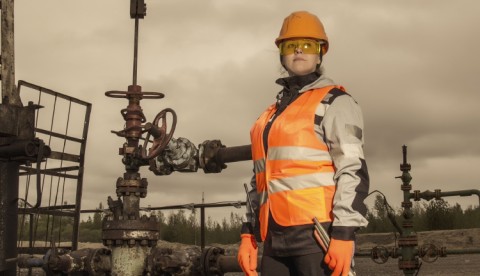
To begin with, it is a well-known fact that women are notably underrepresented in the majority of the oil industry. A male-dominated sector is one in which women make up fewer than a quarter of the employment environment. Oil, gas, and mining are examples of extractive industries that typically fit these criteria. Women continue to be underrepresented in these fields generally, particularly in senior positions.

Seeking Investors, Developing Investments

Attracting investors in the oil and gas industry has been an ongoing chess game for decades. With worldwide pandemics, financial crises, stock crashes, and technological advances, it becomes a question of which piece must be sacrificed to save the king. There is no denying that oil and gas businesses are finding it difficult to get investors. The energy environment is changing, and oil prices are still erratic. According to a PwC poll of oil and gas sector experts and company executives, both groups are aware that finding investors would be difficult in the future. Though many are making progress, others aren't quite there yet. Oil and gas businesses should keep searching for fresh approaches to up their game in order to regain investor trust and funding.

To Phase-Out or to Substitute: That Is the Question

Why do oil and gas sources need to be entirely cut out? What consequences could arise from a complete halt of these fossil fuels? Are renewable energy technologies ready to carry this load overnight? Other than the known issue of increasing carbon emissions, the oil and gas industry is starting to feel the heat to reduce the impact on climate change by mitigating their respective carbon dioxide footprint. The global community has not been able to come together to stop using fossil fuels. However, there are a couple of middle-ground solutions: phase-out and/or substitutes.

Carbon Neutrality: The Penultimate Solution

Carbon neutrality is not a hindrance, it’s a necessity. Oil and gas companies passed just simply installing solar panels on roofs or carpooling to work – we are beyond that point now. It is essential to combine a series of solutions to achieve carbon neutrality by canceling out carbon emissions released by such a carbon-intensive industry. This is one of the main themes tackled and discussed during the recent United Nations (UN) Climate Summit that took place in Sharm El Sheikh earlier last month (COP27).

Mitigation Of Emissions – Decarbonization Strategies

Oil and gas firms, clearly, have a more difficult route to decarbonization. All the same, their involvement in climate change mitigation is equally important. In fact, both investors and customers are holding them responsible for their actions.

Adapting to New Oil Market Dynamics

Have oil and gas companies finally been able to profit since the pandemic? The short answer: yes… but this does not come without a handful of complications. To begin with, it has become of high interest to know that, recently, major oil and gas corporations reported multi-billion figure earnings over the course of the 2nd quarter. Simultaneously, worldwide inflation has reached record levels over the course of the last half-century, and downturns are looming. The oil and gas sector's enormous profits are astonishing when juxtaposed with the many homes now having to pay for basic heat, conditioning, and nutritional demands.

Tipping The Scales: Natural Gas Energy Transition

One of the most difficult issues of this century is to provide more energy with minimum environmental effect. Substituting coal and diesel with natural gas may assist in addressing this challenge by lowering emissions and improving air quality. Gas is also a good asset for renewable energy sources, enabling to balance supply and demand for wind, solar, and hydroelectricity. Natural gas is also critical in sectors of the economy that are complex to electrify, such as industrial operations and cargo handling.

Page 4 of 17

Login

Welcome! Login in to your account

Remember me Lost your password?

Lost Password