

Features / Industry Insights

To Phase-Out or to Substitute: That Is the Question

Why do oil and gas sources need to be entirely cut out? What consequences could arise from a complete halt of these fossil fuels? Are renewable energy technologies ready to carry this load overnight? Other than the known issue of increasing carbon emissions, the oil and gas industry is starting to feel the heat to reduce the impact on climate change by mitigating their respective carbon dioxide footprint. The global community has not been able to come together to stop using fossil fuels. However, there are a couple of middle-ground solutions: phase-out and/or substitutes.

Carbon Neutrality: The Penultimate Solution

Carbon neutrality is not a hindrance, it’s a necessity. Oil and gas companies passed just simply installing solar panels on roofs or carpooling to work – we are beyond that point now. It is essential to combine a series of solutions to achieve carbon neutrality by canceling out carbon emissions released by such a carbon-intensive industry. This is one of the main themes tackled and discussed during the recent United Nations (UN) Climate Summit that took place in Sharm El Sheikh earlier last month (COP27).

Mitigation Of Emissions – Decarbonization Strategies

Oil and gas firms, clearly, have a more difficult route to decarbonization. All the same, their involvement in climate change mitigation is equally important. In fact, both investors and customers are holding them responsible for their actions.

Adapting to New Oil Market Dynamics

Have oil and gas companies finally been able to profit since the pandemic? The short answer: yes… but this does not come without a handful of complications. To begin with, it has become of high interest to know that, recently, major oil and gas corporations reported multi-billion figure earnings over the course of the 2nd quarter. Simultaneously, worldwide inflation has reached record levels over the course of the last half-century, and downturns are looming. The oil and gas sector's enormous profits are astonishing when juxtaposed with the many homes now having to pay for basic heat, conditioning, and nutritional demands.

Tipping The Scales: Natural Gas Energy Transition

One of the most difficult issues of this century is to provide more energy with minimum environmental effect. Substituting coal and diesel with natural gas may assist in addressing this challenge by lowering emissions and improving air quality. Gas is also a good asset for renewable energy sources, enabling to balance supply and demand for wind, solar, and hydroelectricity. Natural gas is also critical in sectors of the economy that are complex to electrify, such as industrial operations and cargo handling.

Preventative Crisis Management: The Key to Operational Excellence

Oil and gas facilities, which include oil and gas refineries, offshore production platforms, pipeline networks, and various chemical plants, are among the most complicated and dangerous industrial processes in the world. Everyone on site contributes to the operational hum of business as usual. But what happens when a disaster strikes? Can staff deal with the situation swiftly and efficiently? Can work be delegated to staff to help alleviate the situation? Can we readily communicate essential information to employees, emergency personnel, and the general public?

The Core of Oil & Gas Landscape: Pipeline Usage & Connectivity

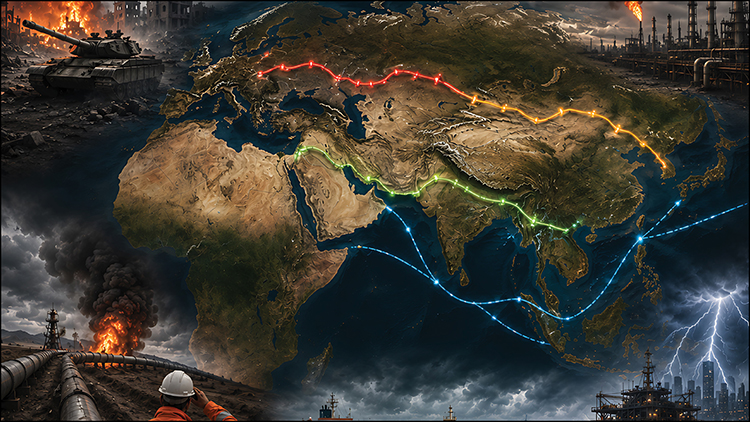
To begin with, it is essential to understand the importance of pipeline infrastructure as oil and gas, as well as distillation products and chemically stable compounds, are typically transferred between locations through pipelines. Ever since the turn of the century, investments in the worldwide pipeline business have grown rapidly.

Russia-Ukraine Conflict Brings LNG to Spotlight

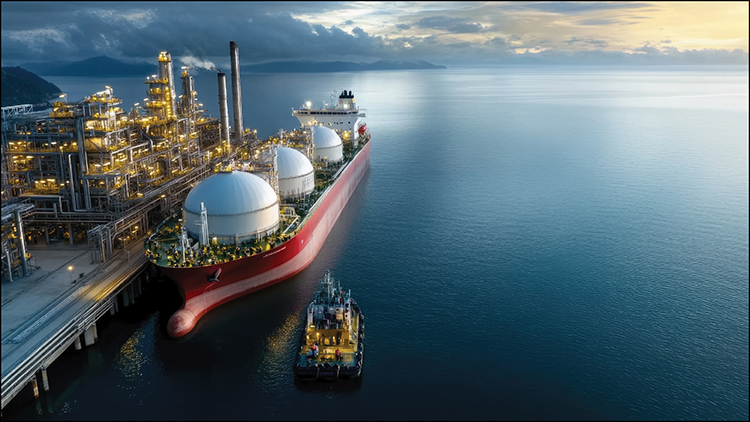
As Europe scrambles to replace the gas coming from Russia, liquefied natural gas (LNG) comes into the spotlight as an energy source that can replace the millions of tonnes of gas it currently buys from its main provider, Russia. Natural gas is the second largest source of energy in the Europe, accounting for nearly 25% of its total consumption. The consequences of current events could cost Europe its valuable source of energy. This can explain the recent rush by European countries towards securing more shipments of LNG, while consolidating the proper infrastructure for receiving it. As of May 2022, 11 EU Member States were LNG importing countries, for a total regasification capacity of 160 billion cubic meters (bcm) per year.

Employee Retention in The Oil & Gas Industry

To begin with, the oil and gas sector, like most other sectors, faces challenges with employee retention. Training in the oil and gas sector may be costly, and professionals need years of professional experience. If these experienced individuals depart their companies for any reason, it proves to be hard to replace them.

Egypt Prospects to Fulfill European Natural Gas Needs

Egypt is well-positioned to profit from the present energy crisis in Europe, given its increased natural gas finds, production, and LNG exports. From one perspective, Egypt might soon get to be a major energy exporter to the EU if it is able to considerably alleviate the European problem by selling LNG in large quantities to the EU. However, some experts feel that becoming a major LNG supplier to the EU is a long-term goal that will be determined by other variables rather than relieving the present situation. Thus, it is suggested that Egypt should embrace a simple strategy, maximising earnings from LNG exports to Europe, because the EU is already purchasing natural gas at higher spot rates.

Page 5 of 18

Login

Welcome! Login in to your account

Remember me Lost your password?

Lost Password