




Features / Industry Insights

Supporting Oil and Gas Workforce to Bridge The Skills Gap

Currently, a wave of advanced technologies has dominated the oil and gas sector around the world, primarily to address the surging global demand through enhancing hydrocarbon recovery. Human capital remains to be the pivotal tool in achieving the industry’s goals.

Building Digital Capacities: Skills of the Future in the Automation Era

An oil company could achieve as much as $1 billion in cost savings or production increases by deploying technologies that exist today.

Structural Integrity Management: A Pillar for Having A Sustainable Sector

Structural integrity management (SIM) is one of the main pillars of asset integrity management (AIM) in the oil and gas sector. SIM focuses on ensuring the asset’s structural integrity and its continuous fitness-for-purpose, allowing owners to achieve their business objectives flexibly and to ensure operations sustainability. Maintaining structural integrity guarantees that different structures of the sector will have the ability to bear any loads, including their own weight. Therefore, enhancing the integrity of oil and gas structures represents a cornerstone for guaranteeing the success of the ongoing operations.

Pipeline Integrity Management Systems: Stretching A Pipeline Through Its Lifecycle

PIMS evaluates a pipeline’s integrity across its lifecycle, from identifying risks and hazards to managing testing and mitigations to streamlining safe operations. Through proper assessment methods, PIMS identify, validate, and utilize pipeline data in order to optimize the pipeline’s integrity.

Maintaining Asset Integrity and Reliability in Managed Pressure Drilling

The importance of capitalizing on every asset in the oil and gas industry is fundamental. Therefore, oil and gas companies continuously aim at utilizing unused reserves, as well as ensuring that major assets are safe, well maintained, and efficiently operating. Drilling technologies have an integral role in enhancing efficiency, which drove the rising worldwide use of Managed Pressure Drilling (MPD) to drill challenging wells, taking into consideration reducing fluid losses and non-productive time (NPT).

Service Contracts for Mature Fields Redevelopment: A New Way Out

Although still uncommon in Egypt, applying service contracts for brownfield operations have been subject of debate to enhance production prospects and the profitability of Egypt’s mature fields. One of the main motivations behind service contracts application is the sovereignty concerns that are solved by using this type of agreement.

Enhancing Production Recovery in Brownfields Using 4D Seismic Survey

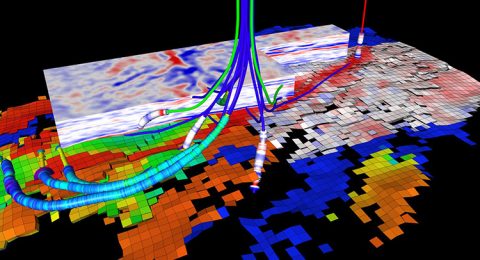
4D seismic survey is an advanced well-established data acquisition technique, which uses multiple seismic surveys of a producing field during a certain period in order to determine changes in reservoirs over time.

Pre-Stack, Post-Stack Inversion in Brownfields

In order to reactivate the production from mature fields, it is important to conduct an accurate assessment for wells in oil and natural gas brownfields to enable best results. For this, conducting seismic surveys and ensuring that the data is collected and correctly interpreted is essential.

Looking at Brownfields from an Economic Perspective

Redeveloping mature fields can have an incredible economic value, only if they are managed efficiently. For this reason, oil and gas industry leaders need to shift their focus to improving efficiency rather than achieving growth, which is often driven just for the sake of boosting profits and gaining competitive edge.

Retaining and Empowering the Sector’s Talented Women

Attracting talented women to be part of the oil and gas sector is an important step towards achieving gender parity in the industry. However, retaining them and enhancing their skills is crucial to give them the opportunity to grow and become future leaders.

Page 14 of 18

Login

Welcome! Login in to your account

Remember me Lost your password?

Lost Password