Expanding the private sector’s role in the economy remains central to Egypt’s macroeconomic strategy. A series of external shocks-most notably the COVID 19 pandemic, the heightened regional geopolitical volatility starting with the war on Gaza and exacerbated by the Middle East conflict- temporarily slowed this agenda.
Nevertheless, after years of shelving asset sales due to weak market conditions and undervalued bids, the government is actively closing major transactions and preparing a fresh pipeline of state owned enterprises for listing.
This structural shift drew praise from the International Monetary Fund (IMF) in its seventh review of the Egyptian reform program. The fund commended Egypt’s adherence to its State Ownership Policy and accelerated divestment framework.
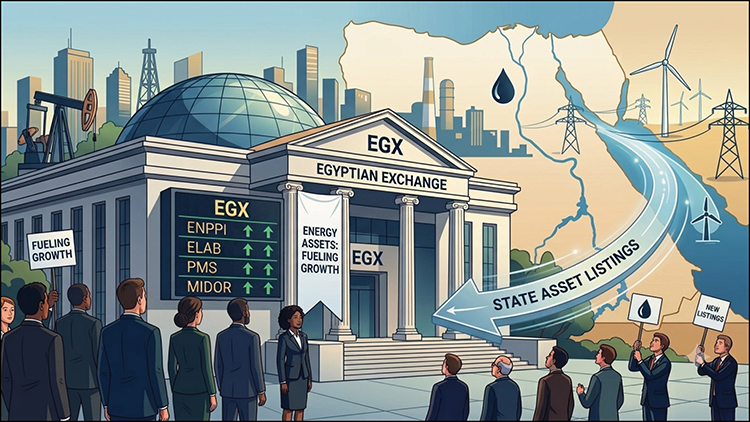
A defining feature of the revived program is its strong emphasis on the energy sector, underscored by the fact that 10 of the 30 companies slated for temporary listing on the local stock market-as a prerequisite for privatisation-hail from this field.
Energy companies are at the Forefront
Egypt’s plan to expand private ownership has recently seen important deals across renewable energy and fuel distribution. In a landmark $420 million agreement, UAE-based Alcazar Energy agreed with Egyptian authorities to acquire, manage, and upgrade the 580-megawatt (MW) Gabal El-Zeit wind farm on the Red Sea coast. This transaction serves as a model utilizing foreign direct investment to rehabilitate state renewable assets while securing clean energy via built-in Power Purchase Agreements (PPA).
Simultaneously, TAQA Arabia secured a stake in 172 military-affiliated Wataniya fuel stations. The ownership of the stations was transferred to a new entity named Quick Fuel in which TAQA Arabia holds an initial 10% stake with an option for an additional 15% upon listing while immediately assuming full operational management of the network.
Furthermore, three heavyweights in the petroleum and petrochemicals sectors were temporarily listed on the Egyptian Exchange in late June: Engineering for the Petroleum and Process Industries (ENPPI), Egyptian Linear Alkyl Benzene Company (ELAB), and Petroleum Marine Services (PMS).
The temporary listings give these companies a six-month window to finalize financial preparations for public offerings. These listings-which aim to boost private sector ownership and foreign investment-are part of a broader commitment under an IMF agreement to accelerate privatization
In 2023 the government compiled a list of 32 state-owned firms to go private, then increased the number by the end of the year to 35. Until February 2026, the first phase of the government’s state ownership document culminated in selling stakes in 19 companies through direct stake sales and Initial Public Offerings (IPOs), raising some $ 5.9 billion (bn).
In the same month, local media reported the Madbouly government aims to raise some $ 10.3 bn through the privatization of state-owned companies and assets by the end of the fiscal year (FY) 2026-27.
A Good Catch?
Energy companies are prime targets for privatization because they combine high profitability with strategic importance, making them highly appealing to investors. Globally, divesting state-run oil and gas giants has generated massive interest and concluded with notable success.
Historical precedents include the landmark privatizations of the UK’s British Gas and British Petroleum (bp) during the 1980s and 1990s, which raised billions and reshaped the energy landscape. Similarly, Italy’s giant, Eni, divested shares across multiple deals, though the government retained a “golden share” granting a veto over crucial corporate decisions. Regionally, Gulf nations executed head-turning transactions, topped by the historic 2019 Saudi Aramco IPO, which raised an unprecedented $25.6 billion by selling a 1.5% equity stake, making it the largest IPO in history.
In Egypt, petroleum firms stand out as exceptional privatization nominees. “Petroleum companies own highly valuable tangible assets and contribute significantly to the country’s GDP, making them naturally attractive to international and local investors,” notes Mohamed Hosny, Equity Strategist at Thndr Securities Brokerage. Furthermore, Hosny points out that the sector possesses the scale to support broader fiscal reforms: “The sector is large enough to generate the kind of privatization proceeds the country needs to meet its IMF commitments, while simultaneously diversifying [the commodities traded on] the Egyptian Exchange (EGX), which is currently heavily dominated by banking and real estate equities.”
Eman Marie, Head of Research at Faisal Brokerage Company, echoes this outlook, pointing to the structural health of these enterprises. She highlights that Egypt’s frontline energy companies boast “robust balance sheets, predictable cash flows, and resilient profit margins-advantages that become even more pronounced during periods of elevated global oil prices.”
Best players lead the way
Both Eman and Hosny agree on the advantageous position of the companies in the pipeline, especially the Middle East Oil Refinery (MIDOR) and the Petroleum Projects and Technical Consultations Company (Petrojet). MIDOR, one of the largest refineries in the region, has recently completed a major revamping project with a total investment of $2.7 billion and is now producing more than 7.5 million tons per annum (mt/y), serving both local and international markets.
Petrojet tells an equally compelling story. Acting as the primary construction arm for the region’s energy infrastructure, it boasts a diversified portfolio. Hosny noted that the company has secured future business contracts worth EGP 246 billion through 2029 and continues to break into new areas, including nuclear energy, becoming the first Egyptian company to participate in the Dabaa Nuclear Power Plant. In addition, Petrojet has expanded its presence to 28 countries
In addition to their strong fundamentals, Eman believes that offering blue-chip, infrastructure-heavy enterprises provides institutional investors with stable, long-term yields. This avoids the risk of market fatigue from lower-tier offerings.
The Caliber of the companies already temporarily listed, as well as those expected to follow, signals that the government is deliberately starting with its most credible names. Also, “The fact that the Egyptian General Petroleum Corporation (EGPC) is the major shareholder in the oil companies slated for privatization makes the process less challenging, as it ensures the government retains control while opening ownership to outside investors,” said Hosny.
Challenges exist
However, there are some pumps in the road. Oil and gas companies’ Privatization is challenging. “The industry’s heavy reliance on joint ventures (JVs) structures creates complex legal frameworks, as these companies are operating through intricate concession agreements and JVs with International Oil Companies (IOCs).” Eman Pointed out.
Hosny agreed, saying that these companies were not designed for public ownership, meaning time is needed for legal and operational restructuring.
He adds: “Petroleum is a strategically sensitive sector, requiring the government to handle privatisation with caution by offering only minority stakes and retaining operational control.”
Guarantees for success
Observers argue that the success of Egypt’s privatization offerings hinges on the government’s adherence to governance standards-transparent procedures, clear disclosure, and accountability in decision making-as well as ensuring companies are sold at fair value, meaning prices that reflect their true market worth rather than discounted bids.
The temporary listing mechanism can help, according to Hosny, as it requires companies to comply with disclosure and governance rules and gain practical market experience before any share sale, building a track record and investor base ahead of the full offering. As Hosny sees it, independent valuation of shares can guarantee successful offerings: “The current framework mandates final financial valuations by an independent certified financial advisor to determine fair value before any stake is sold.”
Faisal Bank’s Marie underscored that the government is avoiding past pitfalls in privatizing similar oil and petrochemical companies such as Sidi Kerir Petrochemicals Company (SIDPEC) and Alexandria Mineral Oils Company (AMOC). She explained that previously volatile raw material prices impacted equity valuation, while industry regulations posed obstacles for investors. This time, temporary listing enforces transparent disclosure before shares reach the open market.
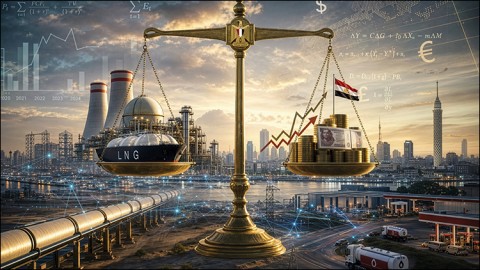
Egypt’s privatization drive has placed energy companies at the forefront, signaling both ambition and pragmatism. By starting with credible names and enforcing temporary listings, the government is building investor confidence through governance, disclosure, and fair valuation. The sector’s profitability and strategic weight make it a natural candidate to anchor the program, while lessons from past missteps are being addressed through stricter frameworks. Global precedents show that energy privatizations can reshape markets, and Egypt’s effort is no exception. Success will depend on careful execution, but the foundations suggest the country is determined to deliver.