Features / Industry Insights

Digital Twin Paves the Way for Remote Working

The global community is now facing a revolution of information technologies. Computers, telecommunication networks and other digital systems allow us to transmit information quickly and connect with distant places allowing the institutions and organizations to enhance their quality, productivity, as well as control the costs.

Egypt: A Green Energy Mine

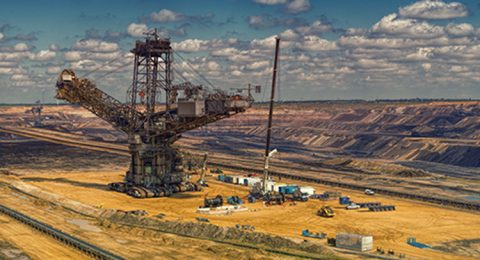
Egypt has a vast wealth of mineral resources including gold, copper, silver, zinc, platinum and several other precious minerals and base metals. These resources are largely located in the Arabian-Nubian Shield (ANS), otherwise known as the Eastern Desert and the Sinai Peninsula. Having such a large expanse of mineral wealth could mean a promising future for Egypt’s economy. This is especially interesting with the new mining bid round, which could result in an abundance of exploration and exploitation.

Mining to Produce Renewable Energy Technologies: A Controversy

To begin with, Egypt is one of the most mineral-wealthy countries in Africa. In fact, Egypt is not only abundant in the amount of mineral resources available, but in the variety of these resources. The primary essential mineral resources found in Egypt mainly consist of metallic and non-metallic mineral resources. Metallic mineral resources include materials such as copper, lead, nickel, cobalt, gold and silver, while non-metallic metals typically are those of limestone, sandstone and gravel dolomite.

Remote Sensing Vs Geographical Information System (GIS): Which Is Better for Mining Industry?

In light of the global intensive need for the resources and energy, new technologies are developed for the sake of maximizing the production and compensate such needs at the lowest costs. In the mining industry, there has always been a need for developing the exploration and production methods along with their respective new technologies aiming at increasing the outputs.

Overcoming Human Capital Flight in Egypt’s Oil and Gas Industry

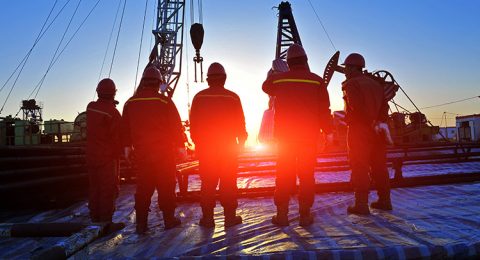
The oil and gas industry is always changing; seeking advancement and improvement, whether it is in areas of technology or operations. However, acquiring and developing human resources should not be ignored, as calibers are the linking point between the present and the future. There is a myriad of qualified engineers, geoscientists, and professionals in the oil and gas industry. However, the abundance of one entity could lead to drastic changes in the future. According to a research published by the Italian National Research Council entitled ‘The History of Brain Drain’ defines Brain Drain as “the emigration of highly trained or qualified people from a particular country”.

The Decommissioning Of Oil and Gas Fields in Egypt: Legal Aspects

The oil and sector does not concentrate only on exploration and production (E&P) activities, but also post-E&P activities. Decommissioning of oil and gas fields means the activities related to the abandonment of petroleum production wells and the removal of onshore and offshore installations. Decommissioning is considered a non-profit activity, yet it inevitably needs to be performed by the concessionaire, either international oil companies (IOCs) or national oil companies (NOCs).

The Fishbone Technology: To Use or Not to Use?

The fishbone technology was pioneered by Shell, where it was tested in the Western Desert. But now that Shell is selling its Western Desert assets, should the fishbone technology stand the test of time and be leveraged by other operators?

Preventative Maintenance in The E&P Sector in Egypt

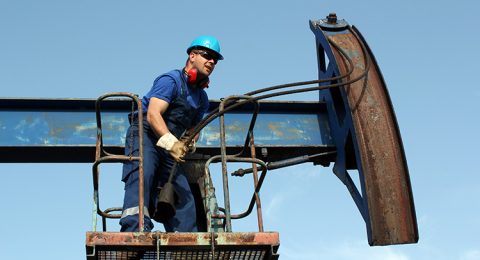
While maintenance is a topic heavily discussed in the oil and gas field, it is important to distinguish between the different types of maintenance. In the oil and gas field, there are three main types of maintenance that could be applied in exploration and production (E&P) activities: reactive maintenance, predictive maintenance, and preventative maintenance.

Lack of Safety Driving Takes A Big Toll on Oil and Gas Workers

Last month, the Egyptian oil and gas sector was deeply shaken by a tragic incident that took the lives of four oil workers. The accident occurred when a vehicle carrying the workers hit an oil rig at the drilling site, leaving four dead and two others injured. This was not the first time that road safety was subject to skepticism in the oil and gas sector. Unfortunately, it might not be the last, either.

Drilling Waste Management: An Indicator for Advanced HSE Standards

Oil and gas exploration and production (E&P) activities consist of many elements including numerous investors, complicated techniques, different work categories and procedures, grade separation, and continuous operations. These elements may lead to many risks, including spills, blowouts, pollution, discharged effluents by daily drilling operations, well treatment chemicals, etc. If effective strategic measures to minimize these risks are not implemented, severe accidents may occur with a negative impact on the workers’ safety and health as well as harming the environment. For this reason, risk management is crucial to ensure that adequate measures are taken to protect workers via the implementation of Health, Safety, and Environment (HSE) standards.

Page 11 of 17

Login

Welcome! Login in to your account

Remember me Lost your password?

Lost Password