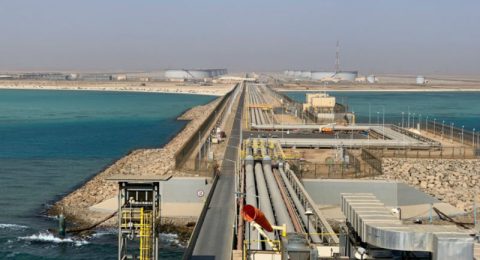
Gulf oil flows excluding Iran recovered to more than 81% of pre-war levels in September, supported by a sharp rebound in Saudi exports to around 5.4 million barrels per day (mmbbl/d), despite continued attacks on regional energy infrastructure and shipping, according to data cited by Reuters.
Flows of crude, condensate and refined fuels, including liquefied petroleum gas (LPG), from Saudi Arabia, Kuwait, Qatar, Oman, Bahrain, Iraq and the UAE averaged 19.2 mmbbl/d in September, compared with about 23.6 mmbbl/d in the year before the Iran war began on February 28, according to Vortexa data. Kpler put total September oil exports at 18.6 mmbbl/d.
Crude and condensate exports showed a stronger recovery, reaching 16.3 mmbbl/d, or 91% of pre-war levels, while refined fuel exports, including LPG, remained at only 60% of their pre-war level of 7.3 mmbbl/d. The slower recovery in refined products has contributed to tight global diesel and jet fuel markets.
Saudi Arabia accounted for most of the increase in Gulf exports. Kpler data showed that Saudi crude and condensate shipments rose by around 4.2 mmbbl/d month-on-month to 6.6 mmbbl/d in September, more than offsetting declines in Kuwait, Qatar and Iran. UAE and Iraqi exports also increased.
Combined crude and condensate exports from Saudi Arabia, the UAE, Iraq, Oman, Kuwait, Qatar and Iran increased to about 14.7 mmbbl/d in September, from 10.8 mmbbl/d in August. Iranian exports fell to zero during the month, according to Kpler.
Meanwhile, OPEC+ agreed to keep its November oil production targets unchanged at a meeting on Sunday, as Middle East export disruptions continue to limit actual output despite higher flows through the Strait of Hormuz.
Saudi Arabia, Russia, Iraq, Kuwait, Algeria, Kazakhstan, and Oman decided this during a brief online meeting. Gulf OPEC+ producers have been pumping below their targets as exports have remained between 60% and 80% of normal levels in recent months.