Crude oil exports from key Middle Eastern producers are set to rebound to 12.8 million barrels per day (mmbbl/d) in September, their highest level since the US-Israeli war with Iran began in February, as Saudi Arabia and the United Arab Emirates (UAE) increase shipments, according to preliminary data from analytics firm Kpler cited by Reuters.
The rebound has been driven partly by a recovery in oil flows through the Strait of Hormuz, with exports via the key waterway expected to reach around 7.4 mmbl/d this month.
Saudi Arabia is leading the recovery after attacks damaged its East-West Pipeline and disrupted exports from the Red Sea port of Yanbu. The kingdom has diverted more crude through the Strait of Hormuz to compensate for the disruption to its alternative export route.
Saudi crude shipments are on track to average around 5.4 million b/d in September, more than double the 2.446 million b/d recorded in August, Kpler data showed.
Shipments from Saudi Arabia’s Ras Tanura port on the Gulf are expected to reach about 3.6 mmbbl/d this month, compared with 929,000 bbl/d in August. However, the September figure remains below the 6.411 mmbbl/d recorded in February, before the conflict began.
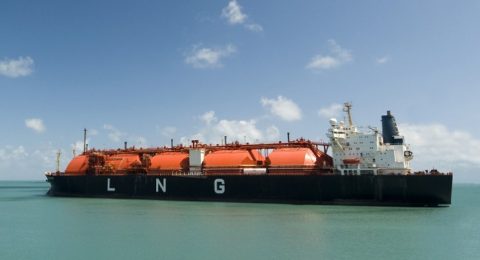
Kpler data also showed that 19 very large crude carriers (VLCCs), each capable of carrying around 2 million barrels of crude, exited the Strait of Hormuz last week carrying Saudi oil.
The increase in Saudi shipments has also placed greater pressure on tanker availability. Earlier in September, Saudi Arabia’s increased use of the Strait of Hormuz had pushed ship-to-ship (STS) transfers in the Gulf of Oman toward capacity limits, increasing demand for VLCCs and contributing to higher shipping costs.
Despite the September recovery, Middle Eastern crude exports remain significantly below pre-war levels. Exports from Saudi Arabia, the UAE, Iraq, Oman, Qatar, Kuwait and Iran are expected to remain around 6 mmbbl/d below the 18.8 mmbbl/d recorded in February.
The Strait of Hormuz remains critical to global energy markets. Before the conflict, the waterway typically handled around 125 large commercial vessels a day, including oil tankers and gas carriers, accounting for about one-fifth of global daily crude oil and liquefied natural gas supplies.
The latest export recovery therefore reflects a partial restoration of regional oil flows rather than a return to pre-conflict conditions, with shipping routes, tanker availability and security around key export infrastructure continuing to influence Middle Eastern supply.