


Features / Technology

Surfing The Waves of Global Climate Change: What ptX Can Actually Do

With skyrocketing global temperatures, increased natural disasters, and rising sea levels, never has humanity felt the wrath of today’s natural environment. Experts have pointed to global environmental and climate patterns that could spell an apocalyptic scenario if humanity seeks to continue living the way it is now. Despite the various opinions about climate change that exist within human societies, the global community is in unanimous consensus that there is a dire need for the people of the world to work together to reduce greenhouse gas emissions. As the world begins to adapt to this new reality, inventors have been hard at work trying to find new ways for human communities to live with the energy needs that they have, while leading a carbon-neutral lifestyle.

Intelligent Systems Push on Well Recovery Optimization

Digitalization and the use of advanced technology has become one of the important pillars of the oil and gas industry. It is a global trend among the petroleum operators to keep production sustainability in a safe and easy environment. Nowadays, advanced technology is a key factor in wells’ drilling, operation and production. Advanced technology has become necessary especially for optimizing production from deep-water, high-risk, complicated and uneconomical wells. In response to this, Smart wells have evolved.

Hydraulic Fracturing Uncertainty-Based Model Using Monte Carlo Technique

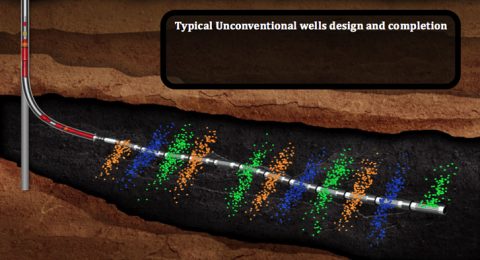
Looking at the nature of Egypt, the country has two thirds of its oil in brownfields. Therefore, using techniques like hydraulic fracturing and horizontal drilling is unavoidable. Hydro-fracturing is not only implemented to stimulate brownfields production, but it is also used when it comes to unconventional oil and gas exploration. However, there are several uncertainties when it comes to the process.

BIOCNG: The Locomotive of Future Natural Gas Vehicles

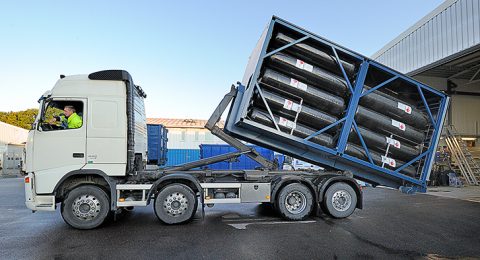
Great interest is headed towards maximizing the use of natural gas for fueling vehicles around the world. This is due to its clean properties as well as its ability to limit harmful emissions. Compressed natural gas (CNG) is the fuel dedicated for natural gas vehicles (NGVs) that is widely used in the world. By the end of 2021, it is expected for NGVs to reach 30 million worldwide, according to NGV Global. For this reason, new technologies are emerging to help accelerate this transition efficiently. BioCNG technology is a simple, effective and innovative way that was developed to produce CNG vehicle fuels.

CHP: From Waste to Power

The promise of tomorrow is reshaping a clean world with clean energy, at least that is the case for the oil and gas industry. With the climate crisis in focus, the oil and gas industry needs to step up its game to downsize its greenhouse gas (GHG) emissions. According to McKinsey, oil and gas operations account for 9% of all human-made GHG emissions in addition to producing fuels that contribute to another 33% of global emissions. One effective way the industry can reduce its GHG emissions is through utilizing Combined heat and power (CHP) technology.

Artificial Intelligence Transforms Seismic Interpretation

Within the upstream industry, getting more accurate information is the best way to increase production and save time. Seismic interpretation is the optimum technique to discover and develop profitable fields and reserves. As time passes, digital transformation goes deeply into the oil and gas industry to develop and update the sector and particularly the exploration and production (E&P) operations that seek more productivity. Artificial intelligence (AI) is the next technology breakthrough to come. For seismic interpretation, AI will help in facilitating the process of oil and gas explorations.

Aster & Fuzzy Logic: New Methods in Hydrocarbon Exploration

In the world of exploration and production (E&P), new technologies are always on the rise looking for a way to maximize hydrocarbon production with efficiency. Remote sensing techniques have been used in the oil and gas industry for quite some time, but not as extensive as geological and/or geophysical surveys. A new study presented by Reza Taheri, Assistant Instructional Professor at the University of Wyoming, and Alan Tait, Adjunct Research Fellow, at the University of Monash, provides a new remote sensing technique, specifically Advanced Spaceborne Thermal Emission and Reflection Radiometer (ASTER), to be used in hydrocarbon production.

MOBILE SOLUTIONS FOR GAS FLARE REDUCTION

Innovative technologies for more efficient and environmentally friendly utilization of associated petroleum gas are flooding the market. There is a plethora of available products to choose from that will help replace gas flaring with other more economically viable and energy efficient alternatives. The technologies were developed for countries that cannot adopt standard solutions such as building expensive gas pipelines that would transport associated gas.

Deepwater Natural Gas Exploration Technologies

While Egypt has received positive news recently regarding onshore gas projects in the Nile Delta and Western Desert, 80% of its gas reserves reside in the Mediterranean Sea. However, since most of the gas is located in deep-water fields, extraction has proved difficult.

Unconventional Assets The Global Resource Potential and Challenges for Egypt

The US sets up a great example to follow: The “unconventional resource asset revolution” represents a paradigm shift in energy supply that is reshaping global energy markets. In the U.S., unconventional resource plays have proven to be quickly producible in large volumes at a relatively low cost. The surge in hydrocarbon production from unconventional plays in the U.S. has resulted in abundant supplies of natural gas, oil (light tight oil), and natural gas liquids (NGL) that have reversed long-term declines in natural gas and oil production. Less than 10 years ago, most predictions for the U.S. forecast dramatic increases in LNG imports to meet increasing demand. Today, the U.S. is preparing to export LNG in the near future, and may become a net oil exporter around 2030.

Page 6 of 12

Login

Welcome! Login in to your account

Remember me Lost your password?

Lost Password