



Features / Legal Opinion

Glimpse of Laws Protecting Investments in Egypt and Cyprus

Since 2009, a series of large natural gas discoveries in the Levant Basin have altered the dynamics of the region, and the Eastern Mediterranean basin became one of the latest areas of interest for the international oil and gas industry. Offshore fields in the area have great potential both in terms of economic activities and progress in the region as well as on an international political level.
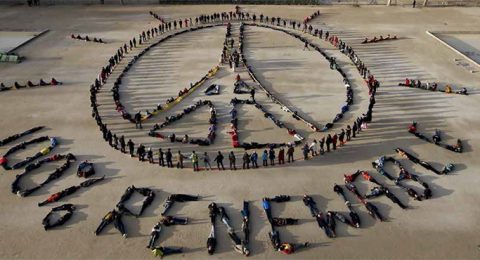

US Withdrawal From The Paris Agreement: The Legal Implications (Or Lack Thereof) On The Energy Industry

In June 1, 2017 US President Donald Trump controversially announced that the USA would no longer be part of the Paris Agreement (or Paris Climate Accords as they are often referred) and effectively signaled the withdrawal of the United States from the Agreement as a signatory.

ENCOURAGING INVESTMENT IN THE PETROLEUM INDUSTRY A COMPARISON OF HOST GOVERNMENT INSTRUMENTS

The petroleum industry utilizes a range of host government instruments to grant rights for exploration and production of oil and gas resources. The form of host government instrument is one of the key factors in determining an exploration and production contractor’s (Contractor’s) potential return on investment and in turn the Contractor’s incentive to explore and extract petroleum resources.

KEY TERMS TO CONSIDER WHEN BUYING OR SELLING OIL AND GAS INTERESTS IN EGYPT

With the Egyptian oil and gas market continuing its rapid development amid increased stability in the country and exciting new deepwater discoveries, upstream merger and acquisition activity is poised to increase significantly. When considering a sale or purchase of an interest in oil and gas properties in Egypt, the most critical document governing the transaction is the sale and purchase agreement (SPA).

REGULATING UNCONVENTIONAL OIL & GAS IN EGYPT

Unconventional oil and gas presents significant potential for Egypt. However, along with this potential, the growth of unconventional techniques presents increased environmental, social, and corporate risks. To date, the legal framework in Egypt has not directly addressed the regulation of unconventional oil and gas development. For the most part, regulation of unconventional development has not been needed.

Energy in the Middle East: The Big Picture for 2017

By Hugh Fraser, Office Managing Partner, Andrews Kurth Middle East We are heading towards the end of one of the most transformational years in living memory: at the start of the year, the ink was barely dry on the Paris COP21 Agreement on climate change, the Iran Joint Co-Operation Agreement brought Iran back into the world of international petroleum trade and the oil price slumped to $28;

Joint Ventures in the Energy Sector: Structuring JVs for Success in Egypt

The sheer scale of investment needed to bring Egypt’s deepwater upstream, downstream oil and gas, and power projects into operation, and the specific needs for foreign investment, casts a sharp focus on the joint venture mechanism for doing business in Egypt. The aggregate level of investment anticipated across these sectors currently exceeds $100 billion and it is hoped that the IMF funding package of $12 billion agreed in August will serve as the catalyst to kick start or accelerate much of the needed investment.

Protecting and Commercializing Advanced Petroleum Technology: The Role of Intelligent Energy Law in 2016

The world of energy sustained a threefold shock to the system as the industry rolled into 2016. First, the impact of the COP21 Agreement reached on 12th December 2015 in Paris, which stressed the need to focus on the reduction of carbon emissions, had arrived definitively. This brought sharply into focus the International Energy Agency’s proposed “Bridge Scenario” which, it is claimed, could deliver a peak in energy-related emissions by 2020, relying solely on proven technologies and without changing economic development prospects of any region by virtue of five key initiatives: increased energy efficiency; the progressive reduction and phasing out of inefficient coal-fired power plants; phasing out fossil fuel subsidies by 2030; reducing methane emissions in oil and gas production; and increasing investment in renewable energy technologies from $270 million in 2014 to $400 billion in 2030.

Oil and Gas Arbitral Awards in Egypt

The issue discussing domestic versus foreign arbitrations has dominated news in the energy industry in Egypt in the past months. It has become a key conundrum for oil, gas, renewables, and other energy companies that are operating in the country. Foreign energy investors have objected to the requirements by the government to hold all their dispute settlement processes in Egypt. Instead, they requested to have an option to file suits abroad with international arbitration centers, shall there arise any disagreements in the future.

RE-ASSESSING RISK AVOIDANCE STRATEGIES IN LNG CONTRACTING

Despite the tsunami of power generation development that is currently underway throughout the world and dependent upon renewable energy technologies, more traditional thermal electricity generation strategies are still in play for a number of reasons.

Page 6 of 7

Login

Welcome! Login in to your account

Remember me Lost your password?

Lost Password