Oil prices fell in early Asian trading on October 19 after US President Donald Trump waived sanctions and tariffs on Russia, potentially allowing more Russian fuel to reach global markets; however, ongoing disruptions to Middle Eastern crude flows limited the potential for a sustained decline, Reuters reported.
Brent crude futures fell 0.96% to $108.80 per barrel on October 18, while US West Texas Intermediate (WTI) crude dropped 0.23% to $101.18 per barrel. Both benchmarks had settled at their highest levels in months on Friday, October 16.
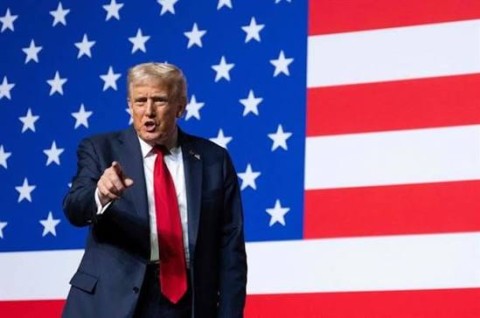
Trump signed an executive order on October 16 waiving key sanctions, restrictions, and tariffs under the law known as the Graham Act, which was signed in September to pressure Russia over its war in Ukraine. US Secretary of State Marco Rubio said the administration would take up to 60 days to assess the measures’ impact on the global economy.
The decision followed an agreement Trump announced with Russian President Vladimir Putin to export diesel to the United States and other markets. Supplies are expected to start at about 2.3 million barrels (mmbbl) in October before rising to around 7.6 mmbbl per month.
However, uncertainty over the waiver’s scope and duration could limit its immediate impact on oil prices. KCM Trade Chief Analyst Tim Waterer said the move could increase Russian fuel exports, but that mixed signals from Washington had created uncertainty. Investors are unlikely to fully price in a sustained supply increase until the details become clearer, he added.
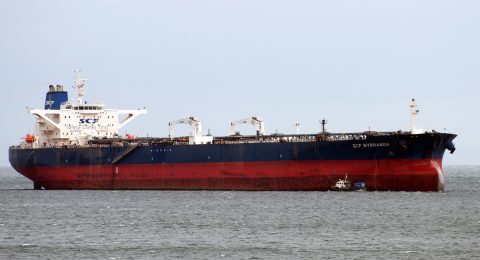
Despite the potential for additional Russian fuel supplies, geopolitical tensions and attacks on commercial vessels continued to threaten global oil flows. Crude exports from the Gulf fell to approximately 8.5 million barrels per day (bbl/d) on a seven-day average during the week preceding October 19, down from more than 20 million bbl/d the previous week, according to analytics firm Kpler.
Brent crude briefly reached $110 per barrel on October 16, its highest level since May, amid concerns over shipping security and tighter global supplies. Reuters reported at least 10 confirmed incidents involving commercial vessels during the preceding week.
The competing pressures leave the market balancing the prospect of additional Russian fuel supplies against risks to crude transportation and production in the Middle East. The US administration’s efforts to contain fuel prices have so far provided a potential short-term response to supply concerns rather than resolving the underlying geopolitical risks.
Ukrainian President Volodymyr Zelenskyy criticized Washington’s decision, saying the US measures would harm Ukraine as its war with Russia continues.
Russia remains a major global oil producer, and Western sanctions imposed following its invasion of Ukraine in 2022 have reshaped its energy trade, accelerating a shift toward Asian markets. The United States and the United Kingdom tightened measures in January 2025, while the European Union adopted further restrictions in July 2025 targeting Russian oil revenues and vessels used to transport sanctioned crude.