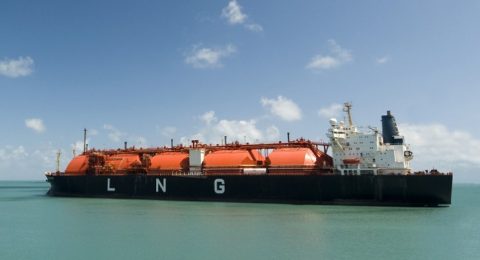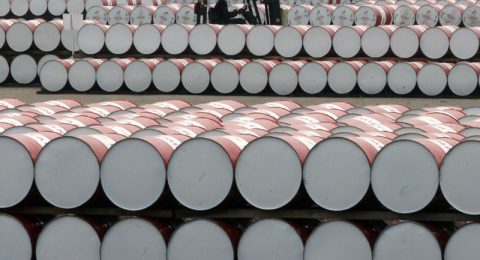
Oil markets continue to reassess the impact of the conflict with Iran following Tehran’s declaration that the Strait of Hormuz was “closed,” even as evidence suggests Gulf crude oil exports have sustained momentum despite disruptions, Reuters reported.
Initial estimates pointed to a potential loss of 12–15 million barrels per day (mmbbl/d) of non-Iranian Gulf crude exports, driving Brent crude close to $120 per barrel in early March and prompting forecasts of $200 oil. However, prices have since fallen below $90 per barrel as more cargoes continued to reach global markets than initially expected.
US President Donald Trump said more than 100 million barrels (mmbbl) of oil had passed through the strait under a US mission supporting tanker movements. Meanwhile, Belgian shipping data firm Kpler estimated that 136 mmbbl of non-Iranian crude moved through Hormuz and Gulf of Oman export channels between April and June 10, equivalent to about 1.9 mmbbl/d.
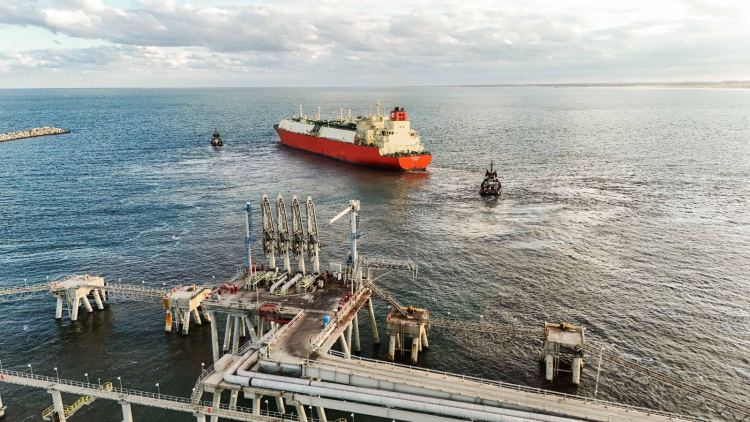
According to Kpler, flows recovered after initial disruptions as producers adopted alternative logistics. Trading sources said Iraq, Kuwait, and the UAE continued exporting crude through alternative routes and shipping arrangements, while Saudi Arabia redirected around 4–5 mmbbl/d through its Red Sea port of Yanbu.
The International Energy Agency (IEA) estimated Gulf supply losses at 14 mmbbl/d, or roughly 14% of global supply. However, trading sources said actual disruptions may be closer to 5–6 mmbbl/d. One source estimated Iraqi exports were down by 2.5–3 mmbbl/d, Kuwaiti exports by about 1.5 mmbbl/d, and Saudi and UAE exports by around 0.5 mmbbl/d each.
Additional factors weighing on prices include rising US oil exports, the release of a record 400 mmbbl from international emergency reserves, and weaker Chinese demand. After accounting for lower demand in China, one trading source estimated the global market shortfall at around 2 mmbbl/d.
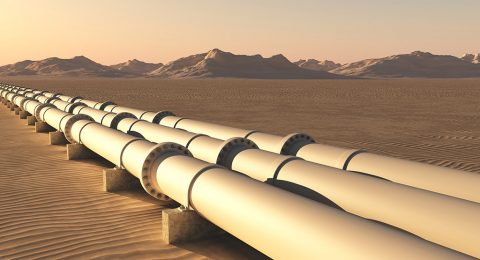
The operational reliance on alternative logistics highlights the long-standing vulnerability of the Strait of Hormuz, which the US Energy Information Administration (EIA) classifies as the world’s primary maritime energy chokepoint. Accounting for approximately 20% of global petroleum liquids consumption, the narrow waterway connects Middle Eastern crude oil producers directly to key global markets. To mitigate transit disruptions, regional producers have spent decades developing land-based bypass infrastructure. Central to these efforts is Saudi Arabia’s five-million-barrel-per-day East-West Pipeline, which allows the kingdom to transport crude oil from its eastern fields directly to the Red Sea port of Yanbu, effectively bypassing the volatile Gulf shipping lanes during geopolitical conflicts.