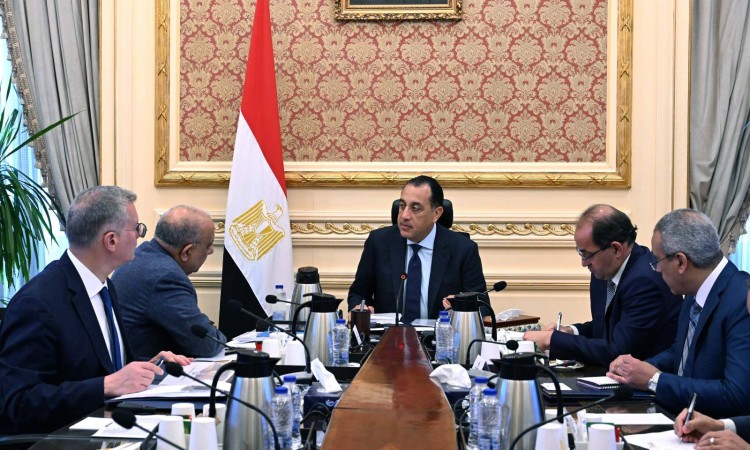
Prime Minister Mostafa Madbouly directed a unified ministerial effort to secure funding for fuel supplies, stabilize the national electricity grid, and meet the energy needs of households and industry. In a high‑level meeting with the Ministers of Petroleum, Electricity, and Finance, the government reviewed urgent measures to ensure the uninterrupted provision of petroleum products and natural gas, according to a Cabinet statement.
Minister of Petroleum and Mineral Resources Karim Badawi emphasized that securing these energy supplies remains the ministry’s top priority, supported by a comprehensive plan to accelerate domestic production and raise the output of recent discoveries.
In this respect, Ahmed Kouchok, Minister of Finance, confirmed the availability of required financing in coordination with the relevant ministries. Moreover, the Ministry of Finance is also working to boost investments in the energy sector as part of a comprehensive vision to support Egypt’s economy, according to Cabinet Spokesperson Mohamed el-Homsani.
Badawi added that the ministry is integrating plans to expand the petroleum pipeline network in addition to working on strategies to meet demand over the next five years. This is in addition to refinery development programs aimed at reducing import costs and ensuring the network’s readiness to meet national needs.
For his part, Minister of Electricity and Renewable Energy Mahmoud Esmat presented the current work plan to increase reliance on renewable and clean energy within Egypt’s energy mix, reduce the use of conventional fuels, and limit dependence on fossil fuels to achieve sustainable development.
He outlined updates on the plan to raise the share of clean energy to 45% by 2028, as well as progress on renewable energy projects over the next two years and long-term projects through 2040.
Esmat also proposed an initiative to encourage factories to adopt solar cell systems for electricity generation, which is currently under study in preparation for launch in cooperation with other ministries and stakeholders.
This initiative represents a key step in diversifying electricity sources, easing pressure on the unified grid, and expanding the use of solar energy nationwide, Esmat stressed.
The Ministry of Petroleum’s efforts are bolstered by significant international confidence in Egypt’s energy sector, with investment commitments exceeding $19 billion over the next three years. This includes major contributions from Eni ($8 billion), bp ($5 billion), Apache ($4 billion), and Arcius Energy ($2 billion), all aimed at bringing new wells online to support the national five-year production plan.