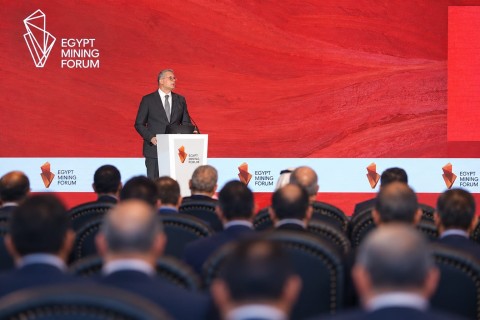
The Egyptian government is accelerating a strategic shift toward localizing phosphate-based industries, pivoting away from exporting raw materials in favor of manufacturing high-value fertilizers and chemical products, concluded a meeting chaired by Prime Minister Mostafa Madbouly.
To anchor this transition, Minister of Petroleum and Mineral Resources Karim Badawi said the ministry is now integrating cutting-edge scientific research with modern earth sciences to optimize the utilization of Egypt’s vast mineral wealth. Badawi noted that the ministry’s current strategy focuses on a massive expansion in the production of phosphate and compound fertilizers to ensure that local agricultural requirements are fully met while simultaneously leveraging industrial surplus for high-value international exports, effectively transitioning the sector from a commodity-based model to a high-tech manufacturing powerhouse.
The meeting, attended by a number of senior officials in the mining sector, reviewed the size of phosphate ore reserves distributed across different regions of the country, as well as the actual production capacity of coarse phosphate ore. It also addressed the status of production at phosphate fertilizer factories and their diverse products.
Moreover, the meeting discussed efforts to expand value-added industries related to phosphate ore, as well as the projects currently being implemented in this framework in cooperation with numerous local and international companies specialized in these industries, in order to maximize the resources available in this regard.
Key initiatives include the $573 million Abu Tartour phosphoric acid plant and a new $525 million industrial complex in the Suez Canal Economic Zone (SCZONE), both designed to localize the production of high-value chemical fertilizers.
Egypt currently ranks as the world’s third-largest holder of phosphate reserves, trailing only Morocco and China, with estimated deposits reaching 2.8 billion tons. The country’s phosphate ore production recorded 16 million tons between July 2024 and April 2025, a sharp increase from the 11 million tons produced during the 2023/2024 fiscal year.