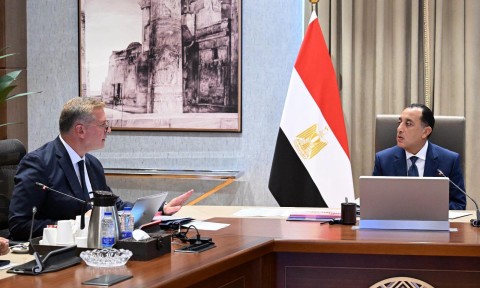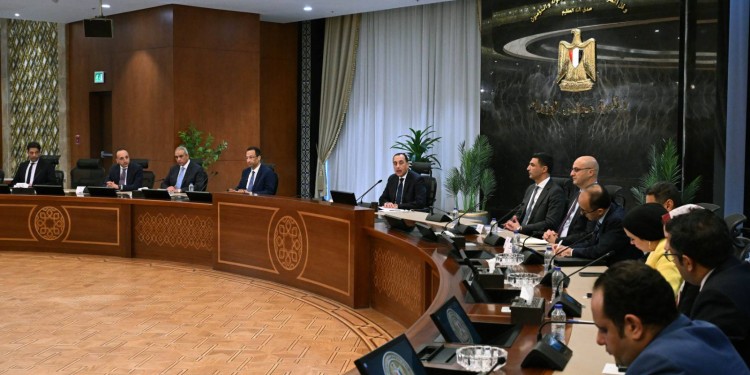
Egypt has secured investment commitments exceeding $19 billion from international oil companies (IOC)s over the next three years, Prime Minister Mostafa Madbouly said during the cabinet’s weekly meeting. He broke down the figure to: $8 billion from Italy’s Eni, $5 billion from British Petroleum(bp), $2 billion from the UAE’s Arcius Energy, and $4 billion from US-based Apache.
“This diversity of global giants interested in investing in the sector reflects their confidence in the Egyptian economy amid global turbulence,” Madbouly said.
In December, Karim Badawy, the Ministry of Petroleum and Mineral Resources, had noted that Egypt has a total investment commitment of $16.7 billion from Eni, bp and Arcius Energy through 2030.
On the exploration front, Madbouly highlighted the recent Nile Delta gas discovery in the Abu Madi area, which is expected to add 50 million cubic feet per day (mmcf/d) to production.
The Prime Minister noted that the competitive advantage of this discovery lies in its proximity to the shore, which will enable the state to bring it into production by the summer of this year, thereby helping to reduce the import bill in the coming period.
He also referred to the newly discovered Denise West‑1 exploratory well in the Eni‑bp Temsah concession in the Mediterranean. The discovery holds estimated reserves of over 2 trillion cubic feet (tcf) of gas and 130 million barrels (mmbbl) of condensate.
Madbouly explained that once development of the field is completed, its daily output will range between 500 and 600 million cubic feet (mmcf)— representing about 8 to 10 % of Egypt’s total natural gas needs. He noted that the field is expected to enter production in the second half of 2027, stressing that such discoveries constitute a fundamental pillar in securing the country’s energy requirements.
“We were aware of the indicators for Denise, but chose not to announce them until the operating company confirmed the figures. This approach ensures transparency and reliable data for the public,” Madbouly stressed.
He noted that further discoveries are expected in 2026, as a result of technical studies conducted by international companies. “All these efforts contribute to reducing the import bill and enabling Egypt to move closer to achieving self-sufficiency in its energy needs, especially natural gas.”
This momentum in discoveries and investments, according to Madbouly, was mainly driven by the government’s efforts to restore investor confidence and its regular settlement of the accumulated dues, a plan that helped to lower the unsettled figure to $714 million at the end of April from over $6.1 billion in 2024, with the remaining dues targeted to be fully settled by the end of June.