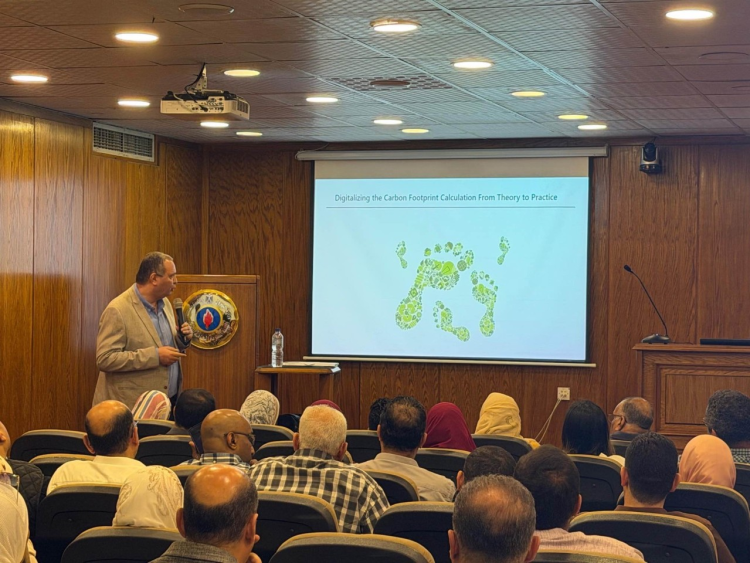
The Egyptian General Petroleum Corporation (EGPC) has launched a digital platform to monitor the sector’s carbon footprint, underscoring its commitment to digital transformation and environmental sustainability. The platform is an internal carbon‑tracking engine for oil and gas firms; it is restricted to sector use and not publicly accessible.
The main features of the platform were presented during an EGPC workshop, which included a comprehensive overview of its components and operating mechanisms, including methodologies for calculating emissions in line with best practices and international standards, ensuring standardised measurement approaches and enhancing the accuracy and reliability of environmental data. It also highlighted the platform’s vital role in supporting decision‑makers by providing precise, up‑to‑date information and preparing integrated carbon footprint reports at the sector level.
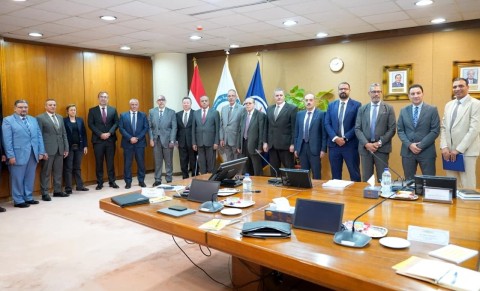
The workshop was organised by the EGPC’s departments of Environment Protection, Planning & Projects, and Information and Communication Technology (ICT) .
Tamer Aiyesh, EGPC Assistant Chairman for Health, Safety & Environment Protection (HSE) noted that the petroleum sector today stands among the most environmentally compliant industries. He emphasized ongoing efforts to modernize operations and gradually shift toward eco‑friendly processes, reducing emissions while balancing development needs with environmental protection.
As for the platform key benefits, Shaimaa Sayed, EGPC’s HSE Department Manager, highlighted that it improves emissions management efficiency, strengthens environmental compliance, and supports Egypt’s participation in international climate initiatives. She also addressed potential challenges, such as data integration and capacity building, and outlined proposed solutions to ensure effective and sustainable implementation.
Moreover, Mohamed Ali, EGPC’s Assistant General Manager, stressed the importance of digital transformation as a cornerstone for advancing environmental management systems, enhancing data collection and analysis, accelerating decision‑making, and enabling smart, indicator‑driven operations.
Carbon footprint accounting is a pivotal tool for understanding and managing emissions, helping mitigate environmental impacts and reinforcing climate action efforts, noted Tarek El-Shennawy, General Manager for Energy Efficiency, Alexandria National Refining and Petrochemicals Company (ANRPC).
During the workshop, Mohamed Hany, Manager of the Data Analytics Department at EGPC, showcased the platform’s integrated package of data analytics and business intelligence tools. These enable real‑time data processing, interactive dashboards, and precise performance indicators, offering advanced insights to improve operational efficiency and strengthen strategic planning, he noted.
The workshop concluded with agreement on a detailed roadmap covering activation phases, coordination mechanisms, training programs, and capacity‑building programs. The rollout is set to begin soon.
It is worth noting that EGPC has a 140 affiliated companies, including 12 subsidiaries and 41 joint ventures operating across exploration, production, refining, drilling, engineering, maintenance, transportation, and distribution.