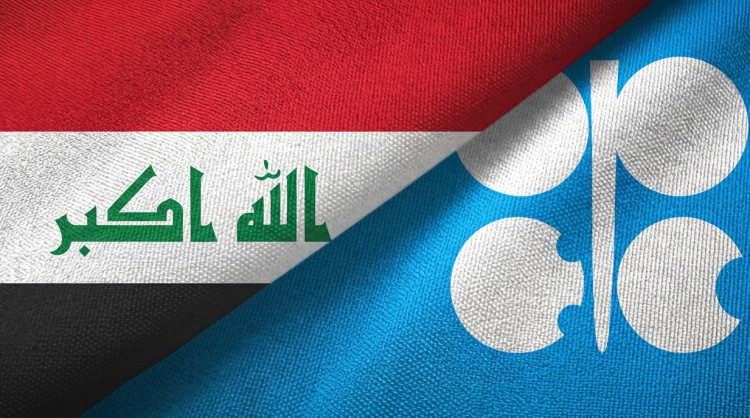
Iraq’s Ministry of Oil stated that the Organization of the Petroleum Exporting Countries (OPEC) and its allies have begun gradually restoring Iraq’s production quotas, particularly the voluntary cuts, as part of efforts to increase the country’s production capacity over the coming months, according to Iraq News Agency (INA).
Ministry spokesperson Salim al-Rikabi denied reports that Prime Minister Ali Falih al-Zaidi had discussed Iraq’s withdrawal from OPEC, stressing that the government remains committed to the organization while seeking a reassessment of production quotas in line with member states’ circumstances and existing agreements.
The ministry’s statement came a day after Reuters reported, citing sources familiar with the matter, that Iraq had considered leaving OPEC if the producer group did not allow Baghdad to significantly increase its oil output.
Al-Rikabi said the government is calling for production quotas to reflect Iraq’s security and economic conditions, adding that OPEC and its allies have responded by launching an assessment of the sustainable production capacity of member states in coordination with an independent international consulting firm. He noted that Iraq is actively participating in the process according to the approved timetable.
He added that the gradual restoration of production quotas, particularly the voluntary cuts, is expected to support Iraq’s efforts to boost its production capacity.
Al-Rikabi also emphasized that any future discussions on production ceilings or output levels will continue to be handled through OPEC’s established technical and consensus-based mechanisms.
He further noted that OPEC members have shown a high level of understanding of Iraq’s exceptional circumstances over the past four decades, including the impact of wars, security challenges, and terrorist attacks that damaged the country’s oil infrastructure and supporting facilities.
According to al-Rikabi, these considerations are expected to support Iraq’s efforts to restore production to a fair level, enabling the country to reclaim its position as OPEC’s second-largest producer while advancing oil sector development and rehabilitation projects, which remain the backbone of Iraq’s economy and its primary source of revenue.
Notably, Iraq, OPEC’s second-largest producer after Saudi Arabia and one of the organization’s five founding members, has a production quota of 4.378 million barrels per day (mmbbl/d) for July. However, its current production remains well below that level due to disruptions caused by the Strait of Hormuz crisis.