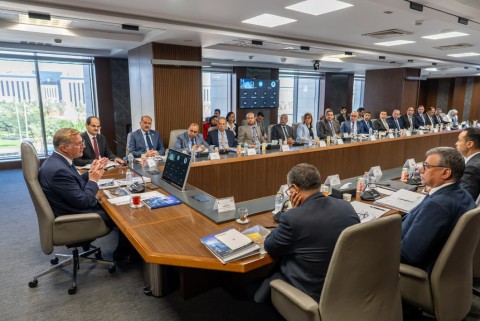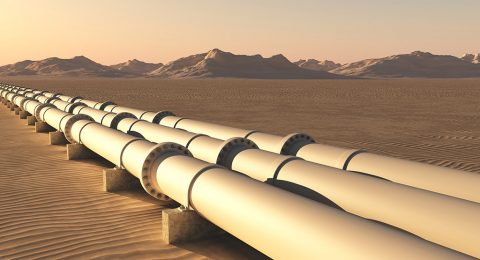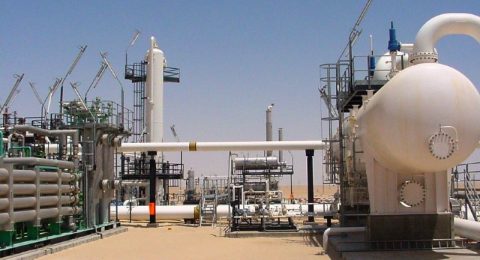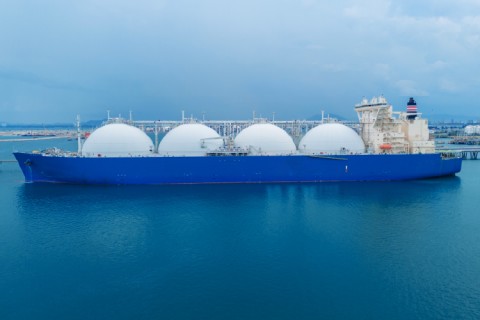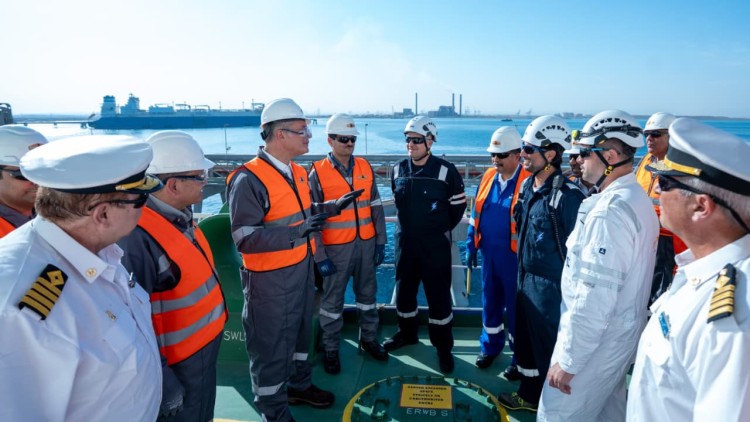
Karim Badawi, Minister of Petroleum and Mineral Resources, inspected the liquefied natural gas (LNG) regasification units at Ain Sokhna to ensure full operational readiness ahead of peak summer consumption, noted a statement by the Ministry of Petroleum and Mineral Resources (MoPMR).
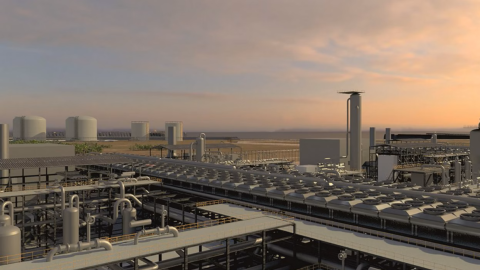
The inspection included three floating storage and regasification units (FSRUs): the Høegh Gallion and Energos Eskimo at SUMED Port, and the Energos Power at Sonker Port. The visit aimed to assess the units’ technical readiness, operational efficiency, and continuous preparedness to receive LNG shipments, regasify them, and pump them into the national natural gas grid
During the tour, Badawi stressed that Egypt possesses an integrated and flexible system to secure natural gas supplies, guaranteeing that the requirements of electricity generation plants, industrial facilities, and economic sectors are met during the summer months. He noted that the MoPMR is executing a proactive plan in complete coordination with the Ministry of Electricity and Renewable Energy to ensure stable and sustainable energy supplies for citizens.
He highlighted that the country’s success in meeting last summer’s record electricity demand, which exceeded 40,000 megawatts (MW), reflected the capacity of the Egyptian energy system to efficiently manage operational challenges and rising consumption rates. Badawi added that the current regasification framework, which includes the three units in Ain Sokhna alongside a fourth unit in Damietta, provides a total regasification capacity of approximately 2.7 billion cubic feet per day (bcf/d). This capacity strengthens the state’s ability to secure necessary natural gas supplies for power plants and industrial sectors during peak periods.
Separately, Badawi confirmed that the full settlement and payment of outstanding arrears to foreign investment partners in petroleum and natural gas exploration and production reflects Egypt’s commitment to enhancing trust with international partners and fostering a stable, attractive investment climate.
The tour included several ministry officials and chairmen of petroleum sector companies.
As part of preparations for peak summer demand, Prime Minister Mostafa Madbouly previously reviewed scenarios developed by the MOPMR to secure fuel supplies for the electricity sector.
Egypt experienced extended power cuts and load-shedding during 2023 and 2024 as declining domestic natural gas production coincided with rising electricity demand, particularly during the summer months. The challenge was exacerbated by the accumulation of arrears owed to international oil and gas companies, which the government has since worked to reduce in order to restore investor confidence and encourage increased drilling and production. In response, Egypt expanded LNG imports and regasification capacity while accelerating payments to foreign partners as part of broader efforts to strengthen energy security and ensure adequate fuel supplies for power generation