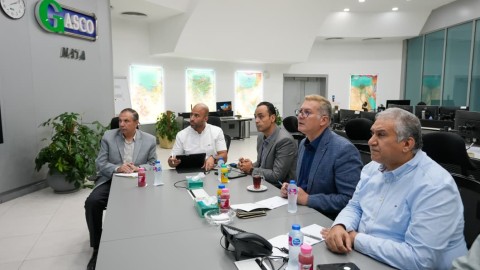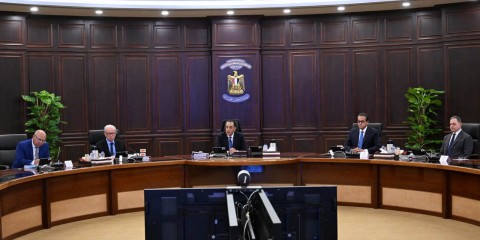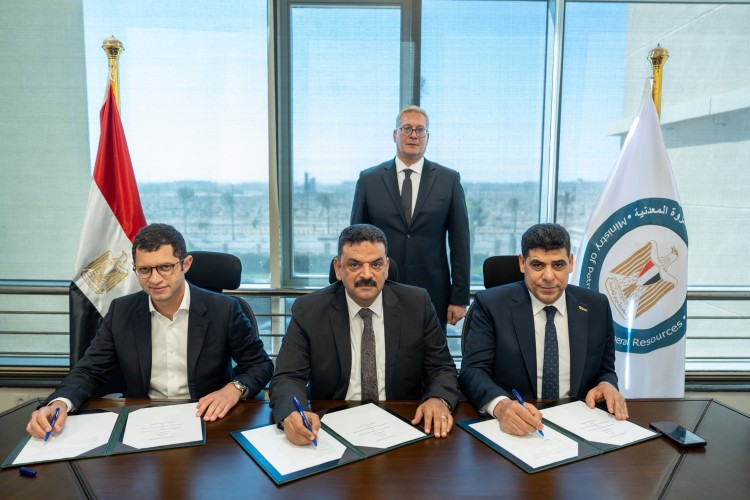
The Egyptian Mineral Resources and Mining Industries Authority (MRMIA), the New Valley for Mineral Resources and Oil Clay (WADICO), and Elsewedy Capital Holding for Investments signed a shareholders’ agreement to establish a company to develop, construct, manage, and operate an integrated phosphate fertilizer production plant in Ain Sokhna.
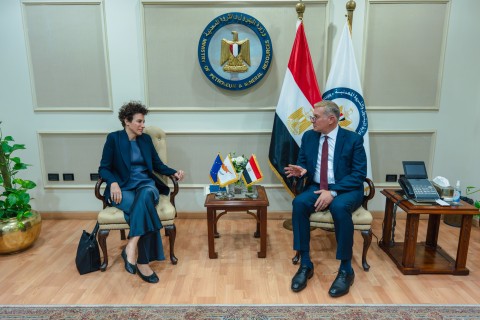
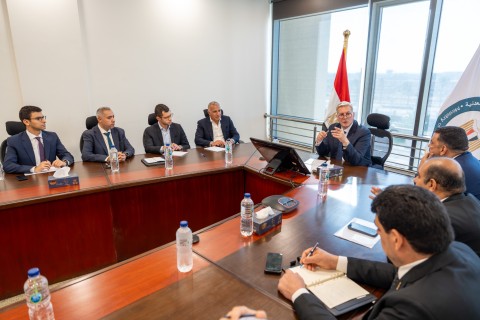
The signing took place in the presence of Karim Badawi, Minister of Petroleum and Mineral Resources, and Ahmed Elsewedy, Chairman of Elsewedy Capital Holding for Investments. The agreement comes in Implementation of the Ministry of Petroleum and Mineral Resources’ strategy to maximize the added value of the country’s mineral resources.
Signing the contract were Yasser Ramadan, Chairman of MRMIA; Reda Selim, Chairman and Managing Director of WADICO; and Abdelrahman Elsewedy, CEO of Elsewedy Digital, on behalf of Elsewedy Capital Holding.
The project will produce phosphate fertilizers to meet domestic demand and export the excess, thereby increasing foreign currency revenues, supporting food security, and creating new employment opportunities.
Badawi said Egypt’s mining sector is witnessing legislative and institutional reforms that have enhanced the country’s investment attractiveness. He highlighted the transformation of the Mineral Resources Authority into an economic authority (The Mineral Resources and Mining Industries Authority), granting it greater flexibility to partner with investors and implement major projects.
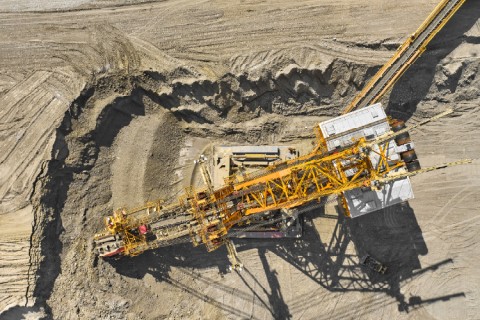
Egypt, with 2.8 billion tons of phosphate reserves (the world’s third largest), has major deposits in the Red Sea and New Valley regions, including 1 billion tons at Abu Tartour. The government is pursuing value-added processing through large-scale projects such as the Abu Tartour Phosphoric Acid Complex, a 450,000-ton-per-year facility now in its implementation phase, and a $1 billion integrated complex in Ain Sokhna, which will produce 300,000 tons per year each of phosphoric acid and DAP/TSP fertilizers.
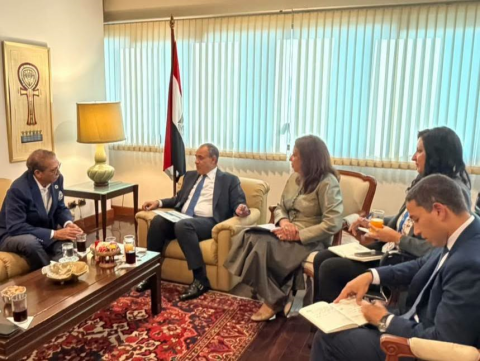
Earlier in July, Badawi and Elsewedy discussed the final preparations for the first phase of the integrated phosphate industries complex in Ain Sokhna. The complex, signed in November with total investments of $1 billion, contains three phases. The first phase focuses on the production of phosphoric acid and DAP/TSP fertilizers, each with a capacity of 300,000 tons per year (t/y). The second phase (2029-2031) aims to produce high-purity specialized phosphate chemicals. Meanwhile, in the third phase (2032-2034), the complex targets expanding to new energy materials for the production of electric battery components.