Features / In Focus



Stranded Gas: Technology Today and Future Challenges
Natural Gas is the world’s fastest-growing type of energy. Its use, according to many sources such as the Wall Street Journal, is predicted to at least double between 2000 and 2020. Many factors contribute to this surge in demand. First of all, population growth is a factor – more people equal the need for more energy. Oil, although still plentiful, is getting harder to recover. With environmental concerns rising all over the world, clean-burning natural gas is seen in a more positive light than coal, oil, or nuclear power. Many countries that previously had little or no modern infrastructure are now developing it. All of these factors add up to a vastly increased demand for natural gas, and the unfortunate possibility of an equivalent price rise. Current natural gas reserves for the entire planet are estimated at 6,100 trillion cubic feet (tcf), according to EIA estimates. Of these reserves, at least half are considered stranded.
Arab Oil Aid and the Path to Egypt’s Upstream Independence
The 2013/2014 fiscal year has ushered in many significant changes for Egypt’s economy and energy sector. Renewed efforts to pay off foreign debts and fuel subsidy cuts were the major features of president Sisi’s initial economic reform measures, and an upsurge in aid from Arab countries – much of it in the form of oil assistance – has contributed to meeting the countries significant energy demands. While Mohamed Morsi’s year as president was in some ways defined by the near $7.5 billion in financial aid from Qatar, which is now in the process of being returned, Egypt was flooded with billions of dollars from the United Arab Emirates, Saudi Arabia, and Kuwait, following Morsi’s ouster in support of the new regime. Regardless of the political implications, this new roster of foreign donors is proving essential to Egypt’s economic future.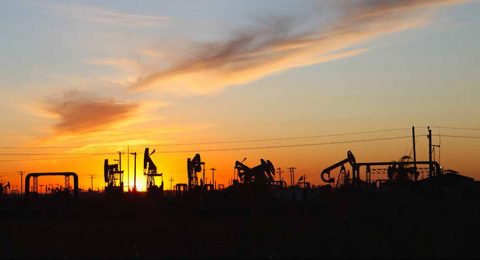
Enhanced Oil Recovery: A Cornerstone In Egypt’s Future Energy Development
Faced with an increase in the need for oil globally, energy companies have two choices: First, they can discover new fields; the second choice is to find a way to increase production for their current fields. Generally speaking, this second option is called EOR, or Enhanced Oil Recovery (it may also be referred to as Increased Oil Recovery or IOR). EOR can recover 30-60% of a site’s oil, as opposed to 20-40% using primary or secondary recovery, as stated by George Douglas Hobson in his “Introduction to Petroleum Geology.” This article will discuss the history of Enhanced Oil Recovery, several methods of recovery that fall under the broad definition of Enhanced Oil Recovery. It will also point out the current use of these methods in Egypt.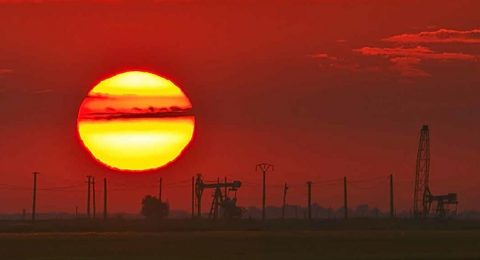
Drilling in Egypt: Past,Present, and Future
Advances in oil and gas technology are all around, increasing the amount and scope of discoveries with every passing year. Drilling, imaging, extraction, sample analysis—all of these areas and more are feeling the effects of technology research and development, with new discoveries giving rise to new interactions between sectors and almost instantly bringing forth ideas for even more.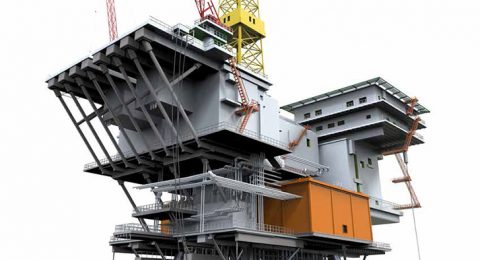
Israel’s Energy Future: A CHANGE IN THE GAME
The name Yuval Bartov is not well known even in energy circles, yet he did something historic and world-changing. While taking samples of rock in the Middle East in 2009, he pulled up a sample of rock that contained oil. He was southwest of Jerusalem, Israel.
Egypt Prepares to Open up Gas Market
An EGAS/GASCO joint working group is composing the drafts of a law and a decree that will enable to establish a gas regulator in Egypt next year. This is the first significant step towards opening the country’s gas market to competition.
The Future of Egyp’s Brownfield Development Convention: An Overview of the Workshop
At this month's convention, "The Future of Egypt's Brownfield Development," Egypt Oil & Gas will host a workshop dedicated to the latest advancements in technology and current case studies related to brownfield development in Egypt. Negotiating Terms and Recovering Costs: Egypt’s Tedious Production Sharing Agreements
Production Sharing Agreements (PSAs) for oil and gas exploration are seen as a characteristic of developing countries that ''seek to exploit their resources for economic rents but lack the experience or technical expertise to bear the financial burden,'' wrote energy law expert Marcia Ashong in her 2010 Dundee University study on cost recovery. While international oil companies (IOCs), desire for swift recovery of costs and profit maximization, delayed payments to contractors have caused frustration for IOCs as national debt mounts in Egypt. However, there is a general concern surrounding the inherent shortcomings of PSAs and the cost recovery structure itself, especially considering the advent of expensive, high-risk forms of exploration such as deep-water or hydraulic fracturing.