

Features / Energy Economics

The Economics of Egypt’s Petroleum Production Boom

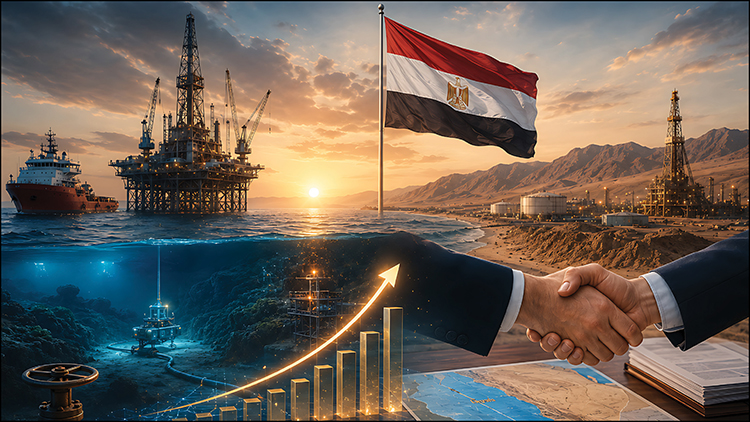
Egypt’s vision of promoting itself as a regional energy trading hub is an initiative that is both inspirational and challenging, but no country with such an ambition can really establish its credentials in the global energy market without flexing the muscles of its own energy sector. Though rich with energy resources, most notably natural gas, Egypt’s role as a force within the energy market was not up to its full potential decades ago. But that reality is quickly changing with effective economic policies that have sought to boost production, not only to ensure that the needs of the local market are fully satisfied but to secure Egypt’s place in the global economy as an attractive source of energy supplies for export.

Natural Gas Empowers Energy Transition Economy

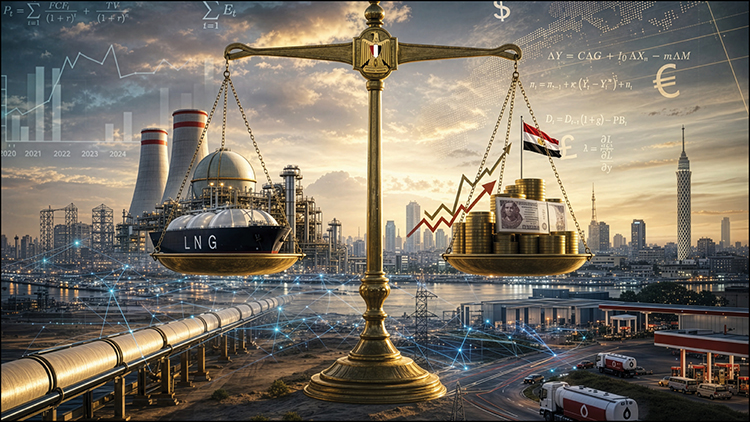
As the energy transition is in full swing and research in renewable energy technologies has brought about the possibility of new ways of living sustainably, the fate of natural gas has come into question. Natural gas has had its fair share of criticism, but perhaps a more objective look at alternative views would reveal that the picture is more complex. Gas can play a number of different roles as an energy source in various regions and markets, depending on the needs of those particular areas, and can even be the ideal fuel to set the foundations for a low carbon energy transition while stimulating economic growth. Given the number of contradicting views on the matter, forming a reasonably accurate projection of what economic role gas may play in the future on a global scale is challenging, but trends indicate that gas is here for the foreseeable future.

Hedging Out of The Crisis

With the Russia-Ukraine war raging on, economists have been thrown into unchartered waters as the conflict rewrites all the energy market’s financial equations. The war has forced global energy prices to go through the roof, creating one of the most daunting economic crises the world has ever seen. With the world’s economy in flux and gas-starved Europe bracing itself for a long winter, corporate leaders, government officials, and the world’s top experts have been hard at work to implement a strategy that can help navigate the world out of this deep abyss, but crisis management is a complex science with its different opinions and approaches. In the world of energy economics, taking the right measures to counter a negative trend is a key part of mitigating its fallout. And for many economists, hedging does just that.

Transporting Hydrocarbon The Economic Way

Hydrocarbons are a crucial part of every industry and in powering everyones' lives. When it comes to hydrocarbon transportation, the world looks at several means and chooses the safest, fastest, and most economic. The hydrocarbon transportation methods, whether it is to move natural gas or petroleum products, differ according to the amount and distance they travel, and they include: maritime navigation, land transportation, and pipelines. As the war between Russia and Ukraine goes on, several countries start eying the European market and studying the best transportation options for oil and gas.

The Rouble Gas Ultimatum: A Game of Economic Chess

As the relationship between global conflicts and economics increases in its complexity, currency has become just another one of many pieces to make that final checkmate move. In defiance of international sanctions, embattled Russian President Vladimir Putin declared that all “unfriendly” countries that have bought Russian energy supplies must fulfill their payments in roubles. This stood as a pressing challenge for the European Union, which gets an estimated 40% of its natural gas from Russia. Though several countries have asserted that the contract does not legally require them to pay using the Russian currency, they might not have any other option but to comply. While this request has received its fair share of criticism, it is a key decision that will force the energy market to support the value of the rouble in the face of tumultuous economic conditions.

Biofuel Economics: Egypt’s Profitable Path Towards Energy Transition

In being the host for COP 27 this November and a leading country in Africa, Egypt stands for the interests of the entire African continent in seeking a feasible vision for energy transition. As climate scientists express increasing concerns about emissions, energy transition has become a prerequisite for a prosperous future. Biofuel has been proposed by many as an effective route to escape a global climate cataclysm, but economists have been left to ponder whether it is an economically feasible component to the energy mix that will stimulate growth and boost profits.

How Natural Gas Fits into Energy Transition Plans

The energy transition is becoming inevitable as the world moves towards cleaner energy to face climate change. In this regard, natural gas is one of the main players, and an important step in the energy transition path. The world has been seeing natural gas not only as cleaner fossil fuel with low-emission, but also as a cost effective one. However, in recent days the prices of different energy sources have been climbing after the Russian invasion of Ukraine. This change has raised the question of the economic feasibility of natural gas at the moment.

Egypt Jumps on The Green Bond Bandwagon

The burgeoning effects of climate change and the cost of extreme weather disasters grew by 86% between 2016 and 2017, according to the World Metrological Organization. “There have been rising calls to promote a type of finance known as ‘green finance’ as a proactive method to fulfil SDGs connected to environmental sustainability as part of global efforts to transition to a sustainable low carbon economy,” according to Prof. Nagwa Samak, Vice Dean of Post Graduate Studies and Research, Faculty of Economic and Political Science, Cairo University.

Investors, Governments Turn the Wheel of The Hydrogen Economy

In light of the necessary need for the energy transition, hydrogen becomes the current mainstream of interest all over the world, having the ability to play a key role in the future of energy. This pushed governments and investors to think about the economy of hydrogen. According to an article published by “The Guardian”, hydrogen economy refers to the approach of using hydrogen as a low-carbon source of energy instead of the existing ones. The International Energy Agency’s (IEA) “Future of Hydrogen” report stated that hydrogen can help in implementing the global goal of reducing emissions.

Vying for Major Recovery in 2021

In 2020, the world economy sufferedfrom the COVID-19 pandemic, which caused cracks in most of the industries, one of which is the oil and gas industry. The economy witnessed lockdowns associated with lower performance and production rates. However, by the start of 2021, the economy commenced its recovery trip thanks to the emergence of the vaccine and the early governments support packages, which were the main drivers for such a recovery. The International Monetary Fund (IMF) estimated that the global economy has grown by 5.9% in 2021, which is the highest in the past ten years, after the sharp decline of the global gross domestic product (GDP) in 2020 recording -3.1%.

Page 5 of 6

Login

Welcome! Login in to your account

Remember me Lost your password?

Lost Password