Rising geopolitical tensions in the Middle East have significantly affected economies across the region, including Egypt. Surging oil and natural gas prices, coupled with global supply chain disruptions, have fueled inflation and reshaped energy strategies.
Egypt remains heavily reliant on natural gas, which provides nearly 84% of its electricity generation, compared to just 13% from renewable sources. The government aims to raise the share of renewables to 42% by 2030, a target recently revised upward to 45% by 2028. These developments have prompted many countries—especially developing economies—to prioritize energy diversification over rapid transition.
Industrial Sector: The Hardest to Decarbonize
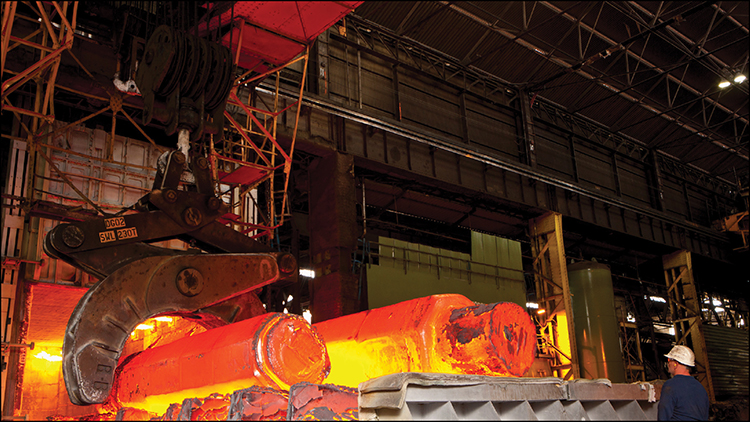
Despite government efforts to rationalize electricity consumption in residential and commercial sectors, applying similar measures to industry remains difficult. Energy-intensive sectors such as fertilizers, iron and steel, petrochemicals, and cement depend heavily on natural gas or diesel, either as a primary energy source or as a production input. Fertilizer manufacturing, in particular, relies on natural gas as feedstock.
This dependency has sparked debate on how to encourage industries to shift toward renewable energy. “Renewable energy is a promising solution to the current crisis; however, several challenges must be addressed to maximize its potential,” said Adel Mohamed Taha, Chief Technical Advisor for Sustainability and Industrial Decarbonization at the Federation of Egyptian Industries.
Taha explained that nitrogen-based fertilizer plants use natural gas both as energy and feedstock, while iron and steel complexes require high-temperature furnaces, classifying them as energy-intensive. Meeting such thermal demands currently depends on natural gas and other fuels. He noted that if factories continue using natural gas for thermal energy but switch to renewables for electricity, their overall carbon footprint could be significantly reduced.
“This can be achieved either by sourcing renewable electricity from the national grid via power purchase agreements or by establishing direct connections with nearby solar or wind power plants,” he added.
According to a study by the Egyptian Center for Economic Studies (ECES), Egypt had about 56,694 megawatts (MW) of renewable capacity installed in 2025, while peak electricity demand reached only 36,800 MW in 2024. The challenge lies not in generation volume but in timing, location, and reliability of delivery.
Green Hydrogen: A Costly but Strategic Alternative
Taha also highlighted the potential of green hydrogen in heavy industries. Low-carbon hydrogen could improve efficiency, provide high thermal energy, and reduce reliance on natural gas. Initially, hydrogen production relied on natural gas, resulting in high emissions. Green hydrogen, produced through water electrolysis powered by renewables, offers a cleaner alternative.
Despite its promise, integrating green hydrogen into heavy industries remains expensive. It requires substantial investment, with challenges in pricing, infrastructure, and securing off-takers. Taha emphasized that policy measures—such as Egypt’s hydrogen incentives law and financial de-risking instruments—are crucial to overcoming these barriers.
Localization of Green Hydrogen Projects
The Suez Canal Economic Zone (SCZONE) has made green fuel localization central to its sustainable development strategy. “We have allocated land for future electrolyzer installations and designed a pipeline to transport production from the plant to the port,” said Mohamed Abo El Dahab, General Manager of Green Economy at SCZONE, during the High-Level Finance Coordination Dialogue on Green Hydrogen and Ammonia in Egypt and Morocco.
A transmission line is being extended to power the electrolyzer, which will produce green ammonia. The facility, spanning 30 million square meters and located 15 kilometers from the port, will share infrastructure with a desalination plant. Egypt’s green hydrogen project is expected to export its first shipment of green ammonia to Germany by the end of 2027.
Meanwhile, Misr Fertilizers Production Company (MOPCO), in partnership with the Egyptian Petrochemicals Holding Company (ECHEM) and Norway’s Scatec, completed pre-FEED studies in April for an $873 million green ammonia project in New Damietta. Scheduled to begin operations in Q3 2028, the plant will produce 150,000 tons annually for export and integration into MOPCO’s existing facilities. It will be powered by up to 480 MW of renewable energy and supported by a 240 MW electrolyzer.
Additionally, Abu Qir Fertilizers and Chemicals Company and Alexandria Fertilizers Company (Alexfert) signed a memorandum of understanding to explore a Mediterranean Green Hydrogen Hub in Alexandria. Feasibility studies include plans for 500 MW of wind and solar generation and a green hydrogen capacity equivalent to 480 tons per day of green ammonia.
By localizing green hydrogen production, these projects enable fertilizer industries to gradually replace natural gas with cleaner feedstock, reducing exposure to volatile gas prices while lowering carbon emissions.
State Measures Driving Renewable Adoption
Egypt’s National Low-Carbon Hydrogen Strategy, launched in 2024, aims to scale up hydrogen production across industry and transport while strengthening Egypt’s position in the global hydrogen market. The government expects this initiative to add $18 billion to GDP and achieve annual hydrogen production of 3.8–5.6 million tons by 2040.
Grid infrastructure is also being upgraded, supported by a €90 million EU grant to expand renewable transmission capacity. Egypt plans to add 2,500 MW of renewable capacity to the national grid in 2026, enhancing stability and efficiency.
Sabah Mashaly, Deputy Minister of Electricity and Renewable Energy, noted that Egypt is among the few regional countries with five green hydrogen projects already underway, implemented by private companies using direct connections to renewable sources.
Ehab Ismail, Chairman of the New and Renewable Energy Authority, highlighted investment incentives, including reduced customs duties on renewable equipment (from 5% to 2%) and a lowered value-added tax (from 14% to 5%). He stressed that land allocation for renewable projects is coordinated with the Egyptian Electricity Transmission Company to ensure grid readiness before approvals.
While renewable energy and green hydrogen are not yet fully integrated into Egypt’s hardest-to-abate industries, the country possesses the infrastructure, policies, and investment momentum to accelerate execution. Achieving a balanced energy mix will be critical for resilience against geopolitical pressures and economic volatility.