Egypt’s Red Sea oil and gas sector has long been described as a frontier of untapped potential, yet persistent fiscal and operational hurdles have nevertheless kept international oil companies (IOCs) at arm’s length. As a consequence, bid rounds have been delayed, arrears have accumulated, and investor confidence has faltered—leaving exploration opportunities more theoretical than tangible. Today, by contrast, Egypt is recalibrating its approach. By extending bid rounds with clearer timelines, settling arrears to restore trust, and introducing cash‑flow guarantees to stabilize IOC revenues, the government is signaling a pragmatic shift from fragmented fixes to a coherent investment strategy. Taken together, these measures, coupled with targeted fiscal reforms, aim to reposition Egypt as a competitive deepwater exploration hub, transforming latent promise into actionable capital flows.
Unlocking Opportunities
“The Egyptian Red Sea remains one of the world’s last underexplored frontier basins. Unlike the mature hydrocarbon provinces of the Gulf of Suez, Western Desert, and the Mediterranean, exploration activities in the Egyptian Red Sea are still at a relatively early stage. To date, exploration efforts have been primarily limited to regional and basin scale seismic acquisition campaigns, with only preliminary geological and geophysical assessments completed,” Wael Attia, Egypt Country Manager at Pacific Oil Limited Company, a privately-owned oil & gas company with a business portfolio across the MENA region, tells Egypt Oil & Gas.
“Consequently, it would be premature to identify companies that have already achieved commercial hydrocarbon yields in the Egyptian Red Sea,” Attia points out.
Nevertheless, building on this context, new seismic analysis confirms the basin’s high potential, highlighting favorable petroleum systems and structural plays. This in turn has attracted major IOCs, driving strong interest in recent licensing rounds by the South Valley Egyptian Petroleum Holding Company (Ganope), according to Attia.
Egypt’s Red Sea licensing round was launched in November 2025, offering exploration opportunities across four offshore blocks (RS‑1 to RS‑4). The original closing date of May 3, 2026, was extended to June 29, 2026, reflecting both strong investor interest and the government’s effort to maximize participation. Ganope explained that the extension was intended to give companies more time to prepare competitive submissions, according to the Egypt Upstream Gateway (EUG). Moreover, investor momentum was further demonstrated at industry events such as the Society of Exploration Geophysicists (SEG) Cairo Annual Conference and Egypt Energy Show (EGYPES) 2026, where bp and SLB finalized agreements to deploy advanced seismic technology in the Red Sea.
In tandem with these efforts, Egypt has also introduced a profitability‑based production‑sharing model (R‑Factor), which automatically adjusts fiscal terms to reflect investment returns. This mechanism is designed to make Red Sea acreage more commercially attractive and reduce investor concerns about opaque fiscal structures. In this context, Attia notes that “Ganope has introduced an attractive contractual framework with competitive fiscal incentives and investment-friendly terms designed to encourage exploration risk-taking and attract new capital into this frontier area.”
Bolstering the Investment Climate
Financial stability is critical for attracting exploration capital, and Egypt’s arrears to IOCs have long been a deterrent. Outstanding debts once exceeded $6 billion, chilling investor appetite. Against this backdrop, on June 10, 2026, Egypt fully settled its outstanding arrears to foreign oil and gas partners, a move designed to restore investor confidence, stimulate fresh capital injection, and accelerate critical exploration and research activities. This accomplishment follows a dedicated effort over the past year to address a financial burden that had previously constrained the sector.
Additionally, “financial and regulatory reforms also play a critical role in investment decisions. Improved fiscal terms, streamlined licensing procedures, greater contractual flexibility, and enhanced mechanisms for cost recovery and profit sharing significantly improve project economics and help offset the elevated geological and operational risks associated with frontier basin exploration,” Attia emphasizes.
Egypt’s fiscal reforms go beyond arrears clearance. Specifically, new tax incentives, profit‑sharing adjustments, and risk‑sharing clauses are being rolled out to improve project economics. In particular, the R‑Factor model ensures that fiscal terms evolve with profitability, while contractual flexibility allows operators to better manage exploration risk. Ultimately, these reforms are designed to make Egypt’s Red Sea blocks competitive against other global deepwater frontiers.
Rather than piecemeal fixes, therefore, Egypt is integrating bid round reforms, arrears settlement, and cash‑flow guarantees into a coherent strategy. This plan positions Egypt as a credible frontier hub in global deepwater exploration. With 101 exploratory wells planned by 2026 and 480 wells targeted by 2030, the scale of ambition is clear. If these initial exploration campaigns succeed, a substantial wave of follow‑on investments across the value chain is expected.
The Economic Potential of the Red Sea Basin
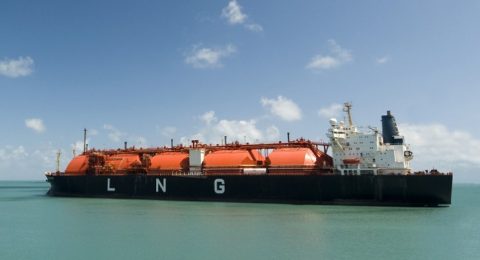
Successful Red Sea developments could generate significant macroeconomic benefits. Expanded exploration and production would reduce Egypt’s import bill, strengthen foreign currency reserves, and contribute to GDP growth. Moreover, spillover effects include higher LNG export volumes, downstream industrial expansion, and job creation. Attia highlights that beyond upstream expenditures, “successful Red Sea developments would create broader economic benefits by stimulating local content, service industries, logistics, maritime support activities, and regional industrial development.”
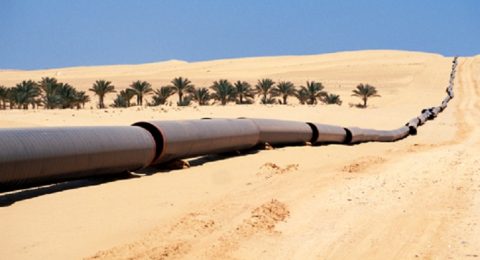
“Therefore, if exploration results prove successful, the Red Sea has the potential to become one of Egypt’s most important new hydrocarbon growth areas and a major destination for sustained energy sector investment in the years ahead,” according to Attia. Consequently, “any commercial discoveries would require significant investments in gathering systems, offshore and onshore pipelines, gas processing plants, storage facilities, marine terminals, and associated support infrastructure. These developments could collectively represent investments worth several billions of dollars over the coming decade,” he notes.
Overcoming Barriers
Despite fiscal reforms, operational risks remain. Hesham Al Khateeb, Geologist who has proven track record in Exploration and Development for more than 30 years, points to thick salt deposits, complex tectonics, rugged seafloor topography, and extreme high‑pressure, high‑temperature environments as major challenges. These conditions demand advanced seismic imaging, specialized drilling technologies, and stringent environmental safeguards to protect the Red Sea’s pristine ecosystems.
Al Khateeb further highlights the challenging limited well data, stating that “Historically, the Red Sea has been under-explored, resulting in a scarcity of well data compared to more mature basins, increasing exploration risk .More wells mean more data mean more information and more approaches” Geopolitical risks also loom, with maritime security in the Red Sea a persistent concern. Nevertheless, if reforms are sustained and exploration programs deliver commercial yields, IOC participation is likely to rebound.
“To overcome these challenges, operators must increasingly leverage advanced technologies and integrated approaches: Advanced Multi-Client 3D Seismic and Imaging: Modern seismic surveys, including advanced multi-client 3D seismic and full-waveform inversion (FWI), are crucial for improving subsalt imaging and resolving complex geological structures” Al Khateeb explains.
Moreover, innovation is also critical for Red Sea exploration. Al Khateeb points out that “Innovations in drilling technology are essential for operating in high-pressure, high-temperature (HPHT) environments and through challenging salt formations.”
Al Khateeb further highlighted the importance of infrastructure, pointing out Saudi Arabia’s example where “the East-West Pipeline exemplifies a critical logistical solution, providing export flexibility and mitigating geopolitical risks associated with other shipping lanes.”
Egypt’s Red Sea reforms mark a decisive shift from fragmented fixes to a coherent investment strategy. By clearing arrears, extending bid rounds, and introducing cash‑flow guarantees with profitability‑based fiscal models, Egypt is laying the foundation for renewed IOC engagement. Success, however, will depend on overcoming technical, geopolitical, and environmental hurdles. If commercial discoveries follow, the basin could unlock billions in investment, strengthen reserves, expand Liquefied Natural Gas (LNG) exports, and generate jobs—turning frontier promise into lasting economic resilience.