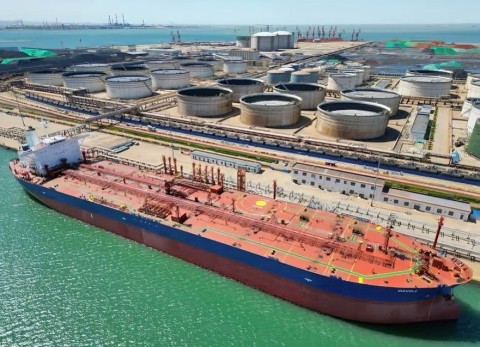
Crude oil and condensate exports from the Gulf remained broadly stable in July 2026, at around 10.7 million barrels per day (bbl/d), although shipments were still approximately 40% below the pre- US-Iran-war levels, underscoring the continued impact of regional conflict on global energy flows, according to Reuters citing tanker tracking data from Kpler and Vortexa.
The stability in exports helped ease concerns over a deeper supply disruption despite persistent hostilities in the Middle East. However, export volumes weakened during the second half of July as fighting between Iran and the US-Israel coalition intensified, disrupting shipping through key regional waterways.
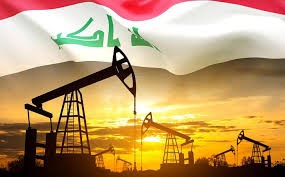
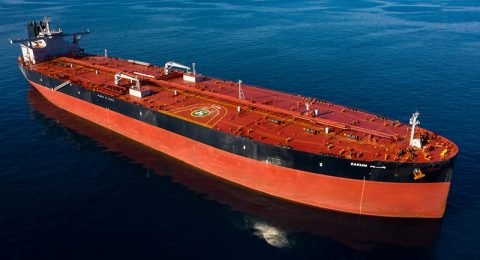
According to the report, Iraq recorded the largest increase in exports during July, roughly doubling its June shipments after loading nine additional Very Large Crude Carriers (VLCCs). In contrast, exports from Saudi Arabia and the United Arab Emirates (UAE) declined over the month.
Despite the relatively stable export volumes, tanker traffic through the Strait of Hormuz and the Bab el-Mandeb Strait remained well below normal levels. The report noted that attacks on commercial vessels continued to weigh on shipping activity, with 14 attacks reported in July, compared with eight in June, prompting vessels to reroute and increasing transportation costs.
Driven by higher export demand, some producers have ramped up their production. According to a source familiar with the matter, Kuwait increased its crude output from approximately 1.65 million barrels per day (mmbbl/d) in June to 1.971 mmbl/d in July.
Meanwhile, Saudi Aramco President and CEO Amin Nasser warned that global oil inventories have declined by more than 2.6 billion barrels since February, adding that replenishing inventories could take up to 18 months, even if shipping through the Strait of Hormuz returns to normal immediately. He also pointed to slower exports from Saudi Arabia’s Red Sea export terminal at Yanbu due to Houthi attacks near Bab el-Mandeb.
Gulf crude exports rebounded in June 2026 to more than 10 million bbl/d, supported by improved security around the Strait of Hormuz, but they remained about 40% below pre-war levels, reflecting the lasting impact of the regional conflict on energy trade. The UAE led the recovery by increasing exports of previously stranded cargoes, helping stabilize international oil markets.
The International Energy Agency (IEA) said global oil supply recovered partially in June but remained 9.4 million bpd below pre-war levels. The agency expects supply to improve in 2027, provided that traffic through the Strait of Hormuz normalizes, while analysts have cautioned that any sustained market recovery depends on restoring safe maritime transit through the Gulf.