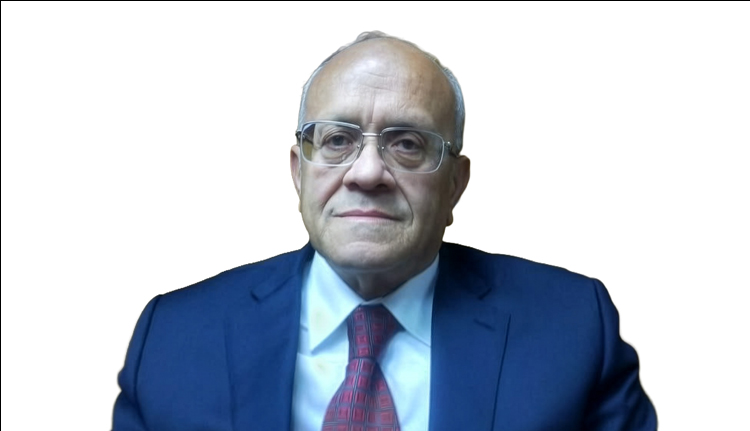
In an exclusive sit-down with Egypt Oil & Gas, Omar Teima, former Chairman of the Egyptian Mineral Resources Authority (EMRA), now the Egyptian Mineral Resources and Mining Industries Authority (MRMIA), sheds light on a landmark era in Egypt’s mining sector and reflects on how the industry has evolved since his departure.
Leading EMRA from February 2014 to August 2017, Teima spearheaded critical structural shifts. His tenure saw the drafting and execution of Mineral Resources Law No. 198 of 2014 and its 2015 Executive Regulations, modernizing outdated 1956 legislation. He restructured fiscal frameworks, standardized national quarry licensing, expanded field inspections to curb illegal mining, and launched the 2017 international gold bid round, which was Egypt’s first in eight years.
Following his exit, the sector underwent further transformation, notably adopting the 2019 rent-and-royalty system and separating mining from petroleum management. Sitting down with Egypt Oil & Gas, Teima offers an insider’s view on his baseline achievements and how those early reforms set the stage for today’s investment climate.
How do you compare EMRA’s status during your tenure through 2017 with its current standing as an independent economic authority?
What we see today fulfills the vision we pursued between 2014 and 2017. Back then, our immediate focus was replacing the 1956 legislation with Mineral Resources Law No. 198 of 2014 and its updated executive regulations. We also attempted to transform EMRA into an independent economic entity, but were unsuccessful. Remaining a service authority meant all revenues flowed directly to the Ministry of Finance. Our development budgets were routinely trimmed, leaving strategic plans largely on paper.
The shift to an independent economic authority gave MRMIA financial autonomy-retaining revenues, approving budgets, and funding exploration, training, salaries, and equipment-proving that fiscal freedom is the cornerstone of operational success.
For perspective, in the 1980s and 1990s around 30 field expeditions were dispatched annually to the desert. By my tenure, tight budgets reduced that number to just five or six per year, while hiring freezes created severe staffing and training gaps. Equipment was similarly depleted; in 2014, we managed to purchase a few 4×4 vehicles to replace models dating back to 1990. Off-road vehicles are not luxuries; they are a geologist’s lifeline in rugged terrain.
Today, EMRA has the leverage to modernize its fleet, acquire current technologies, recruit top talent, and scale up geological missions. This shift removes historical constraints, allowing the authority to move from survival mode to strategic growth and unlock Egypt’s true mineral potential.
Beyond EMRA’s transition into an independent economic authority, what do you view as the most significant developments in Egypt’s mining sector since 2017?
The primary advancement is the implementation of the Open Block System (OBS) for concession tenders. Moving away from rigid two- to three-month bidding windows, blocks remain accessible continuously throughout the year rather than requiring companies to wait for a specific bid round announcement. Receiving an initial bid triggers a 30-day competitive window; if no competing offers emerge, the block remains accessible. The OBS method allows investors to commit capital on their own timelines across diverse commodities, including gold, phosphate, talc, and kaolin.
Egypt has also benchmarked global leaders to modernize local operations. Several recent delegations to Australia highlight a strategic push to adapt proven international mining frameworks, particularly by targeting mid and small sized Australian exploration firms. Unlike mega-conglomerates, these mid-tier players partner with domestic Egyptian contractors who have built strong technical capacity, acquired modern equipment, and deployed skilled local labor across regional projects.
This domestic contracting capability is best illustrated by the Shalateen Mineral Resources Company framework. Rather than mining directly, Shalateen operates as a state administrative entity, awarding supervised contracts to local partners through competitive tenders. This approach has established Shalateen as Egypt’s second-largest gold producer after Sukari. Crucially, the model offers a practical path to integrate informal, unregulated mining into the formal economy. While major multinationals often struggle to manage local prospectors, Shalateen allocates smaller, managed parcels of two to ten square kilometers under state supervision. This converts illegal operations into formal production, routes gold directly into state channels, restores desert security, and keeps local operators distinct from major corporate concessions.
What is your perspective on Egypt’s transition from petroleum-style Production-Sharing Agreements (PSAs) to an international standard Royalty-Tax-Rent fiscal regime?
The debate over commercial structures in mining contracts is central to attracting global capital while securing state revenues. Production-Sharing Agreements, proven in Egypt’s energy sector since the 1950s, deliver raw physical production to the state from day one of extraction. In contrast, profit-sharing models depend on the foreign partner achieving profitability to generate broader fiscal returns, though a fixed royalty remains universal across all systems. The historic Sukari concession was granted in 1996 under a unique profit-sharing arrangement, but serious investors adapt to whichever model the host state establishes. Following Law No. 145 of 2019 and its executive regulations, Egypt officially moved away from PSAs to an international standard Royalty-Tax-Rent framework, eliminating mandatory 50/50 joint ventures (JV).
Beyond the fiscal regime itself, I strongly advocate competitive tendering over the direct placement of concessions, as occurred with Sukari. Direct placement awards a concession to a single investor without competition. Tendering, by contrast, brings transparency. Placing a block out for public bid might draw two, three, or five applicants, allowing the state to evaluate each proposal and select the best offer, not only financially, but more importantly, technically.
The ultimate goal is not simply to dig up gold, but to extract it profitably using sound scientific methods that prevent resource waste. Maintaining transparent bidding alongside flexible contract terms safeguards national resource sovereignty while ensuring Egypt remains highly competitive for international capital.
The mining sector appears to be shifting from exporting raw minerals to processing value-added products, starting with phosphate. What is your perspective on this strategy?
Moving away from crude exports has been a critical goal since 2014, and this policy must extend well beyond phosphate. I have repeatedly advocated that Egypt should completely stop exporting any raw mineral in its unprocessed state. Selling our raw resources at rock-bottom prices only to re-import finished goods at premium rates is an unsustainable economic model.
Egypt holds vast mineral wealth complemented by unique operational advantages. Our deserts feature “open-book geology,” where exposed rock formations allow geologists to visually identify roughly half of the landscape without specialized equipment. Furthermore, our mining regions offer strong security, an available workforce, developed transportation infrastructure, and accessible water. Value-addition allows us to leverage these national strengths and maximize economic returns.
Looking ahead, which minerals hold the highest commercial potential for Egypt?
Gold is number one. Egypt is exceptionally rich in gold deposits, and it remains our highest-potential asset.
Phosphate also offers massive opportunities. While raw grades vary, straightforward processing easily elevates its quality for higher-value commercial applications. Additionally, we have substantial iron ore deposits across several regions, alongside major reserves of quarry materials and industrial minerals including marble, gypsum, feldspar, talc, and kaolin.
Our white sand reserves deserve special focus. Given their extraordinary purity and volume, Egypt’s white sand deposits alone could supply dozens of top-tier global glass manufacturing plants.