Egypt could strengthen its position as a regional natural gas transit and export hub through a proposed route connecting Cypriot offshore supplies to European markets via existing infrastructure, rather than a dedicated subsea pipeline, Middle East Economic Survey (MEES) reported on October 16.
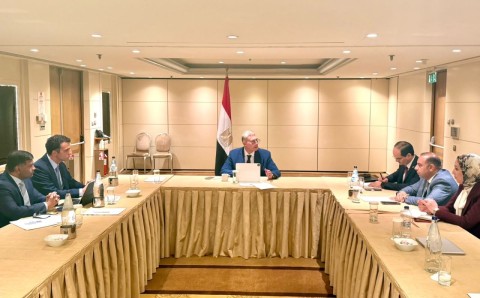
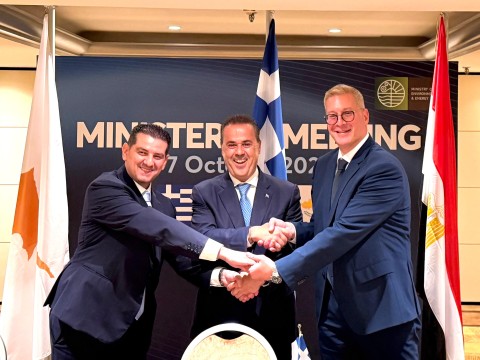
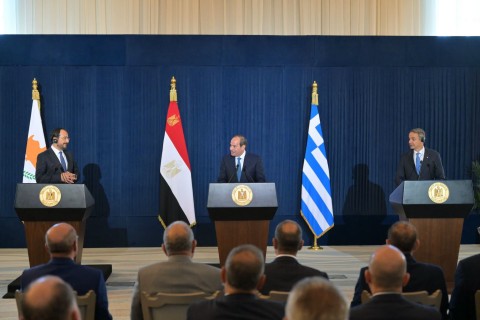
The proposal was discussed by Egyptian, Cypriot, and Greek officials at a strategic energy meeting in Athens on October 7, according to MEES.
The arrangement would connect offshore natural gas fields to Egypt’s pipeline network and liquefied natural gas (LNG) export terminals. Some shipments could then reach Greece for onward distribution to southeastern Europe.
Cyprus’ Cronos field could provide an initial source of supply. Italian energy company Eni and French energy company TotalEnergies approved a $2.2 Bn development project in July. Production is expected to begin in March 2028, with output projected to reach 500 million cubic feet per day (cf/d).
The natural gas would be transported through a subsea connection to infrastructure serving Egypt’s Zohr field before reaching the Damietta LNG terminal for export.
Egypt could retain up to 20% of production for domestic consumption, leaving approximately 400 million cf/d available for export at full output.
Some LNG shipments could reach Greece, where the LNG would be regasified before entering the Vertical Gas Corridor for transportation to markets in the Balkans and Ukraine.
However, neither Eni nor TotalEnergies has announced plans to allocate Cronos natural gas to Greece. Any such arrangement would depend on commercial viability, including shipping costs, regasification fees, and pipeline transportation charges.
Egypt’s existing infrastructure and domestic natural gas demand could strengthen its role in the proposed network. Israeli natural gas deliveries are already approaching the capacity of the pipelines connecting the two countries. Potential Cypriot supplies could ease pressure on Egypt’s domestic market and free up additional volumes for export.
The European Union’s planned restrictions on Russian natural gas imports could create further opportunities for alternative suppliers. Imports of Russian LNG under long-term contracts are scheduled to be prohibited from January 1, 2027, followed by restrictions on Russian pipeline natural gas under long-term contracts from September 30, 2027, subject to applicable extensions. The measures support the bloc’s broader strategy to reduce its dependence on Russian energy.