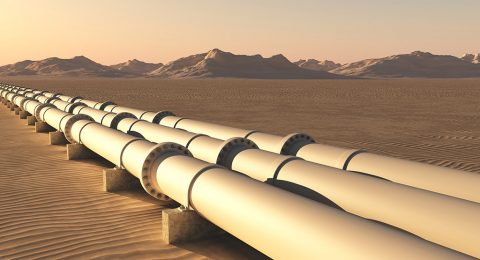
The UAE will accelerate construction of a new oil pipeline to the port of Fujairah, aiming to double export capacity by 2027, according to the Abu Dhabi Media Office reported by Reuters. Crown Prince Sheikh Khaled bin Mohamed bin Zayed directed Abu Dhabi National Oil Company (ADNOC), UAE state-owned energy company, to fast-track the West-East Pipeline project, which is already under construction and expected to begin operations next year.
The move comes as Iran’s Islamic Revolutionary Guard Corps (IRGC) expands its claimed control over the Strait of Hormuz and the Gulf of Oman. Since the February 28 US -Israel strikes on Iran, Tehran has effectively shut the chokepoint, disrupting about 20% of global oil supplies and driving energy prices higher. The IRGC has published maps showing new zones of control and carried out drone and missile attacks on UAE oil facilities, including Fujairah.
The UAE’s existing Habshan-Fujairah pipeline carries 1.8 million barrels per day (mmbbl/d), but the new line will vastly increase capacity. ADNOC is targeting 5 million bpd by next year, while the UAE could raise output to 6 mmbbl/d after leaving OPEC earlier this month.
Saudi Arabia’s East-West pipeline, which Aramco recently expanded to 7 mmbbl/d, has also been critical in bypassing the strait. Together, the UAE and Saudi Arabia remain the only Gulf producers with alternative export routes, while Kuwait, Iraq, Qatar, and Bahrain remain dependent on the waterway.
Fujairah and nearby Khor Fakkan have become vital hubs for oil and food imports but remain vulnerable to Iranian attacks. Recent strikes forced temporary halts to loadings, underscoring the urgency of the UAE’s pipeline expansion