Saudi Arabia’s crude oil exports from the Red Sea are increasingly being conducted without visible vessel-tracking signals as tankers seek to avoid attacks by Yemen’s Iran-aligned Houthis, creating significant uncertainty over the scale of disruptions to the Kingdom’s oil flows.
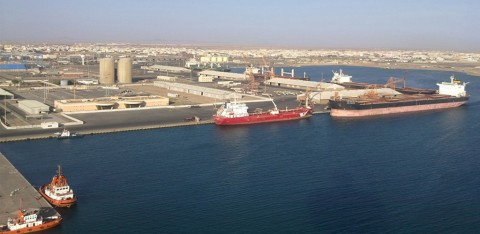
All recent crude loadings from Saudi Arabia’s Red Sea port of Yanbu have been conducted without continuous Automatic Identification System (AIS) signals, according to shipping analysts cited by Reuters. The growing use of so-called “dark voyages” is making it more difficult for traders and institutions, including the International Energy Agency (IEA) and OPEC, to accurately assess Saudi export volumes.
The Houthis declared a maritime embargo against Saudi Arabia on July 20 and have since claimed attacks on Saudi-linked tankers and oil facilities, including the Yanbu oil facilities and the Jazan refinery on the Red Sea coast.
Shipping data illustrates the growing uncertainty. Vortexa estimated Yanbu loadings at 2.38 million barrels per day (mmbbl/d) in the week beginning August 3, down from 2.71 mmbbl/d a week earlier. Kpler estimated a much sharper decline to 1.78 million bpd from 4.04 mmbbl/d, while AXSMarine estimated that loadings increased to 850,000 bbl/d from around 420,000 bbl/d.
“Last week Yanbu liftings were all conducted dark,” Vortexa analyst George Morris said, noting that the firm was not currently seeing Yanbu loadings with AIS signals. Kpler estimated that around 70% of Saudi West Coast loadings in recent weeks were conducted without continuous tracking.
Saudi Arabia has increasingly redirected crude northward through the Red Sea, either via the Suez Canal or Egypt’s SUMED pipeline, as shipping risks rise around the southern Red Sea and Bab el-Mandeb Strait.
Crude and condensate loadings at Egypt’s Sidi Kerir terminal averaged a record 2.17 mmbbl/d in the week covered by the Reuters report, approximately 50% above the previous week. About 90% of those volumes were Saudi crude, according to Vortexa.
The development underscores the growing strategic importance of Egypt’s oil transit infrastructure as Saudi Arabia seeks to maintain access to international markets while reducing exposure to the southern Red Sea.
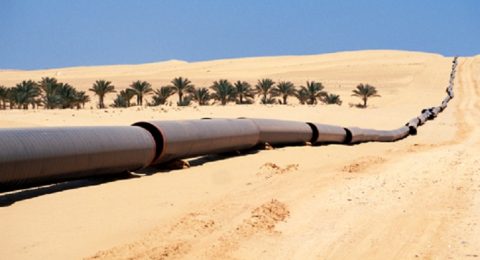
The Suez-Mediterranean (SUMED) pipeline links Ain Sokhna on the Red Sea to Sidi Kerir on the Mediterranean coast, providing an alternative route for crude that would otherwise need to transit the Suez Canal and surrounding waterways.
Saudi Arabia had already redirected over 70% of its daily crude exports to Yanbu after disruptions to shipping through the Strait of Hormuz. Shipments from Yanbu to Europe can move north through the Suez Canal, while cargoes destined for Asia typically travel south through Bab el-Mandeb.