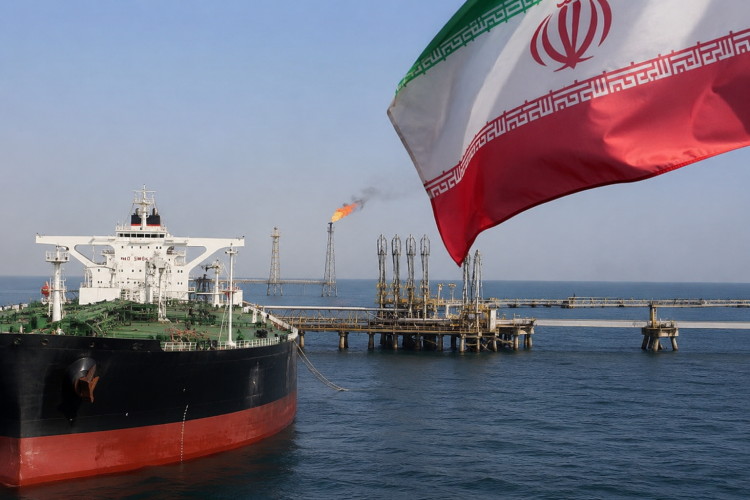
Iran has managed to export liquefied petroleum gas (LPG) and jet fuel since July despite a US naval blockade, maritime intelligence data and sources showed.
Four maritime security and Gulf oil shipping sources told Reuters that Iran had concealed these shipments in a growing number of ship-to-ship transfers conducted by other Gulf producers off the coast of Oman in recent weeks.
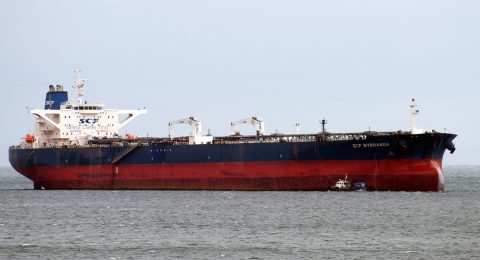
An analysis by United Against Nuclear Iran (UANI), a US-based organization that tracks tankers linked to Iran using vessel-tracking technology and satellite imagery, found that at least eight gas carriers transporting Iranian LPG had departed the Gulf of Oman since mid-July.
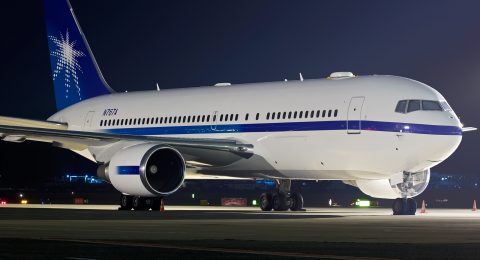
A Reuters analysis of vessel movements and US Treasury sanctions found that six of the eight gas carriers and the jet fuel tanker were under US sanctions for transporting Iranian petroleum and petrochemical products.
UANI researcher Jemima Shelley said that although a small number of tankers carrying Iranian LPG had managed to pass through the US blockade, most vessels transporting Iranian products had been turned back.
She added that some shipments were transferred near Oman’s Shinas and Sohar ports, while others waited in the Gulf of Oman before crossing the blockade. UANI estimated that the LPG shipments totaled 4.1 million barrels (mmbbls).
According to UANI’s analysis, most of the cargoes destined for potential buyers in China sailed to a Malaysian port for further ship-to-ship transfers.
A vessel’s passage did not necessarily mean it had evaded the blockade, a US military official told Reuters. Each vessel is assessed individually, including through a review of its documentation, and some ships may be permitted to pass for humanitarian reasons.
The US lifted restrictions on Iran-related oil exports in June after reaching a draft understanding with Tehran, but reinstated the blockade on July 14 after the agreement collapsed. The blockade was first imposed on April 13.
The US Central Command said in October American forces had disrupted four commercial vessels and turned back 135 others during the latest three-month blockade, according to Reuters.
Washington has combined the blockade with sanctions aimed at severing Iran’s remaining financial links and restricting its revenue. Last week, the US imposed new sanctions on 17 vessels it said were involved in transporting Iranian crude oil, petrochemicals and petroleum products.
Analytics firm Kpler said Iranian crude oil exports fell to zero in September, marking the first month without a shipment since it began tracking Iran’s activity in 2013.