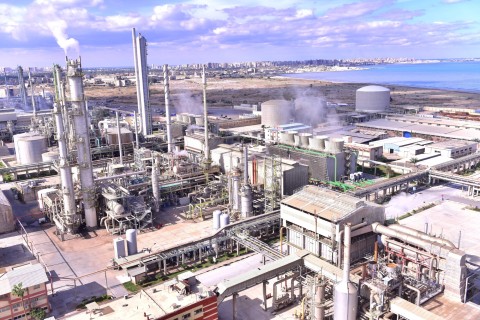
The Egyptian oil and mineral resources sector attracted $6.7 billion in Foreign Direct Investment (FDI) during fiscal year (FY) 2025/26, up from $6.2 billion a year earlier, according to the Central Bank of Egypt’s (CBE) balance of payments (BoP) report.
According to the report, net inflows reached $190.2 million, largely supported by an increase in greenfield investments by foreign companies. Concurrently, sector outflows-which cover cost recovery for exploration, development, and operations incurred by foreign partners-rose from $5.6 billion to $6.5 billion.
The increase in oil-sector investment inflows comes as Egypt seeks to raise domestic hydrocarbon production, attract international oil companies (IOCs), and reduce its reliance on imported petroleum and natural gas.
Egypt has secured more than $19 billion in investment commitments from international oil companies over the next three years. The pledged investments include $8 billion from Italy’s Eni, $5 billion from bp, $4 billion from US Apache Corporation, and $2 billion from the UAE’s Arcius Energy.
Egypt’s petroleum exports rose 18.1% to about $6.6 billion in FY2025/26. A $1.2 billion rise in petroleum product exports and an additional $206 million in natural gas exports supported the increase. However, crude oil exports declined by $350.6 million because of lower export volumes, noted the report.
On the import side, petroleum imports rose by 27.6% to $24.9 billion. The increase was driven by higher purchases of natural gas and crude oil. Natural gas imports rose by $4.7 billion, while crude oil imports increased by $1.9 billion. In contrast, petroleum product imports declined by approximately $1.2 billionl.
The developments coincided with elevated global oil prices amid disruptions to Middle Eastern supply routes. According to the US Energy Information Administration (EIA)’s October 2026 Short-Term Energy Outlook, the Brent crude oil spot price averaged $114 per barrel in September, up $23 from August. The agency attributed the increase to attacks on oil infrastructure and tankers in the region, including disruptions to Saudi Arabia’s East-West pipeline, which temporarily interrupted a key route for exporting crude oil.