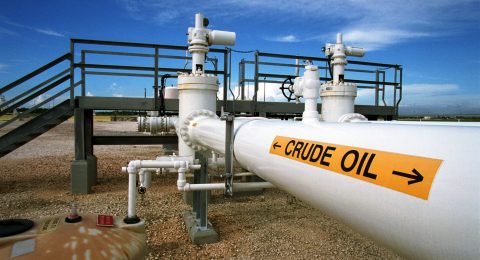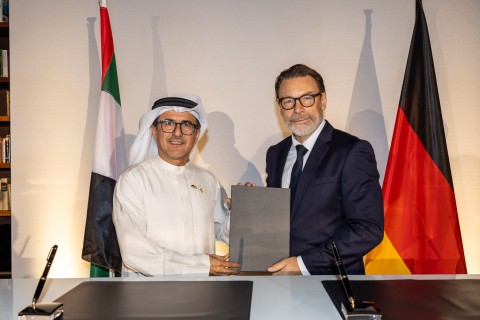
Germany’s cabinet approved a roadmap on September 23 to phase out coal, oil, and gas by 2045, reaffirming the country’s focus on electrification, Reuters reported.
A spokesperson for Germany’s Environment Ministry presented the roadmap at the UN General Assembly in New York. Germany is the third country, after France and the Netherlands, to adopt a national roadmap under an international initiative to reduce dependence on fossil fuels.
The plan includes reviewing whether Germany can bring forward its deadline to end coal-fired power generation from 2035 to 2038.
Germany’s renewables already account for about 55% of gross electricity consumption, and this figure is set to rise to at least
80% by 2030.
In spite of the massive increase in the use of renewables, fossil fuels still account for the vast majority of global energy supply, reaching about 80%. Coal remains the largest source of energy-related carbon dioxide (CO2) emissions by 42%, although only about 27% of the global energy supply is generated from coal.
Oil continues to generate the highest percentage of global energy supply, amounting to 30%, and is responsible for some 30% of energy-related CO2 emissions. Meanwhile, Natural gas accounts for around 23% of global energy generated and produces about 21% of energy-related CO2 emissions.
In the transport sector, Germany expects battery-electric vehicles to account for 100% of new passenger car registrations by 2035 under EU fleet emissions rules.
In August 2026 there were already around 2.6 million battery electric passenger cars on roads. Battery-electric vehicles accounted for 32.4% of all newly registered passenger cars during the month.
The German Environment Agency (UBA) forecasts that the number of battery-electric passenger cars could reach around 7 million by 2030 and 17 million by 2035.
The plan also projects that heat pumps will become Germany’s main heating system in the coming years. Suppliers of gas, oil and liquefied natural gas will in future be required to ensure that, from 2045, the fuels used for heating buildings are switched entirely to climate-neutral fuels.
The roadmap comes as some German conservatives, including Economy Minister Katherina Reiche, call for greater flexibility on the use of combustion-engine vehicles and alternative fuels.