Egypt and Germany discussed debt swap agreements to finance the construction of transformer stations and electricity interconnection lines. The projects aim to strengthen Egypt’s national electricity grid under the Nexus of Water, Food and Energy (NWFE) program, according to the Ministry of Electricity and Renewable Energy.
Launched in 2022, NWFE is Egypt’s flagship program for financing and implementing climate-related projects across the water, food, and energy sectors.
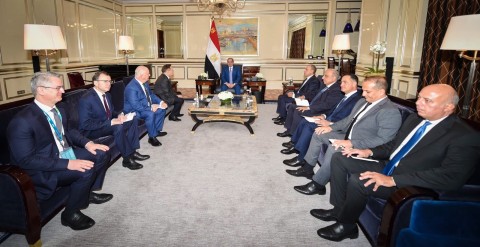
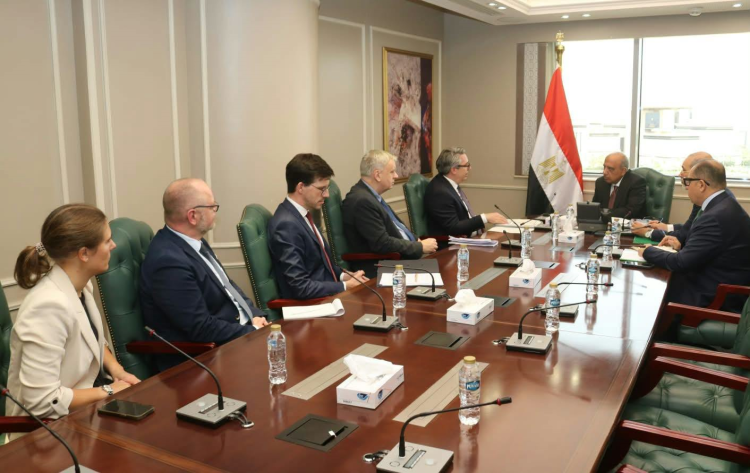
The discussions took place during a meeting between Mahmoud Esmat, Minister of Electricity and Renewable Energy, and Stefan Rouenhoff, Parliamentary State Secretary at Germany’s Federal Ministry for Economic Affairs and Energy, accompanied by a delegation.
The meeting focused on strengthening the bilateral partnership and expanding cooperation in energy policy, renewable energy, infrastructure development, and the national electricity grid.
Both sides reviewed the latest developments in bilateral cooperation following the joint governmental negotiations held in Berlin last November, which included
At that time, Egypt and Germany signed agreements worth €294.5 million (around EGP 16 billion) to support development and strengthen cooperation across several sectors. The agreements included €171.5 million in financing and debt swaps to connect renewable energy stations.
Under the €50 million debt swap agreement, Germany will cancel a portion of Egypt’s debt, with the equivalent value redirected to finance grid connection infrastructure for wind energy projects in Ras Ghareb and Jebel Zeit, both of which are located along the Gulf of Suez. The funding will be released in two equal tranches of €25 million.
The meeting also covered contributions to financing projects such as the second phase of the hydropower plant rehabilitation project, increasing the capacity of transformers at the High Dam Power Plant and the Aswan I and II hydropower plants as well as establishing a control center for managing distributed energy generated from renewable sources.
Both sides emphasized expanding cooperation and encouraging German companies to invest in renewable energy projects. This includes conducting wind speed measurements at selected sites for the development of wind farms in addition to expanding high-efficiency battery storage capacity and strengthening electricity transmission networks.
Esmat noted that Egypt is working to transform its electricity grid from a conventional network into a smart grid while continuing to develop its capacities and infrastructure.
The government aims to diversify the country’s energy mix and increase the share of renewable energy to 45% by 2028.
The Minister pointed to ongoing projects, particularly in solar and wind energy, welcoming further partnerships with the private sector and the utilization of its technical and technological expertise to support the state’s vision and ensure energy security.