Egypt’s existing natural gas infrastructure, strategic location, and international partnerships can help accelerate the development of East Mediterranean gas resources, reduce project costs, and improve access to global markets, executives from Eni, TotalEnergies, and Chevron said on October 20, according to a petroleum ministry statement.
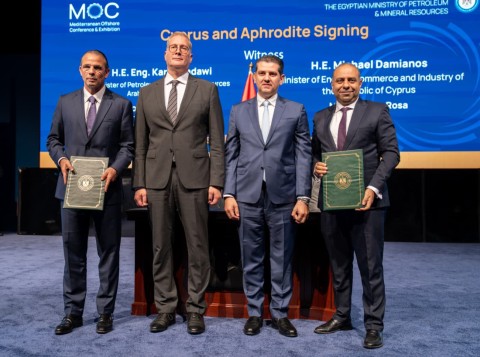
During the Mediterranean Offshore Conference and Exhibition (MOC 2026) in Alexandria, the executives highlighted Egypt’s role in connecting Cypriot offshore gas fields to its processing and liquefied natural gas (LNG) export facilities.
Diego Portoghese, Eni’s Head of North Africa and Levant Region, said Egypt’s infrastructure was central to bringing East Mediterranean gas resources into production more quickly and at lower cost.
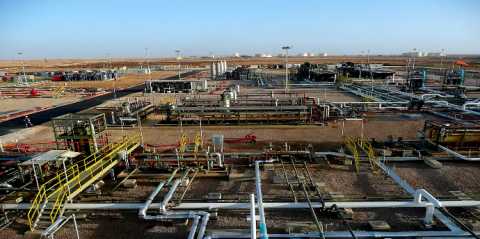
Eni aims to begin production from Cyprus’ Cronos gas field in 2028 by using existing Egyptian facilities. The project, which reached a final investment decision (FID) in July 2026, is designed to establish an integrated cross-border value chain between Cyprus and Egypt.
Portoghese said the arrangement would allow Egypt to generate greater returns from its energy infrastructure investments and reinforce its position as a regional energy hub.
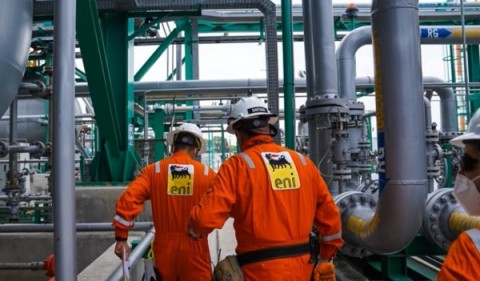
Eni has operated in Egypt for more than 70 years and is the country’s largest natural gas producer, according to Portoghese. He also highlighted progress on the Denis West discovery, for which a commercial agreement was reached in August 2025, adding that drilling began two months later, leading to a discovery estimated at approximately 2 trillion cubic feet (tcf) of natural gas.
Julien Bouyer, Senior Vice President of Exploration and Production for the Middle East and North Africa at TotalEnergies, said Egypt’s role as an energy link between producing regions and consumer markets had become increasingly important amid geopolitical conflicts, trade disruptions, and renewed concerns over energy security.
Bouyer pointed to the country’s processing and storage facilities, LNG export terminals, pipeline networks, the SUMED pipeline, the Suez Canal, and its ports as assets that support the movement of energy between suppliers and international markets.
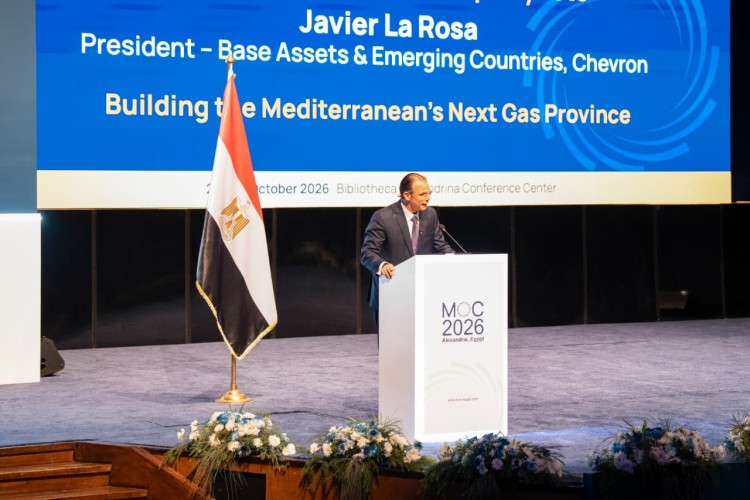
Javier La Rosa, President of Chevron’s Base Assets and Emerging Countries, said the company remained committed to investing across the Mediterranean, including Egypt. He added that geopolitical uncertainty had increased the importance of natural resources, infrastructure, and reliable regional partnerships in helping markets withstand global disruptions.
La Rosa praised cooperation with the Egyptian government and its institutions, saying transparency and communication helped provide the stability and clarity required for long-term investment.
In July 2026, Eni and TotalEnergies reached an FID for Cyprus’ Cronos gas field, targeting first gas in 2028. The project will use Egypt’s existing Zohr facilities and Damietta LNG plant to process and export gas, primarily to European markets.
MOC 2026 is being held from 20 to 22 October under the theme “Egypt as an Anchoring Force for Energy Security in the Mediterranean”. The event brings together government officials and international energy companies to discuss offshore exploration, digital technologies, investment and regional partnerships.