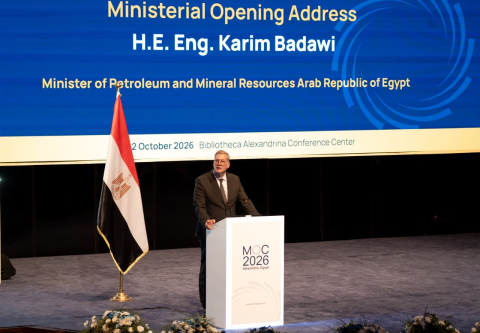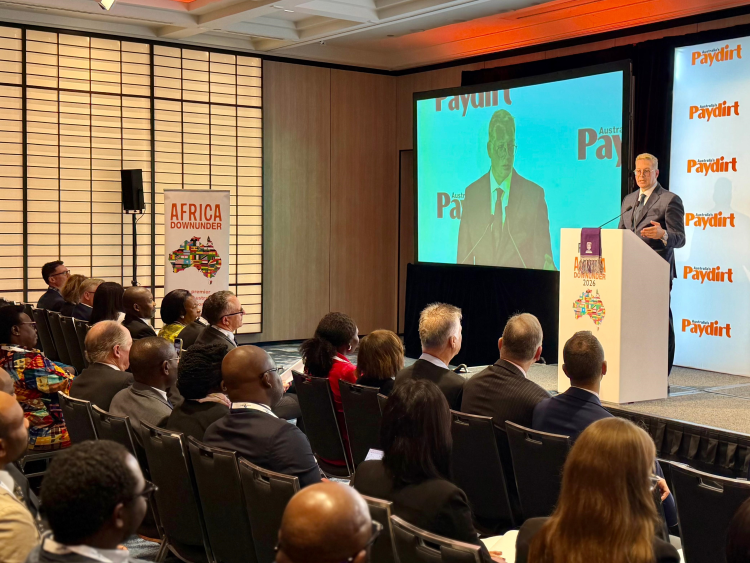
Egypt had introduced practical measures over less than two years to prepare the mining sector for increased investment and turn the country’s geological potential into clearer and more investment-ready opportunities, said Karim Badawi, Minister of Petroleum and Mineral Resources, at the Africa Down Under Mining and Energy Conference in Perth, Australia.
The reforms were introduced in response to demands raised by investors during an ongoing dialogue with the mining community since the fourth quarter of 2024, Badawi noted.
He explained that reforms included implementing a one-stop-shop mechanism under the Mineral Resources and Mining Industries Authority (MRMIA), following its transformation into an economic body. It aims to facilitate investors’ access to approvals and complete procedures, while improving the efficiency of addressing challenges related to exploration and mining activities.
The development of the legislative framework and MRMIA’s role have enabled government entities responsible for approvals and licenses to participate in the authority, supporting faster coordination and decision-making, Badawi said.
Badawi emphasized recent incentive packages aimed at encouraging investments with startup and medium-sized mining companies for discovering gold and other minerals. He further reflected on the open blocks system that allows mining opportunities to be offered for investment throughout the year rather than waiting for bidding rounds.
He noted that Egypt has around 100,000 square kilometers (km2) of exposed basement rocks in the Eastern Desert and South Sinai, within the Arabian-Nubian Shield. The area offers opportunities for discovering gold, copper, base metals, nickel, cobalt, platinum-group elements, rare metals, and rare earth elements.
The Sukari gold mine’s production of around 500,000 ounces (oz) of gold in 2025 is practical evidence of Egypt’s mining potential, said Badawi, praising AngloGold Ashanti’s efforts to develop the mine and highlighting the key role of Egyptian personnel.
In the end, the Minister encouraged mining and exploration companies, financial institutions, and technology providers to participate in the Egypt Mining Forum, scheduled to be held on September 28 in the New Administrative Capital, where they can review data, assess opportunities, and engage directly with the Egyptian Mineral Resources Authority and the mining industry.