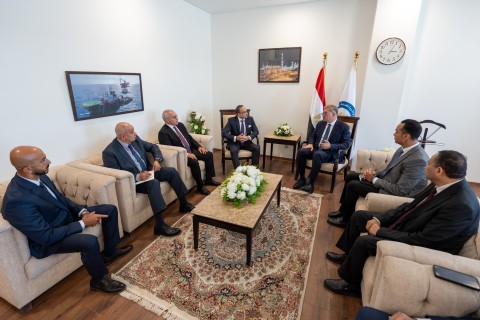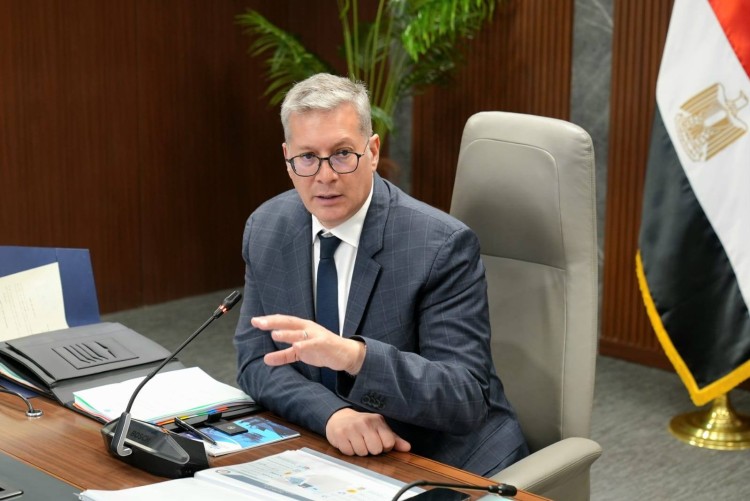
Safeguarding domestic energy supplies for Egypt’s 120 million citizens remains the Ministry of Petroleum and Mineral Resources’ (MoPMR) top priority, Karim Badawi, Minister of Petroleum and Mineral Resources, said during an interactive press briefing, highlighting the sector’s growth potential as the government accelerates exploration, drilling, and production in partnership with international and local companies.
Badawi credited coordinated government planning with ensuring uninterrupted electricity during the summers of 2025 and 2026, avoiding load‑shedding altogether. He stressed that expanding renewable energy’s share of the national grid is crucial to cutting natural gas use in power generation, a shift that would release more gas for higher‑value industries at home while boosting Egypt’s long‑term export capacity.
Turning to the decline in oil and gas production in previous years, Badawi attributed the downturn to lower foreign direct investment in exploration and field development. Thus, restoring international partners’ confidence has been central to reversing the trend, supported by the settlement of $6.1 billion in outstanding arrears owed to foreign operators.
The financial stabilization has helped revive upstream activity, leading to major discoveries including the West Denis-1 well in the Mediterranean’s Temsah concession. Operated by Eni, the discovery contains estimated reserves of 2 trillion cubic feet (tcf) of natural gas and 130 million barrels (mmbbl) of condensates.
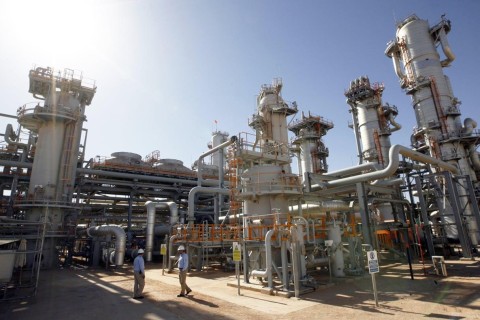
He pointed out that refinery utilization rates exceeded 80% in 2026, supported by operational efficiency improvements across Egypt’s refining facilities. Higher domestic refinery output is helping meet local demand while reducing reliance on imported petroleum products, according to the minister.
Badawi disclosed Egypt’s annual domestic fuel consumption, amounting to roughly 11.84 billion litres of gasoline, 17.77 billion litres of diesel, and 287.5 million LPG cylinders.
Beyond hydrocarbons, Badawi outlined reforms aimed at unlocking Egypt’s mineral resources, including the establishment of the Egyptian Mineral Resources and Mining Industry Authority (MRMIA).
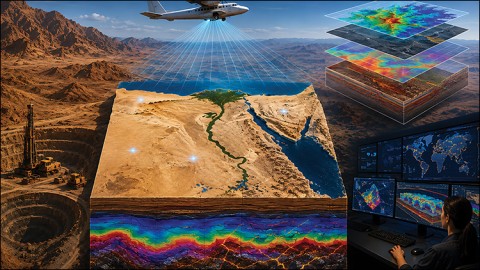
The ministry is also introducing fiscal incentives to attract mining investment, including 30-year tax and customs exemptions under mining exploitation agreements. The minister also drew attention to the airborne seismic survey that will cover six zones across the Eastern and Western deserts, Sinai, and the New Valley.
The Minister concluded by inviting the press to attend the upcoming Egypt Mining Forum, where the official results of the June investment rounds will be formally unveiled.