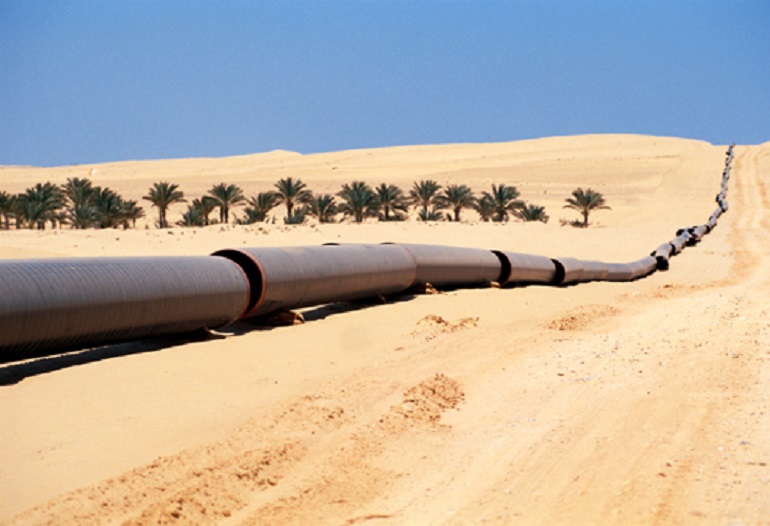
Saudi Arabia is in preliminary discussions to expand the capacity of its East-West crude oil pipeline by up to 2 million barrels per day (bbl/d), according to Reuters. The proposed expansion aims to enable the kingdom and neighboring Gulf states to transport higher volumes of crude oil and refined products directly to the western Red Sea coast, completely bypassing the blockaded Strait of Hormuz.
The expansion under consideration would increase the pipeline’s current capacity from 7 million bbl/d by an additional 1 million to 2 million bbl/d. The project would take years to complete, cost billions of dollars, and require adjustments to Saudi crude’s pricing mechanism. Sources indicated it remains unclear whether state-backed oil company Aramco will upgrade existing infrastructure or construct an entirely new pipeline, though the plans may include a smaller secondary line dedicated to refined petroleum products.
The strategic urgency follows a regional shipping halt through the Strait of Hormuz triggered by the outbreak of war involving Iran. The resulting blockade forced Gulf nations to shut in up to 12 million bbl/d of production, causing global energy prices to surge. Regional output remains severely constrained; Iraqi production collapsed from 4.3 million bbl/d to less than 1.5 million bbl/d, Kuwait declared force majeure, and Bahrain’s Sitra refinery sustained multiple missile strikes.
To mitigate these disruptions, Saudi Arabia is holding preliminary talks with neighboring countries, including Kuwait, Bahrain, and Qatar, that lack alternative routes to bypass the strait. Kuwait Petroleum Corporation (KPC) CEO Sheikh Nawaf al-Sabah confirmed during the Atlantic Council Global Energy Forum that discussions are underway with Saudi Arabia and the UAE to accommodate Kuwaiti crude volumes within their domestic pipeline networks. Similarly, Qatar is evaluating several alternatives through Saudi Arabia to export its volumes, though it faces steeper technical hurdles due to its primarily liquefied natural gas (LNG) export profile.
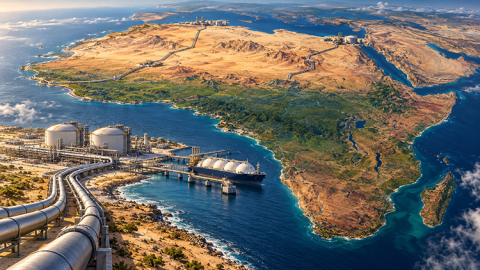
Built in the early 1980s, the East-West pipeline terminates at the Red Sea port of Yanbu. Aramco CEO Amin Nasser noted that approximately 2 million bbl/d of its current capacity feeds domestic refineries on the west coast, while roughly 5 million bbl/d is allocated for export.