For decades, Egypt’s energy exports have been measured in barrels, cubic meters, and cargoes shipped across international markets. Oil, natural gas, refined products, fertilizers, and petrochemicals have formed the backbone of the country’s energy trade and a significant source of foreign currency revenues. Yet as the global economy moves toward decarbonization, a new commodity is emerging; one that is invisible, intangible, and increasingly valuable: avoided emissions.
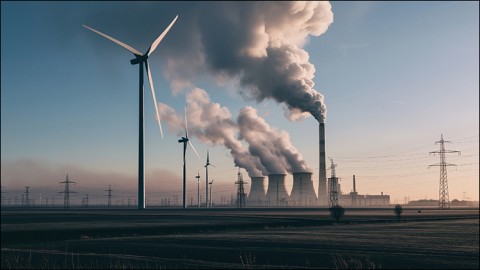
Around the world, governments and industries are beginning to treat carbon reductions as tradable assets. Carbon credits, low-carbon products, and carbon capture projects are creating entirely new markets where emissions themselves carry economic value. Carbon pricing mechanisms now cover nearly a quarter of global greenhouse gas emissions, while demand for high-quality carbon credits continues to grow as corporations pursue ambitious net-zero commitments.
As countries race to meet climate targets while maintaining industrial competitiveness, the question is no longer whether carbon will have a price, but who will be best positioned to profit from it. For Egypt, this raises an intriguing possibility: could emissions reductions become the country’s next export?
The concept behind carbon markets is straightforward. When a company, project, or country reduces greenhouse gas emissions beyond a defined baseline, those reductions can be quantified, verified, and converted into carbon credits. These credits can then be sold to organizations seeking to offset their own emissions.
Egypt’s Carbon Market Potential
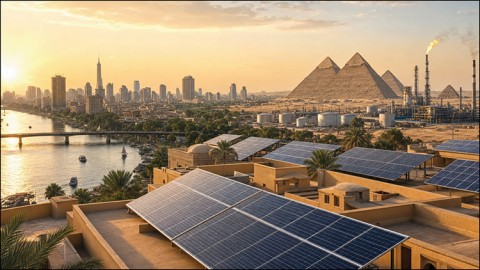
Egypt possesses several advantages that could position it to participate more actively in carbon markets. The country has one of the largest renewable energy sectors in Africa and the Middle East, supported by world-class solar and wind resources. The government has repeatedly reaffirmed its target of increasing renewable energy’s share of electricity generation to 42% by 2030 and more than 60% by 2040. Achieving these targets will require substantial investment, but it will also generate significant emissions reductions that could potentially be monetized through carbon markets.
The pace of investment is already accelerating. In early 2026, Egypt signed renewable energy agreements valued at approximately $1.8 billion, covering large-scale solar generation and battery storage projects. Such investments not only strengthen energy security but also expand the country’s portfolio of low-carbon assets capable of generating measurable emissions reductions.
Recent policy developments suggest that Egypt is laying the foundation for a carbon economy. The Egyptian Climate Exchange (EGCX), operating under the Egyptian Exchange, has established one of the region’s first regulated voluntary carbon markets. The platform aims to facilitate the issuance and trading of carbon credits, creating a mechanism through which emissions reductions generated within Egypt can potentially be transformed into tradable financial assets. If successful, carbon credits could create a new source of foreign currency revenues while attracting climate-focused investments into key sectors of the economy.
Methane: Egypt’s Most Immediate Carbon Opportunity
Although green hydrogen and renewable energy often dominate discussions surrounding the energy transition, methane reduction may represent Egypt’s fastest pathway toward generating value from emissions reductions.
Methane is estimated to have more than 80 times the warming impact of carbon dioxide over a 20-year period, making it one of the most valuable targets for emissions reduction efforts. For Egypt’s oil and gas sector, initiatives such as leak detection and repair programs, flare reduction projects, associated gas recovery, and facility upgrades can generate measurable emissions reductions while simultaneously improving operational efficiency.
This opportunity is particularly relevant given Egypt’s ambitions to maintain its position as a regional energy hub. Every cubic meter of gas captured rather than flared or vented can be sold, processed, or utilized domestically. In other words, methane reduction not only lowers emissions but also preserves valuable energy resources.
Carbon Capture: Turning Emissions into Assets
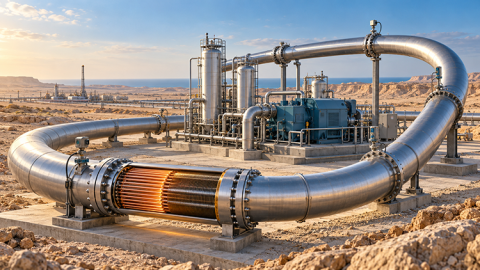
Perhaps the most direct pathway toward monetizing emissions lies in carbon capture, utilization, and storage (CCUS). Globally, CCUS is viewed as a critical tool for decarbonizing hard-to-abate sectors such as cement, steel, fertilizers, refining, and petrochemicals. Rather than releasing carbon dioxide into the atmosphere, facilities capture emissions and either store them permanently underground or utilize them in industrial processes.
Importantly, carbon capture is already beginning to move from concept to implementation. During EGYPES 2025, Misr Fertilizers Production Company (MOPCO) and the global engineering company thyssenkrupp Uhde signed an agreement for a carbon capture project valued at approximately $220 million. The project is expected to capture around 150,000 tons of carbon dioxide annually, making it one of the first large-scale carbon capture initiatives in Africa and the Middle East.
The Opportunity in Low-Carbon Products
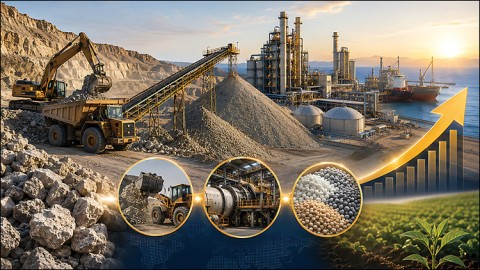
Another emerging avenue lies in the production of low-carbon industrial goods. Global industries are facing increasing pressure to reduce emissions across their supply chains. As a result, buyers are seeking materials and products with lower embedded carbon content. This trend is particularly relevant for sectors in which Egypt already maintains a strong industrial presence, including fertilizers, petrochemicals, cement, and energy-intensive manufacturing.
Among the emerging pathways for creating low-carbon products, green hydrogen may become one of Egypt’s most export-oriented opportunities. In early 2026, the government reviewed progress on the 100-megawatt green hydrogen facility in Ain Sokhna, one of the country’s flagship clean energy projects. Developed by a consortium including Scatec, Fertiglobe, Orascom Construction, and the Sovereign Fund of Egypt, the project has already begun partial production and is expected to supply international markets.
The momentum extends beyond individual projects. In 2026, the Suez Canal Economic Zone (SCZONE) and the United Nations Industrial Development Organization (UNIDO) launched Egypt’s National Clean Hydrogen Program, aimed at accelerating investment, building local capabilities, and positioning the country as a regional hub for clean hydrogen production.
These developments reflect a broader transformation in the nature of exports themselves. Egypt may not simply export energy in the future; it may export products whose lower carbon intensity enhances their competitiveness in international markets. This opportunity is becoming even more important as regulations such as the European Union’s Carbon Border Adjustment Mechanism (CBAM) begin to place greater emphasis on the carbon footprint of imported products. Producers capable of demonstrating lower emissions profiles may gain a significant advantage in key export destinations.
Esraa El Mitainy, Climate Change Expert at Integral Consult, an environmental and sustainability consulting firm based in Cairo, stated that “with several different perspectives this issue can be tackled differently, for example, “Selling classic emissions reductions as carbon credits in the voluntary market offers one revenue stream, while industrial decarbonization can also serve as a strategy to boost competitiveness under EU CBAM rule. However, these measures will require collective efforts from the public and private sector towards a unified goal.”
Challenges on the Road Ahead
Despite the opportunity, monetizing emissions is far from straightforward. Carbon markets continue to face questions regarding transparency, verification standards, and pricing stability. Credit values can fluctuate significantly, creating uncertainty for investors. Establishing robust monitoring, reporting, and verification systems will be essential to maintaining market credibility.
Competition is also intensifying. Countries across the Middle East, Africa, and Asia are pursuing similar opportunities in renewable energy, carbon management, and low-carbon industrial exports. Egypt will need to leverage its unique combination of geographic location, industrial capacity, energy infrastructure, and natural resources to distinguish itself in an increasingly crowded marketplace.
Beyond Energy Exports
The global energy transition is reshaping the very definition of what constitutes an energy asset. In the past, value was created primarily by extracting and exporting hydrocarbons. Value may also be created by preventing emissions, capturing carbon, and producing cleaner industrial goods.
For Egypt, this evolution presents an opportunity to expand its role within the emerging low-carbon economy. The country already possesses many of the foundational elements required to participate: a growing renewable energy sector, an emerging carbon market, expanding green hydrogen investments, established industrial capabilities, and decades of expertise in oil and gas operations. The opportunity is not to replace traditional energy exports overnight. Rather, it is to create a new layer of value on top of existing industries.