A New Energy Equation
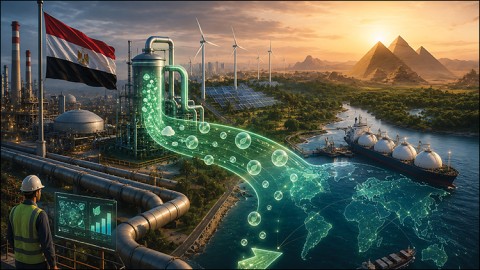
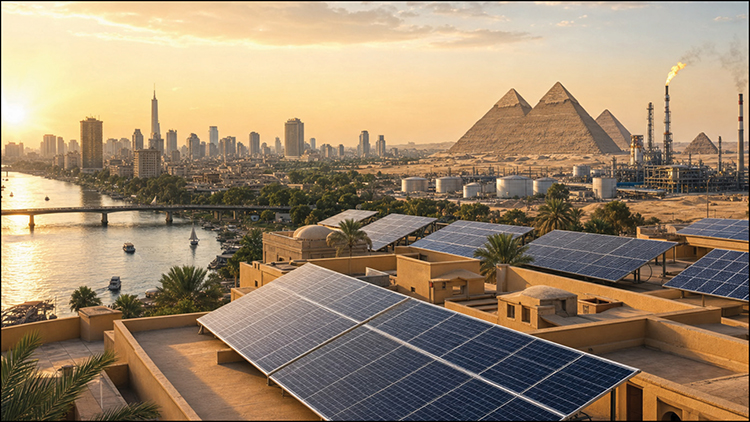
As climate pressures intensify and global energy markets shift toward lower-carbon systems, arid countries like Egypt are finding themselves at the center of a new energy equation. With abundant sunlight, expanding industrial zones, and growing electricity demand, Egypt is increasingly positioning solar energy as a key pillar of its economic and energy future. Yet the country’s renewable transition is not simply about replacing fossil fuels. Instead, Egypt is pursuing a more complex strategy; one that seeks to integrate solar power into its industrial economy while optimizing the role of natural gas within a changing global energy market.
This shift is becoming increasingly visible across the country. From large-scale solar parks in Upper Egypt to rooftop solar initiatives targeting factories and industrial facilities, the government is accelerating efforts to diversify the energy mix while reducing pressure on domestic gas consumption. Prime Minister Mostafa Madbouly has repeatedly emphasized that expanding renewable energy is now a strategic national priority tied directly to economic resilience, industrial competitiveness, and long-term energy security.
For decades, natural gas has served as the backbone of Egypt’s electricity generation system and one of the country’s most strategic economic assets. However, rising domestic electricity demand is placing increasing pressure on gas supplies that could otherwise support exports, industrial growth, and foreign currency revenues. Furthermore, Egypt currently aims to generate 42% of its electricity from renewable sources by 2030, with long-term ambitions reaching 60% by 2040. Yet renewable energy still accounts for only around 11.5% of the country’s electricity generation mix, highlighting the scale of investment and infrastructure development still required.
Rooftop Solar Moves into Industry
One of the clearest signs of this shift is the government’s proposed “Shams Al-Sinaa” (‘Industry’s Sun’) initiative, which aims to install nearly 1 gigawatt (GW) of rooftop solar capacity across approximately 7,000 factories nationwide, as announced by the Egyptian Cabinet. Estimates suggest the initiative could require nearly seven million square meters of rooftop space, making it one of the largest industrial rooftop solar programs in the Middle East and Africa.
Moreover, the initiative comes at a critical time. Egypt’s electricity demand continues to rise rapidly due to population growth, industrial expansion, urbanization, and increasing cooling demand during extreme summer temperatures. At the same time, the country has faced mounting pressure linked to declining domestic gas production and rising fuel import costs.
The industrial sector represents one of the clearest examples of the growing relationship between solar energy and Egypt’s oil and gas economy. Energy-intensive industries such as fertilizers, petrochemicals, cement, steel, and chemicals consume enormous amounts of electricity and natural gas. At the same time, these sectors are facing growing international pressure to reduce carbon emissions as global markets move toward stricter sustainability standards.
European environmental regulations, particularly the Carbon Border Adjustment Mechanism (CBAM), are expected to reshape industrial competitiveness over the coming years by imposing carbon-related costs on emissions-intensive imports. For Egyptian manufacturers and exporters, renewable energy is therefore becoming both a sustainability priority and a commercial necessity.
Feed-in Tariffs and Residential Solar Expansion
Beyond industrial applications, Egypt has also attempted to encourage residential and small-scale solar deployment through feed-in tariff mechanisms and net metering systems. While the early phases primarily supported utility-scale projects, the policies also helped establish a regulatory foundation for rooftop solar expansion in residential and industrial areas. Today, net metering systems are increasingly viewed as essential tools for accelerating distributed solar adoption.
Under these systems, electricity consumers with rooftop solar installations can offset part of their electricity bills by exporting unused energy back to the grid during peak solar generation periods. However, residential solar adoption in Egypt still faces several challenges. High upfront installation costs, financing limitations, regulatory complexity, and limited public awareness continue to slow deployment among households and smaller businesses. Analysts argue that broader adoption may require additional financing support, low-interest green loans, tax incentives, and simplified licensing procedures.
Nevertheless, the economics of rooftop solar are gradually becoming more attractive. As Egypt continues energy subsidy reforms and electricity prices rise, solar power is becoming increasingly cost-competitive for both industrial and residential consumers. Many businesses are now viewing solar investments not simply as environmental commitments, but as long-term economic strategies capable of improving operational resilience and reducing energy costs.
Egypt’s Recent Solar Momentum
Recent months have already demonstrated how rapidly Egypt’s solar ambitions are accelerating. In early 2026, the government inaugurated the first phase of the Obelisk solar power project in Qena Governorate, developed by Norwegian renewable energy company Scatec. The first phase alone includes 500 megawatts (MW) of solar capacity alongside 200 megawatt-hours (MWh) of battery storage systems (BESS), while the full project is expected to reach 1 GW upon completion.
According to project estimates, the Obelisk facility could supply electricity to nearly 1.65 million households while reducing carbon emissions by approximately 1.4 million tons annually (mt/y). Officials also noted that the project is expected to significantly reduce natural gas consumption in the power sector, reinforcing the growing relationship between renewable energy expansion and Egypt’s broader gas optimization strategy.
At the same time, Egypt continues to localize renewable energy manufacturing. Earlier this year, the country inaugurated a major solar manufacturing complex in Ain Sokhna within the Suez Canal Economic Zone. The project, developed by Singapore-based Elite Solar, represents an investment of approximately $116 million and is expected to support up to 5 GW of solar component manufacturing capacity annually. Commenting on the transition, Mohamed El Fouly, Chief Commercial Officer (CCO) at SolarizEgypt, noted that successful nations will not achieve their energy transition by abandoning conventional energy overnight, but rather by engineering a smarter, more diversified energy mix.
Grid Limits, Security Drivers
Despite the momentum, major challenges remain. Grid infrastructure continues to represent one of the biggest obstacles to renewable expansion. Integrating intermittent solar generation into the national electricity system requires major investments in transmission networks, grid flexibility, and energy storage capacity. Ramez Essam Habib, Environmental Engineer Consultant told Egypt Oil & Gas, “In my view the transition in Egypt is driven primarily by energy security concerns, and those security drivers in turn shape the economic agenda. Concerns over supply stability and import exposure have forced policymakers to prioritize diversification and domestic generation.” Habib was also keen to add “Energy security is the main driver. Choosing renewables reduces dependence on imports and falling solar and wind costs make that security driven choice cheaper. Climate pledges and finance add political cover and funding, reinforcing the push—but security leads.”
Egypt has already begun large-scale grid modernization projects, including the construction of ultra-high-voltage substations and expanded transmission lines, but infrastructure development will need to accelerate significantly to support future renewable growth.
Beyond Desert Megaprojects
For years, renewable energy in Egypt was viewed primarily as a distant megaproject in the desert. Today, rooftop solar is transforming the transition into something far more integrated with the country’s industrial economy and daily energy consumption patterns.
For the oil and gas sector, this transformation may ultimately represent not a threat, but an opportunity. By allowing Egypt to optimize gas use, strengthen industrial competitiveness, and modernize its electricity system, solar energy could become an essential partner in the country’s broader energy strategy. In that sense, Egypt’s rooftop solar ambitions are about more than sustainability alone. They represent an attempt to redefine how traditional energy economies adapt to a rapidly changing global energy landscape; one where oil, gas, and renewables increasingly coexist rather than compete.