AVEVA has recently solidified its commitment to the Egyptian market by establishing a strategic regional hub in Cairo. Currently employing 35 professionals, the Cairo office supports operations across both Africa and the broader Europe, Middle East, and Africa (EMEA) region. Founded in 1967 in Cambridge, England, AVEVA is a global leader in industrial software and digital transformation. Since 2023, the company has been fully owned by Schneider Electric, the French multinational energy and automation leader, creating a powerful synergy between industrial software and energy management expertise.
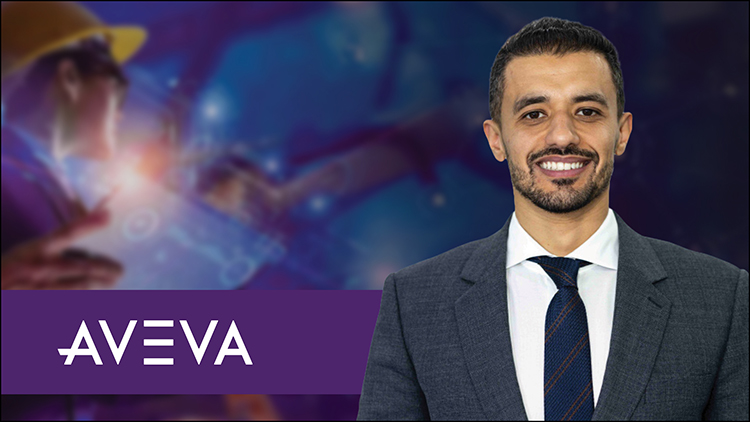
In this interview, Khaled Salah, Vice President of Africa at AVEVA, discusses the critical role of digital transformation in balancing Africa’s industrial growth with the global energy transition. Salah brings extensive experience from his leadership roles at Schneider Electric, where he was inspired by a culture of hard work and global opportunity.
The conversation explores how technologies like digital twins, AI, and AVEVA’s CONNECT platform are being deployed to enhance asset efficiency and national energy security. Salah also highlights the company’s focus on nurturing young Egyptian talent through university partnerships, and its strategic shift toward “Industrial Intelligence as a Service” to attract international investment.
What were the primary drivers behind the establishment of AVEVA’s new Cairo office, and how does this expansion reinforce Egypt’s role within your broader regional growth strategy?
Last year, AVEVA made the strategic decision to separate the Middle East and Africa into two distinct markets, a move designed to more effectively tap into the continent’s vast industrial potential. We view Egypt as a critical strategic hub, bolstered by the country’s ability to attract significant investment and a high level of digital maturity—most notably within the Ministry of Petroleum and Mineral Resources. Furthermore, the country’s strong talent readiness makes it an ideal base for our operations.
Currently, our Cairo office is home to 35 employees; half of this team is dedicated to driving African growth, while the remainder supports the broader Europe, Middle East, and Africa (EMEA) region. We have set an ambitious target to double our headcount to 70 over the next two years, reflecting our confidence in the local market. For AVEVA, Egypt is more than just a gateway to Africa; it has evolved into a vital hub for the entire EMEA region.
AVEVA is known as a global leader in industrial software. How do your solutions specifically address the needs of Egypt’s energy, manufacturing, and infrastructure sectors?
AVEVA provides “Industrial Intelligence as a Service.” We bring operational and engineering data into a single trusted platform, putting it into context to create a digital twin. Once you have a digital twin, you can apply AI and predictive analytics.
A prime example is our work with the MoPMR, where we implemented a panoramic command center that provides visibility across the entire value chain: upstream, refinery, and downstream.
In today’s turbulent geopolitical climate, this visibility enables optimized processes, better demand forecasting, and improved sourcing for crude oil and natural gas. This is not just a commercial use case; it is a matter of national security to ensure secure and affordable energy.
Can you explain how AVEVA’s CONNECT platform and digital twin technologies are transforming operations for clients in Egypt?
A digital twin is a digital representation of a physical asset, allowing us to simulate “what-if” scenarios without interrupting actual production. CONNECT platform is the digital experience that enables this. It is a secure, cloud based industrial intelligence platform that unifies operational and engineering data to give management visibility on previous performance and real-time failures. It allows the system to trigger actions for maintenance or procurement teams immediately. It is a comprehensive industrial platform that provides access to our entire portfolio.
AVEVA has announced several global partnerships in AI and data intelligence. How are these collaborations being applied within Egypt’s industrial landscape?
Through our strategic partnership with NVIDIA and Schneider Electric, we have developed a specialized reference architecture for AI Factories and high‑efficiency data centers. This represents a paradigm shift; we no longer view data centers as standalone assets, but as integrated components of an ecosystem that includes the national power grid.
In Egypt, this technology is being applied to create a virtuous cycle of efficiency. By providing live visibility and industrial intelligence, we help end‑users reduce energy consumption by 10%–20%. This saved energy is then redirected to power the AI Factory infrastructure. The AI, in turn, processes operational data to further optimize asset performance and predictive maintenance. We are already collaborating with Egyptian industrial leaders to implement this architecture, ensuring they can “do more with less” while maintaining the stability of the local grid.
In Egypt, where efficiency and production are top priorities , how does AVEVA help lower costs and attract investment from International Oil Companies (IOCs)?
This is a critical point because every CEO I have spoken with recently is focused on one thing: optimizing energy and lowering the energy bill. They are not asking for AI or digital twins as a luxury; they are asking for solutions that impact the national economy. As noted during recent industry discussions, digital transformation is no longer a luxury,it is a matter of national security. Our solutions are designed to move beyond “fancy dashboards” to deliver real world impact on the prices we pay for energy.
By investing in predictive analytics, companies can avoid future failures and costly downtime. For IOCs, this shift from capital expenditure (CAPEX) to smart operational investment is highly attractive. It demonstrates a commitment to high margin, low cost production, which is exactly what encourages international partners to increase their investment in the Egyptian market.
We can also redirect part of this saved energy to empower AI, which in turn enhances asset efficiency. Depending on the sector, our solutions can improve productivity by up to 60%.
As you lead AVEVA’s operations in Africa, how can industries address the continent’s surging energy demand while remaining globally competitive and committed to decarbonization?
The primary challenge for Africa -and the world- is the massive surge in energy demand. Over the next 20 years, we must provide energy to an additional 5 billion people. Currently, 1 billion people lack energy access entirely, and 2 billion have insufficient access. Meeting these needs without exacerbating carbon emissions requires us to focus on the demand side of the energy equation.
Today, many factories operate with underutilized assets that waste significant amounts of energy. At AVEVA, we help customers achieve energy savings of 10–20%. By improving asset efficiency, this saved energy can be redirected to empower innovation and AI, while ensuring secure, resilient, and affordable energy for the population. Efficiency is the key to the continent’s competitiveness.
How do you see Egypt’s role evolving as a hub for digital transformation in Africa’s energy sector?
It comes down to two things: talent and technology. I am impressed by the young talent in Egypt. To support them, we are planning partnerships with both public and private universities to embed AVEVA solutions into their curricula. This ensures students graduate with hands-on experience, making them ready to join AVEVA, work for our clients, or act as global ambassadors for our technology.
On the technology side, we are heavily investing in Egypt’s electro-intense sectors: oil and natural gas, mining, and power.
Being a young leader yourself, how does AVEVA view age in career development and leadership, given the region’s youth bulge??
I do not believe age is a barrier; I believe in commitment and experience. My own career was enabled by a healthy environment at Schneider Electric, where I was inspired by leaders who worked hard and were given global opportunities regardless of age.
I apply that same philosophy at AVEVA. When I interview potential talent, I focus entirely on whether they are right for the position. I often don’t even know the exact age of my team members, whether someone is 18 or 50 is irrelevant. What matters is commitment. If a person is dedicated, I will do everything in my power to develop them into a “star” within the organization.
While the new generation faces a shortage of some specialized skills, those who show dedication will find that at AVEVA, age is just a number
What are AVEVA’s expansion plans for the coming year?
In Egypt, we will double our personnel to reach 70 employees over the next two years. We are also evaluating growth in Morocco and Algeria, where Schneider Electric currently acts as our distributor. I recently attended GITEX Africa, the continent’s largest technology and startup event, in Morocco to further evaluate these markets.